
The Impact of 5G Technology: Transforming Connectivity and Beyond
How 5G is Changing the Way We Live, Work, and Play
Introduction
The world is on the brink of a technological revolution, and it’s all thanks to 5G. This next-generation wireless technology promises faster speeds, lower latency, and more reliable connections. But the impact of 5G goes beyond just faster internet—it’s set to transform industries, improve daily life, and unlock new possibilities we’ve only begun to imagine. From healthcare to entertainment, and from smart cities to autonomous vehicles, 5G is the catalyst for the digital transformation of our society. As we explore its potential, let’s delve into what makes 5G a game-changer and why it’s more than just an upgrade.
What is 5G?
Definition
5G, or the fifth generation of wireless technology, is designed to provide faster speeds, higher capacity, and more reliable connections than its predecessors (4G, 3G, etc.). It is not just an evolution of mobile connectivity but a revolution in how devices communicate with each other and with the internet. Unlike earlier generations, 5G aims to connect not just smartphones but a vast array of devices, from smart home appliances to industrial machinery.
How It Works?
5G operates using higher frequency radio waves, known as millimeter waves, which can transmit data more quickly and efficiently. These waves have shorter wavelengths, allowing them to carry more data but requiring more infrastructure, such as small cell towers, to maintain coverage. Advanced technologies like massive MIMO (Multiple Input Multiple Output) and beamforming are employed to improve signal strength, reduce interference, and enhance network performance.
Key Features
- Faster Speeds: 5G can deliver download speeds of up to 10 Gbps, making it significantly faster than 4G. This enables instant downloads and smooth streaming of high-definition content.
- Low Latency: Reduced lag time is a hallmark of 5G, making real-time communication and interactions seamless. This is crucial for applications like online gaming, video conferencing, and autonomous vehicles.
- Increased Capacity: 5G networks can support a larger number of devices simultaneously, addressing the growing demand for connectivity in densely populated areas and IoT ecosystems.
Benefits of 5G Technology
- Blazing-Fast Internet: With 5G, downloading a full-length HD movie can take mere seconds. Streaming ultra-high-definition videos and playing online games will be smoother than ever before. This speed boost is a game-changer for both personal and professional use, allowing users to access and share information at unprecedented speeds.
- Improved Connectivity: In crowded areas like stadiums, concerts, and urban centers, network congestion often leads to dropped calls and slow internet speeds. 5G’s increased capacity ensures better coverage and reliability, even in high-demand scenarios. This means uninterrupted connectivity, whether you’re working remotely or enjoying a live event.
- Enhanced IoT (Internet of Things): The Internet of Things relies on a network of interconnected devices, from smart thermostats to industrial sensors. 5G’s ability to handle a vast number of devices simultaneously makes it ideal for IoT applications. This will lead to smarter homes, more efficient industries, and better resource management in cities.
- Revolutionized Healthcare: Telemedicine, remote surgeries, and real-time health monitoring are just a few examples of how 5G is transforming healthcare. Doctors can consult patients in remote areas through high-quality video calls, and surgeons can perform operations using robotic systems guided by real-time data.
- Autonomous Vehicles: Self-driving cars require split-second decision-making, which depends on real-time data exchange. 5G’s low latency ensures that autonomous vehicles can communicate with each other and with traffic infrastructure, improving safety and efficiency on the roads.
Industries Benefiting from 5G
Healthcare

The healthcare industry is one of the biggest beneficiaries of 5G technology. Telemedicine platforms can deliver faster and more reliable consultations, enabling patients to receive medical advice without leaving their homes. Additionally, wearable devices can monitor vital signs in real-time, alerting doctors to any irregularities instantly. Remote robotic surgeries, made possible by 5G’s low latency, allow specialists to operate on patients from across the globe.
Entertainment and Media
The entertainment industry is undergoing a transformation with 5G. Viewers can stream 4K and even 8K content without buffering, while gamers can enjoy cloud-based gaming experiences with minimal lag. Virtual reality (VR) and augmented reality (AR) applications are becoming more immersive, offering new ways to experience sports, concerts, and movies.
Smart Cities
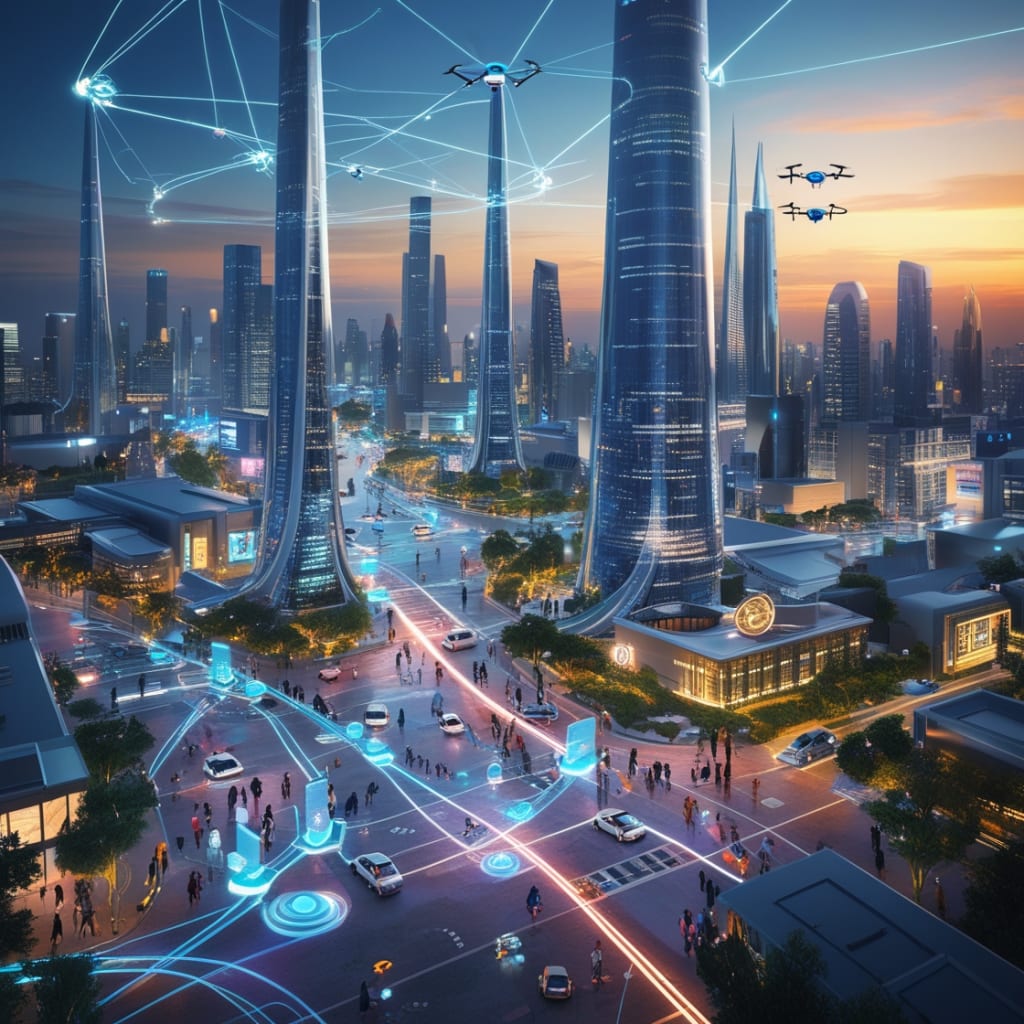
5G is the backbone of smart cities, enabling real-time data collection and analysis to improve urban living. Traffic management systems can optimize flow, reducing congestion and emissions. Energy grids can become more efficient, and public safety systems can respond faster to emergencies, all thanks to 5G connectivity.
Manufacturing
Factories are becoming smarter with the help of 5G. Automation and robotics are taking center stage, improving productivity and precision. Sensors connected via 5G can monitor machinery in real-time, predicting maintenance needs and preventing costly downtime. This level of connectivity is driving the Fourth Industrial Revolution.
How 5G Will Impact Everyday Life
- Smart Homes: Imagine controlling your lights, thermostat, and security system in real-time from anywhere, with no lag. 5G makes this possible, turning homes into interconnected ecosystems that are more efficient and convenient.
- Telecommuting: Remote work has become the norm for many, and 5G is set to make it even easier. With faster video conferencing, seamless cloud access, and real-time collaboration tools, working from home will be more productive and enjoyable.
- Education: Virtual classrooms and online courses will become more immersive with 5G. Students can participate in interactive lessons, access high-quality resources, and collaborate with peers from around the world, breaking down geographical barriers.
- Entertainment: From live-streaming events to immersive VR gaming, 5G is revolutionizing entertainment. High-speed connections ensure uninterrupted enjoyment, while low latency enables real-time interactions.

The Future of 5G and Beyond
- 6G on the Horizon: While 5G is still being rolled out, research into 6G is already underway. This next generation promises even faster speeds, ultra-low latency, and innovations like holographic communication and real-time language translation.
- AI and 5G Integration: Artificial intelligence will play a key role in optimizing 5G networks. From managing traffic to enhancing user experiences, AI and 5G will work together to create smarter, more efficient systems.
- Global Connectivity: 5G has the potential to bridge the digital divide, providing internet access to underserved regions. By connecting remote areas, 5G can drive economic growth and improve quality of life worldwide.
- Quantum Computing and 5G: The combination of quantum computing and 5G could lead to breakthroughs in fields like cryptography, medicine, and artificial intelligence, unlocking possibilities we can’t yet imagine.
Conclusion: A New Era of Connectivity
5G is more than just a faster internet connection—it’s the backbone of the future. From transforming industries to improving daily life, 5G will unlock possibilities that we’ve only dreamed of. As the world becomes more connected, the potential of 5G will continue to expand, creating a smarter, faster, and more efficient future for all.
About the Creator
Europe Creator Economy Market worth USD 112.42 Billion By 2034
Europe Creator Economy Market Overview The Europe Creator Economy Market is projected to reach approximately USD 112.42 Billion by 2034, increasing from USD 14.3 Billion in 2024, reflecting a strong CAGR of 22.9% during the forecast period from 2025 to 2034.
By Roberto Crum3 days ago in Futurism




Comments
There are no comments for this story
Be the first to respond and start the conversation.