
The Human Factor: AI Isn’t the Problem
The danger isn’t what AI can do, but what we stop doing because of it.

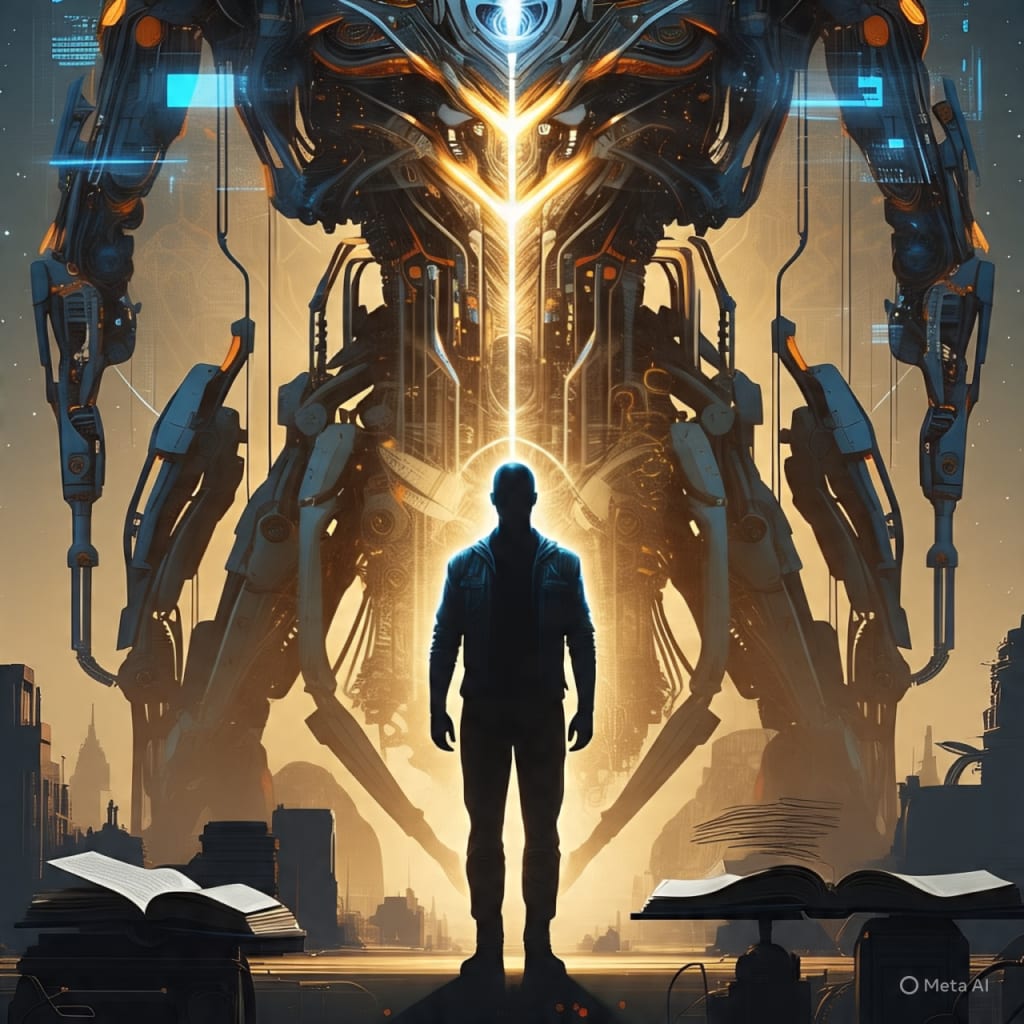
I remember the first time I saw an AI-generated painting. It was beautiful. A soft splash of colors, surreal shapes merging into one another, the illusion of depth and meaning hanging in the pixels like fog. And yet, something in it felt hollow. Not wrong. Just… empty. Like a room painted perfectly but without a window, a scent, or a memory.
In the years that followed, the world rushed toward AI with the same enthusiasm it had once reserved for the internet, smartphones, and space travel. Everywhere I looked, a new tool, a new shortcut, a new miracle was being introduced. Writers, musicians, coders, filmmakers — all being handed this futuristic assistant that could imitate and replicate nearly anything.
People around me split into two groups. There were the hopefuls, believing AI would save time, money, and maybe even the planet. Then there were the fearful, mourning what they saw as the end of human creativity, effort, and purpose. I stood in the middle. Neither impressed nor alarmed. Curious, yes. Observant, certainly. But afraid? No. Because I never believed that AI was the real danger.
What worried me wasn’t what machines were learning, but what humans were forgetting.
Let me explain.
We often praise AI for being fast, accurate, and tireless. But haven’t we always had machines that outperformed us in those areas? Calculators, for example, could solve equations faster than any mathematician. Cameras could capture a moment in a way no sketch ever could. Yet neither made humans stop calculating or painting. We used them, not surrendered to them.
The issue with AI is not that it exists, but that we are ready to hand over things that should remain deeply human. Things that require imperfections, intuition, and soul. It’s not AI replacing us. It’s us willingly stepping aside.
Today, I see people proudly sharing AI-written poems and stories. Some call themselves digital artists after typing ten words into an image generator. Others upload auto-generated music and label themselves composers. But when asked why they created it, what inspired them, or what message lies within the piece, they have nothing to say.
They didn’t create. They clicked.
Creation is not just output. It’s process. It’s frustration, failure, revision, and doubt. It’s that trembling moment before sharing something raw and vulnerable with the world. It’s not just having something beautiful to show but knowing what it cost to bring it into existence.
This, AI can’t understand. And sadly, more and more people seem uninterested in it, too.
Take the restaurant example I often use. McDonald’s is global, efficient, consistent, and wildly successful. But when you think of your favorite meal, your mind doesn’t go to a Big Mac. It goes to that tiny family-run place on the corner, where the food tastes like a memory. You remember the waiter who smiled at your joke, the mismatched chairs, the smell of garlic in the air. That meal meant something because it came with human touch.
AI is like McDonald’s. It can serve the masses quickly and cheaply. But art, stories, emotions — they’re not meant to be mass-produced. They’re meant to be experienced, one heart at a time.
Of course, AI can assist. I use it myself for brainstorming, for getting unstuck, for organizing ideas. But I don’t let it write for me. Because writing is not just about correct grammar or a well-structured plot. It’s about voice. Perspective. Risk. The writer’s fingerprints on every sentence.
I once read a story generated by an AI. It had all the elements of a good tale — characters, tension, conflict, resolution. But it left no aftertaste. I didn’t think about it after I finished. It didn’t spark a memory or a question. It was like reading a manual dressed in metaphors.
In contrast, I recall reading a short, messy story from a young teenager online. It had spelling errors, inconsistent tenses, and awkward dialogue. But it made me cry. Because in that chaos was something real. Pain. Hope. A voice trying to be heard. That is what matters. That is what lasts.
We often hear people say that AI will take all the jobs. Maybe it will take some. Maybe it will even create new ones. But the jobs that will survive, thrive even, are the ones where being human is not a flaw, but the main feature.
Teachers who inspire, not just inform. Doctors who listen. Artists who feel. Writers who bleed on the page. These are not roles AI can truly replace, no matter how much data it consumes.
What AI lacks, and always will, is a childhood. A heartbreak. A first love. A moment of doubt. A reason to keep going. These are the things that breathe life into our creations. Without them, all we have are polished shells.
So no, I am not worried about AI. I am worried about us forgetting that the true power in creation lies not in perfection, but in presence. In being here. In trying, failing, and daring again.
We don’t need to compete with machines. We need to remember why we started creating in the first place.
Not for speed.
Not for applause.
But for connection.
And that is something only we can do.
About the Creator
Mian Suhaib Amin
Advocate by profession, writer by passion. I simplify legal concepts, share stories, and raise voices through meaningful words.
Keep reading
More stories from Mian Suhaib Amin and writers in Futurism and other communities.
The Jungle Doesn’t Cry, But He Did
The sun had not yet risen when the lioness nudged her newborn cub into the world. He was smaller than the others. Quieter. His fur was lighter, his paws clumsier. But his eyes, wide and curious, sparkled like stars that refused to disappear with the morning. They named him Luma, meaning light
By Mian Suhaib Amin8 months ago in Families


Comments
There are no comments for this story
Be the first to respond and start the conversation.