
The History of Early Satellite Development: From Dreams to Orbit
Space

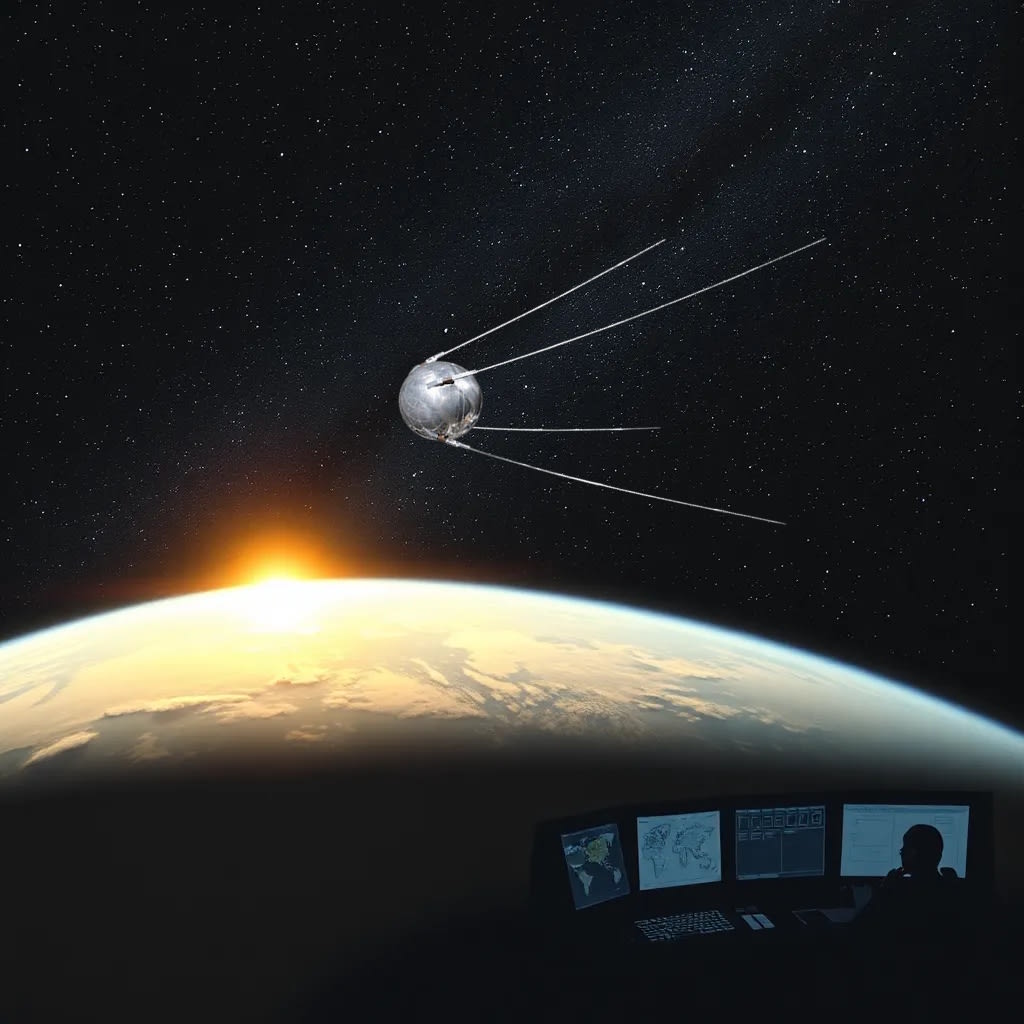
When humanity first dared to dream of conquering space, the concept of a satellite seemed like something out of a science fiction novel. And for a while, that’s exactly what it was—an idea far beyond the reach of existing technology. But by the mid-20th century, that dream began transforming into reality. The story of the first satellites is not just a tale of engineering brilliance—it’s a dramatic narrative of global rivalry, scientific revolution, and an astonishing leap forward in human progress.
From Fiction to Physics: The Roots of the Satellite Dream
The vision of orbiting machines dates back long before we had the means to build them. In the late 19th century, novelist Jules Verne imagined space travel in his stories, inspiring generations with tales of lunar voyages and cosmic adventures. But the first serious scientific groundwork was laid by Konstantin Tsiolkovsky, a pioneering Russian theorist who is often called the father of astronautics.
In the early 20th century, Tsiolkovsky proposed the idea of multistage rockets, laid out the basic equations for motion in space, and even predicted the use of solar power in orbit. His work became a cornerstone for future space engineers, particularly in the Soviet Union, where his theories were embraced and expanded by a new generation of scientists.
The Dawn of the Space Age: Launch of Sputnik-1
The true birth of the space age came on October 4, 1957, when the Soviet Union stunned the world by launching Sputnik-1, the first artificial satellite in history. This small, polished metal sphere—just 58 centimeters in diameter and weighing 83 kilograms—transmitted simple beeping radio signals that were heard around the globe.
Though it seemed simple, creating Sputnik-1 was a colossal engineering challenge. Under the leadership of Sergei Korolev, the chief architect of the Soviet space program, Soviet scientists and engineers faced enormous pressure. Every component had to work perfectly on the first try—failure was not an option. The satellite’s successful launch marked a historic milestone: humanity had placed its first machine beyond Earth’s atmosphere.
The American Response: Explorer 1 and the Space Race
The launch of Sputnik sent shockwaves through the United States. In response, America accelerated its own space program, and in 1958, they launched their first satellite, Explorer 1. Although smaller than Sputnik, Explorer carried scientific instruments and made a groundbreaking discovery: the existence of Earth’s radiation belts, now known as the Van Allen Belts.
This marked the beginning of the space race—a fierce Cold War competition between the U.S. and the Soviet Union, where dominance in space became a symbol of technological and ideological superiority.
Science and Espionage: The Many Roles of Early Satellites
While Sputnik-1 had no scientific instruments, its successor, Sputnik-2, launched later in 1957, carried the first living creature into orbit: Laika, a stray dog from Moscow. Though Laika didn’t survive, the mission provided critical data on the effects of space travel on living organisms, paving the way for future human missions.
Satellites soon took on additional roles—not just for science, but for intelligence. Both superpowers developed reconnaissance satellites capable of photographing military targets from space. Programs like Corona in the U.S. and Zenit in the USSR launched dozens of secret satellites, contributing not only to national security but also to the evolution of satellite imaging, cartography, and remote sensing.
A Lasting Legacy: From Beeping Orbs to GPS and Internet
Those early satellites did more than spark competition—they ignited innovation across multiple fields. Today, the technologies pioneered by those first orbiters form the backbone of our modern world. From telecommunications and weather forecasting to GPS navigation and environmental monitoring, the influence of early satellite development is everywhere.
There are now thousands of satellites orbiting Earth, serving military, scientific, and civilian purposes. But it all began with those initial brave steps, when engineers turned dreams into reality and reached for the stars.
A Fun Fact
Despite its basic function, Sputnik-1 caused a worldwide sensation. Amateur radio enthusiasts around the globe tuned in to hear its rhythmic beeps, and it became a cultural icon almost overnight. The satellite orbited Earth for 92 days before re-entering the atmosphere and burning up on January 4, 1958.
Conclusion: A Story of Boldness and Breakthroughs
The story of the first satellites is more than just a technical achievement—it's a story of bold visionaries, intense rivalries, and the relentless pursuit of the unknown. From Tsiolkovsky’s early theories to the fiery trail of Sputnik-1, these milestones reshaped our understanding of Earth and the universe.
Today, as we rely on satellites for everything from checking the weather to exploring deep space, it's worth remembering the courage and ingenuity that made it all possible. The journey to the stars began with a single beep echoing through the night—and humanity has never looked back.
About the Creator
Keep reading
More stories from Holianyk Ihor and writers in Futurism and other communities.
Astronomy and Philosophy: How the Cosmos Transforms Our Thinking
When we lift our eyes to the night sky, gazing at stars, planets, and the vast darkness beyond, we encounter not only the physical expanse of the universe but also the boundless depths of our own consciousness. Astronomy and philosophy are two ancient ways of understanding the world, and together they create a unique lens that can profoundly shift human thought. But how exactly does the cosmos influence our perception, values, and sense of self?
By Holianyk Ihor7 months ago in Futurism
About Binding Prometheus
I want to start actively advocating on behalf of my own work, and the most valuable part of my canon is, without a doubt, Binding Prometheus, the play I have been working on since 2019 and only finished in 2023 as part of my MA. The play itself is an amalgamation of a million different inspirations. On one end, it evokes the Ancient Greek myth-play, deriving its own title from the earliest extant work of Western drama we have, Aeschylus’s Prometheus Bound. On the other end, it borrows significantly from the sci-fi bulwarks from over the years, namely Mary Shelley’s Frankenstein and Karel Capek’s Rossum’s Universal Robots. The play could be an episode of Black Mirror, I fear. I don’t know. I’ve only ever seen one episode of Black Mirror.
By Steven Christopher McKnight16 days ago in Futurism
United States Beer Market Size and Forecast 2025–2033
Market Overview The United States Beer Market continues to stand as one of the most dynamic segments of the country’s food and beverage industry. According to Renub Research, the market is estimated to expand significantly from US$ 246.72 billion in 2024 to US$ 411.89 billion by 2033, registering a strong Compound Annual Growth Rate (CAGR) of 5.86% from 2025 to 2033. This growth is driven by shifting consumer preferences toward craft and premium beers, innovative brewing techniques, and a growing emphasis on sustainability across production and packaging.
By Janine Root 7 days ago in Futurism


Comments
There are no comments for this story
Be the first to respond and start the conversation.