
The Hidden Vaults
Unveiling the Mystery of 11 Million Embalmed Specimens in the Field Museum's Basement

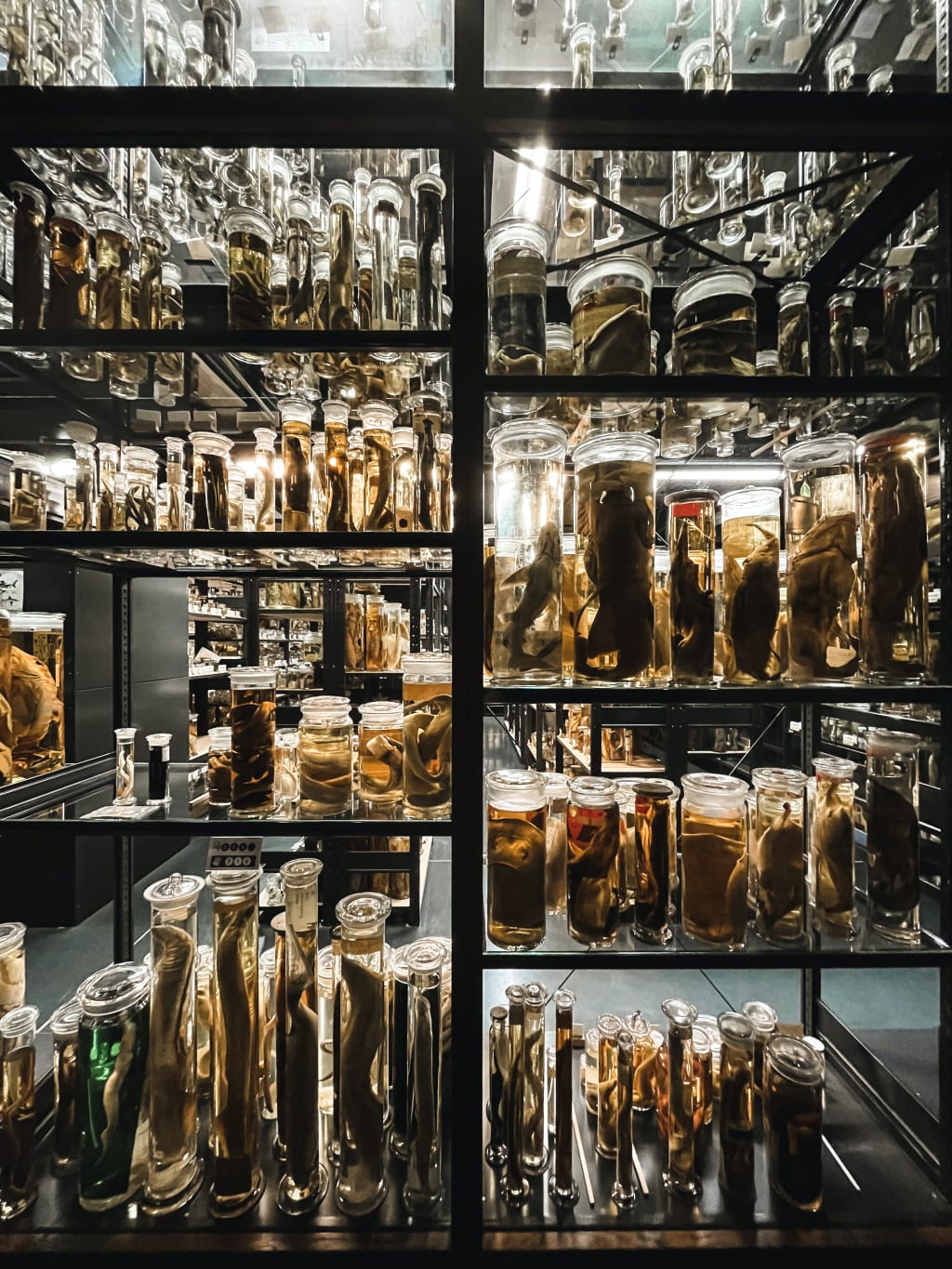
Beneath the grand halls and exhibition spaces of the Field Museum in Chicago lies a secret world, a subterranean repository holding a staggering 11 million embalmed specimens. This vast collection, tucked away in the museum's basement, represents a treasure trove of biological diversity and a testament to the institution's commitment to scientific inquiry and preservation. In this article, we delve into the captivating story behind the Field Museum's hidden vaults and explore the reasons for housing such an extensive collection.
1. A Legacy of Exploration and Discovery:
The Field Museum, with its origins dating back to the 1893 World's Columbian Exposition, has a rich and flourishing history of supporting scientific research and exploration. Many of the embalmed specimens stored in the basement are relics from expeditions conducted over the course of more than a century. These specimens serve as a time capsule, preserving the biodiversity of regions that might have undergone significant changes due to human activities or environmental shifts.
2. Scientific Inquiry and Taxonomic Research:
The embalmed specimens represent an invaluable resource for taxonomic research, allowing scientists to study the intricate details of different species. From insects to mammals, the collection spans a vast array of organisms, providing researchers with a comprehensive understanding of the natural world. Taxonomic research based on these specimens contributes to the identification, classification, and documentation of species, aiding in conservation efforts and ecological studies.
3. Preserving Endangered and Extinct Species:
The Field Museum's basement serves as a mausoleum for species that have faced extinction or are no longer present in their natural habitats. As human activities continue to impact ecosystems worldwide, the specimens in the collection become crucial references for understanding the historical distribution and behavior of species that may no longer exist in the wild.
4. Biodiversity Documentation and Conservation:
In an era of unprecedented biodiversity loss, the stored specimens play a vital role in documenting the diversity of life on Earth. These specimens are akin to a biological library, where each embalmed organism represents a chapter in the story of our planet's ecosystems. The information gleaned from these preserved specimens contributes to conservation efforts by informing policymakers, researchers, and the public about the importance of protecting and preserving biodiversity.
5. Educational Resources and Public Outreach:
While the basement vaults may be hidden from public view, the specimens within them serve as educational resources for researchers, students, and the general public. The Field Museum, with its commitment to science education, utilizes these specimens to create exhibits, conduct workshops, and facilitate educational programs. By showcasing the diversity of life, the museum inspires awe and appreciation for the natural world.
6. Advancements in Scientific Techniques:
As technology and scientific methodologies advance, the stored specimens become increasingly valuable. Researchers can revisit these specimens with new tools and techniques, extracting additional information about genetics, physiology, and ecology. The evolving field of molecular biology, for example, allows scientists to delve deeper into the genetic makeup of species, unraveling intricate relationships and unlocking new layers of understanding.
7. Baseline for Environmental Monitoring:
The Field Museum's basement archive also acts as a baseline for environmental monitoring. By comparing historical specimens with contemporary samples, scientists can assess changes in species abundance, distribution, and morphology. This long-term perspective is essential for identifying the impacts of environmental stressors and human activities on ecosystems.
8. Contributing to Global Research Initiatives:
The Field Museum actively collaborates with scientific institutions globally, contributing to a broader network of research initiatives. Specimens from the basement collection participate in large-scale projects aimed at addressing global challenges, such as tracking the effects of climate change on biodiversity or understanding the spread of diseases among wildlife.
The Field Museum's basement, with its 11 million embalmed specimens, stands as a testament to the institution's dedication to the pursuit of knowledge and the preservation of Earth's biodiversity. Far from being a mere storage space, this hidden vault represents a living record of our planet's natural history, encapsulating the stories of species, ecosystems, and the changing dynamics of life on Earth. As the museum continues to adapt to the evolving landscape of scientific research and education, the basement remains a symbol of the enduring importance of biological collections in advancing our understanding of the world around us.
About the Creator
Keep reading
More stories from Dim Esther and writers in Futurism and other communities.
Memory Evolution
Memory, the repository of our experiences, shapes our identity and guides us through life's labyrinth. However, in the age of constant connectivity, digital stimulation, and information overload, the nature of our memories is undergoing a subtle but profound transformation. This article delves into the intriguing question: Are your new memories replacing the old?
By Dim Esther2 years ago in Futurism
About Binding Prometheus
I want to start actively advocating on behalf of my own work, and the most valuable part of my canon is, without a doubt, Binding Prometheus, the play I have been working on since 2019 and only finished in 2023 as part of my MA. The play itself is an amalgamation of a million different inspirations. On one end, it evokes the Ancient Greek myth-play, deriving its own title from the earliest extant work of Western drama we have, Aeschylus’s Prometheus Bound. On the other end, it borrows significantly from the sci-fi bulwarks from over the years, namely Mary Shelley’s Frankenstein and Karel Capek’s Rossum’s Universal Robots. The play could be an episode of Black Mirror, I fear. I don’t know. I’ve only ever seen one episode of Black Mirror.
By Steven Christopher McKnight16 days ago in Futurism
Packaged Food Market: Snacking Culture, On-the-Go Consumption & Industry Growth
According to IMARC Group's latest research publication, the global packaged food market size reached USD 2,618.2 Billion in 2024. Looking forward, IMARC Group expects the market to reach USD 4,709.0 Billion by 2033, exhibiting a growth rate of 6.68% during 2025-2033.
By Andrew Sullivan2 days ago in Futurism


Comments (1)
Super!!! Excellent story!!!