
The Hidden Power of Nanotechnology – Shaping the Future of Science
Discover how tiny particles are revolutionizing medicine, technology, and everyday life.

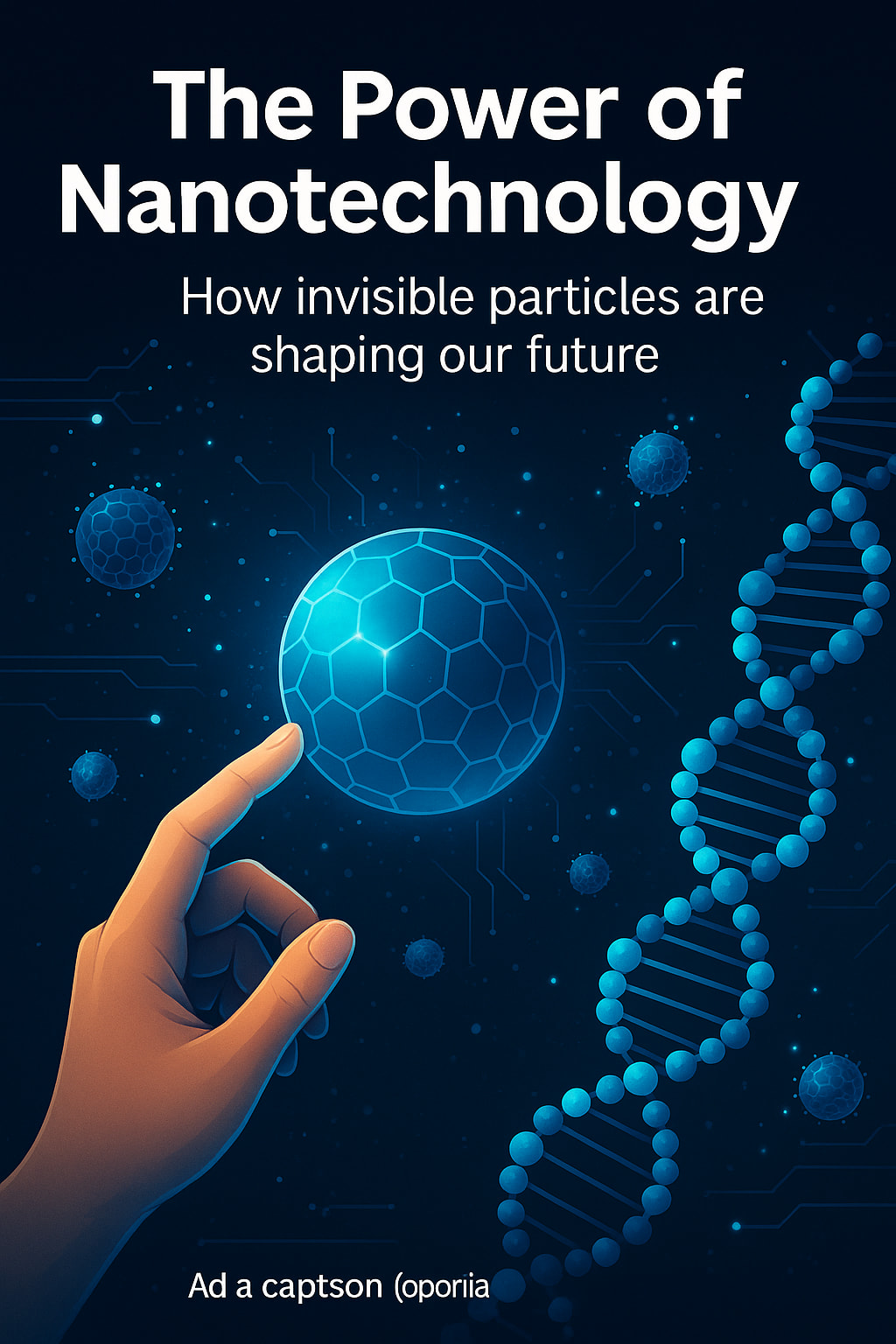
Nanotechnology is a branch of science that deals with structures and materials on the scale of nanometers—one billionth of a meter. To put it simply, it's about working with particles so small that they’re invisible to the human eye. Despite their tiny size, these particles hold the power to transform our world in ways we never imagined.
The word “nano” comes from the Greek word meaning “dwarf.” At the nanoscale, materials behave differently from their larger-scale counterparts. Scientists can manipulate atoms and molecules to create stronger, lighter, and more reactive materials. This invisible technology is now being used in almost every field, from medicine to electronics, from agriculture to energy.
One of the most promising areas of nanotechnology is medicine. Scientists have developed nanoparticles that can travel inside the human body to deliver drugs directly to cancer cells. This means that treatments like chemotherapy can be more targeted, attacking only the harmful cells and leaving healthy ones unharmed. Nanobots—tiny robots at the nanoscale—are also being researched for future use inside the body, where they could repair damaged tissues or fight diseases from within.
In the world of electronics, nanotechnology has allowed us to create smaller, faster, and more powerful devices. From smartphones to laptops, nanomaterials are used to improve battery life, increase memory storage, and make displays clearer and brighter. Quantum dots, for example, are nanoparticles that produce precise colors in LED screens, giving us better image quality.
Energy production is another area where nanotechnology is playing a vital role. Solar panels made with nanomaterials are more efficient at capturing sunlight and converting it into electricity. Nanotech is also helping to create better batteries that last longer and charge faster, which is essential for electric cars and renewable energy storage.
In environmental science, nanotechnology is being used to clean water and air. Nanoparticles can filter out harmful chemicals and bacteria from drinking water, making it safe for consumption in areas where clean water is scarce. In air purification systems, nanomaterials capture pollutants, reducing the risk of respiratory illnesses.
Even food and agriculture are benefiting from nanotechnology. Nano-coated packaging materials help keep food fresh for longer periods by preventing the growth of bacteria. In farming, nanoparticles are used to deliver nutrients directly to plant roots, making agriculture more efficient and sustainable.
One of the most fascinating uses of nanotechnology is in the development of smart materials. These are materials that can change their properties depending on their environment. For example, fabrics coated with nanomaterials can repel water and stains, or even regulate temperature, keeping you warm in winter and cool in summer.
However, with great power comes great responsibility. While nanotechnology holds incredible potential, there are concerns about its safety. Because nanoparticles are so small, they can enter the human body or the environment in ways that larger particles cannot. Scientists are carefully studying the long-term effects of nanomaterials to ensure that they don’t pose hidden risks to people or ecosystems.
The future of nanotechnology looks extremely promising. Researchers are working on nanoelectronics that could revolutionize computing by creating processors thousands of times faster than today’s computers. In medicine, scientists hope to develop nanorobots that can heal injuries at the cellular level or even reverse aging.
Imagine a future where your clothes clean themselves, your phone battery lasts for weeks, and diseases are cured before you even feel sick—all made possible through nanotechnology.
In conclusion, nanotechnology is not just science fiction—it’s already shaping our world silently and invisibly. As researchers continue to explore the potential of this tiny technology, we can expect even more groundbreaking discoveries that will change how we live, work, and interact with the world around us.
About the Creator
Leya kirsan official
✨ Telling tales that haunt your thoughts 👻 | Lover of old secrets & eerie whispers 🌙 | Dive into darkness with me… if you dare 💀📖
Keep reading
More stories from Leya kirsan official and writers in Futurism and other communities.
When Time Started Running Too Fast
Have you noticed how time seems to be speeding up? One moment it’s Monday morning, and in the blink of an eye, it’s already Sunday night again. Weeks fly by, months disappear, and we keep saying, “This year went by so fast!” But is it just a feeling — or is something truly happening to time itself? ⏳
By Leya kirsan official 7 months ago in Futurism
GCC Halal Tourism Market Analysis: Key Drivers, Industry Trends & Future Outlook
According to IMARC Group's latest research publication, "GCC Halal Tourism Market: Industry Trends, Share, Size, Growth, Opportunity and Forecast 2025-2033", The GCC halal tourism market size was valued at USD 7.20 Billion in 2024. Looking forward, IMARC Group estimates the market to reach USD 12.80 Billion by 2033, exhibiting a growth rate of 5.84% during 2025-2033.
By Abhay Rajput4 days ago in Futurism
Why AI Website Builders Are Transforming Elementor Workflows in 2026
Website development has entered a new phase in 2026 as artificial intelligence becomes deeply integrated into the design process. Once known primarily for its drag-and-drop simplicity, Elementor is now evolving into an AI-assisted design platform. With the introduction of tools like Elementor AI, the way designers, developers, and businesses build WordPress websites is rapidly changing.
By Shane Smith5 days ago in Futurism




Comments (2)
Far from being confined to speculative fiction, nanotechnology is already revolutionizing our world at an imperceptible scale. As research accelerates, this frontier of the infinitesimal promises transformative breakthroughs—redefining medicine, industry, and even human potential. The future isn’t just smaller; it’s smarter, subtler, and astonishingly close.
Wow 🥰🥰