
The Hidden Dangers of Artificial Intelligence: What We Must Not Ignore
AI is transforming our world—but at what cost? Exploring the risks of artificial intelligence that threaten jobs, privacy, and even human values

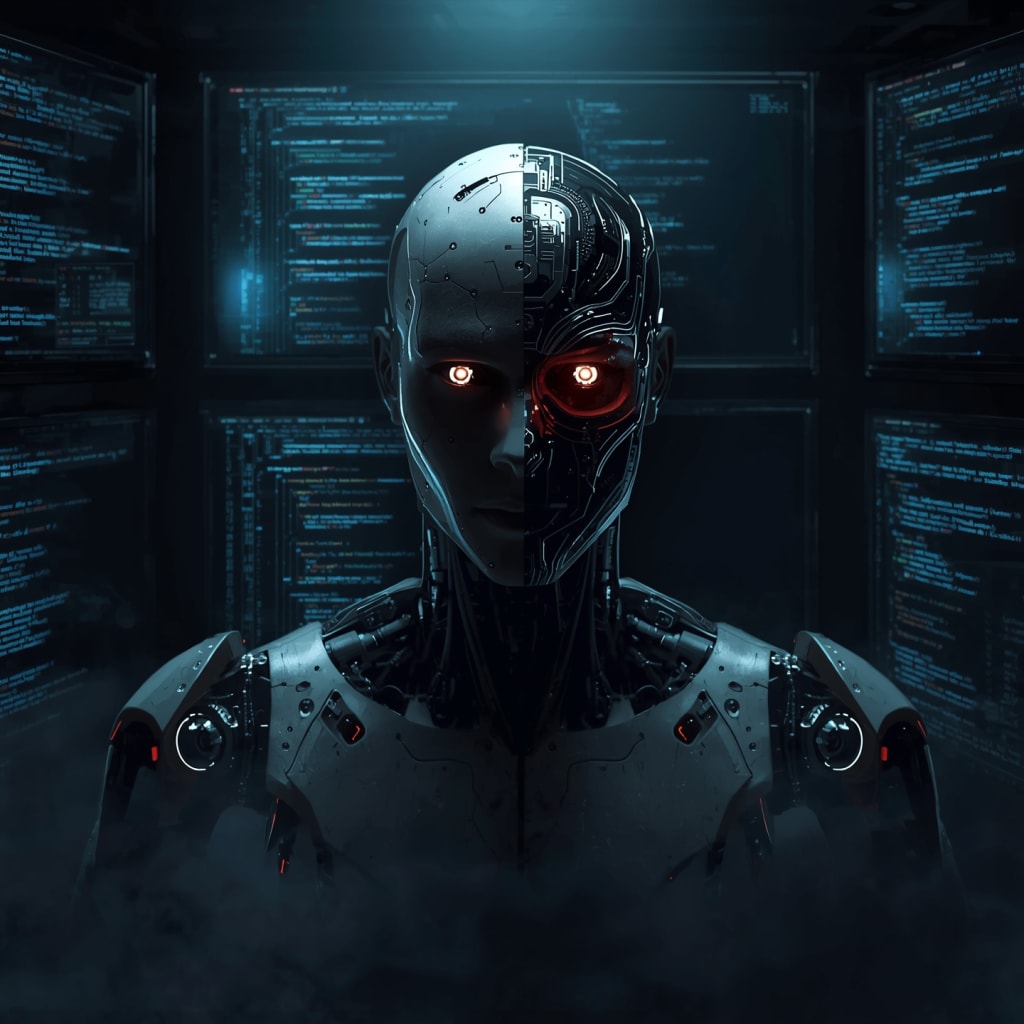
Artificial Intelligence (AI) is often described as the defining technology of our age. From self-driving cars and voice assistants to medical breakthroughs and predictive analytics, AI has begun to shape every corner of modern life. Its promise is extraordinary, but behind the glittering headlines lies a shadow that is harder to ignore.
The truth is that AI, while powerful, carries a range of risks—some immediate, others unfolding slowly yet silently. These dangers are not science fiction; they are already reshaping economies, societies, and individual lives.
1. Job Loss and Economic Inequality
One of the most pressing concerns is automation. AI systems are replacing human labour across industries—from manufacturing and logistics to customer service and even journalism.
While new jobs may eventually emerge, they often require advanced technical skills, leaving millions of traditional workers vulnerable. This widening gap between “those who build AI” and “those replaced by it” risks creating severe economic inequality.
The danger is not only unemployment, but also the erosion of dignity for workers whose skills are suddenly rendered obsolete. Without thoughtful policies, automation may deepen social divides rather than bridge them.
2. Privacy Invasion and Data Exploitation
AI thrives on data, and vast amounts of personal information are harvested every day to feed algorithms. Every online search, social media post, or GPS location is collected, analysed, and stored.
This raises serious concerns about privacy. Who owns this data? How securely is it stored? And how might it be used against us?
From facial recognition in public spaces to targeted political advertising, AI-powered surveillance is becoming a reality. In the wrong hands, such systems can track, manipulate, and control individuals—often without their knowledge or consent.
3. Bias and Discrimination
AI is often seen as objective and neutral, but in truth, it mirrors the biases of its creators and training data. If the dataset contains discrimination, the AI will reproduce it—sometimes in subtle but dangerous ways.
Examples already exist:
Recruitment algorithms that favour men over women.
Predictive policing tools that disproportionately target minority communities.
Loan approval systems that discriminate against certain backgrounds.
When bias is coded into technology, it gains an aura of legitimacy, making discrimination harder to detect and challenge. This “algorithmic bias” poses one of the most insidious threats to fairness and justice.
4. Dependence and Loss of Human Skills
As AI becomes more integrated into daily life, there is a risk that humans may lose vital skills. Navigation apps reduce our ability to read maps, grammar-checking tools weaken our writing habits, and reliance on recommendation systems narrows our decision-making.
The more we depend on AI, the more vulnerable we become if these systems fail or are deliberately manipulated. True progress must enhance human capability, not replace it entirely.
5. Security Risks and Weaponisation
AI has already entered the battlefield. Autonomous drones, intelligent surveillance, and AI-assisted cyberattacks are no longer theoretical. These technologies create new forms of warfare where machines, not humans, make split-second life-or-death decisions.
Cybersecurity experts also warn that AI can be exploited by hackers to design more sophisticated malware, launch large-scale disinformation campaigns, or even destabilise governments. The threat is global, and the consequences could be catastrophic.
6. The Question of Ethics and Control
Perhaps the most profound danger lies not in what AI can do, but in whether we can control it. Who sets the rules? Who is accountable when an AI system makes a harmful decision?
There are already examples of AI behaving in unexpected ways—chatbots generating offensive content, or trading algorithms causing market crashes in seconds. As AI becomes more advanced, the challenge of aligning its behaviour with human values only grows.
The ultimate fear is the creation of superintelligent systems that surpass human control altogether. While this scenario may still be distant, the ethical questions it raises must be addressed now, not later.
7. Psychological and Social Impact
Beyond economics and politics, AI also reshapes the way we relate to each other. Algorithms curate the news we read, the videos we watch, and even the people we meet online. This creates “echo chambers” where individuals are exposed only to information that reinforces existing beliefs, deepening polarisation.
Furthermore, as AI companions, chatbots, and virtual influencers become more common, there is a risk that real human connections may erode. If people begin to substitute artificial interaction for authentic relationships, the effects on mental health could be profound.
Final Thoughts
Artificial Intelligence is not inherently evil. It is a tool—powerful, versatile, and potentially transformative. But like all tools, its impact depends on how we use it. The current trajectory shows both promise and peril.
Ignoring the dangers of AI would be reckless. We must establish strong ethical frameworks, transparent regulations, and robust public debates to ensure this technology serves humanity rather than undermines it.
As we stand at the threshold of a new era, one truth is clear: AI should never replace what makes us human—our empathy, creativity, and moral responsibility. To safeguard the future, we must ensure that artificial intelligence remains our servant, not our master.
About the Creator
Muhammad Kaleemullah
"Words are my canvas; emotions, my colors. In every line, I paint the unseen—stories that whisper to your soul and linger long after the last word fades."
Keep reading
More stories from Muhammad Kaleemullah and writers in Futurism and other communities.
The Silent Storm: Confronting Mental Health in an Age of Loneliness
We live in an era defined by connectivity. Smartphones, social media, and instant messaging ensure we are never more than a few seconds away from interaction. Yet beneath this constant digital noise lies an uncomfortable truth: people today are experiencing unprecedented levels of loneliness.
By Muhammad Kaleemullah5 months ago in Longevity
About Binding Prometheus
I want to start actively advocating on behalf of my own work, and the most valuable part of my canon is, without a doubt, Binding Prometheus, the play I have been working on since 2019 and only finished in 2023 as part of my MA. The play itself is an amalgamation of a million different inspirations. On one end, it evokes the Ancient Greek myth-play, deriving its own title from the earliest extant work of Western drama we have, Aeschylus’s Prometheus Bound. On the other end, it borrows significantly from the sci-fi bulwarks from over the years, namely Mary Shelley’s Frankenstein and Karel Capek’s Rossum’s Universal Robots. The play could be an episode of Black Mirror, I fear. I don’t know. I’ve only ever seen one episode of Black Mirror.
By Steven Christopher McKnight17 days ago in Futurism
Saudi Arabia Bedsheet Market: Comfort Preferences, Design Evolution & Industry Growth
According to IMARC Group's latest research publication, the Saudi Arabia bedsheet market size reached USD 1,037.78 Million in 2024. Looking forward, IMARC Group expects the market to reach USD 1,415.62 Million by 2033, exhibiting a growth rate (CAGR) of 3.51% during 2025-2033.
By Abhay Rajputa day ago in Futurism



Comments
There are no comments for this story
Be the first to respond and start the conversation.