
The Golden Age of Space Exploration: Are We Living in It Now?
Space

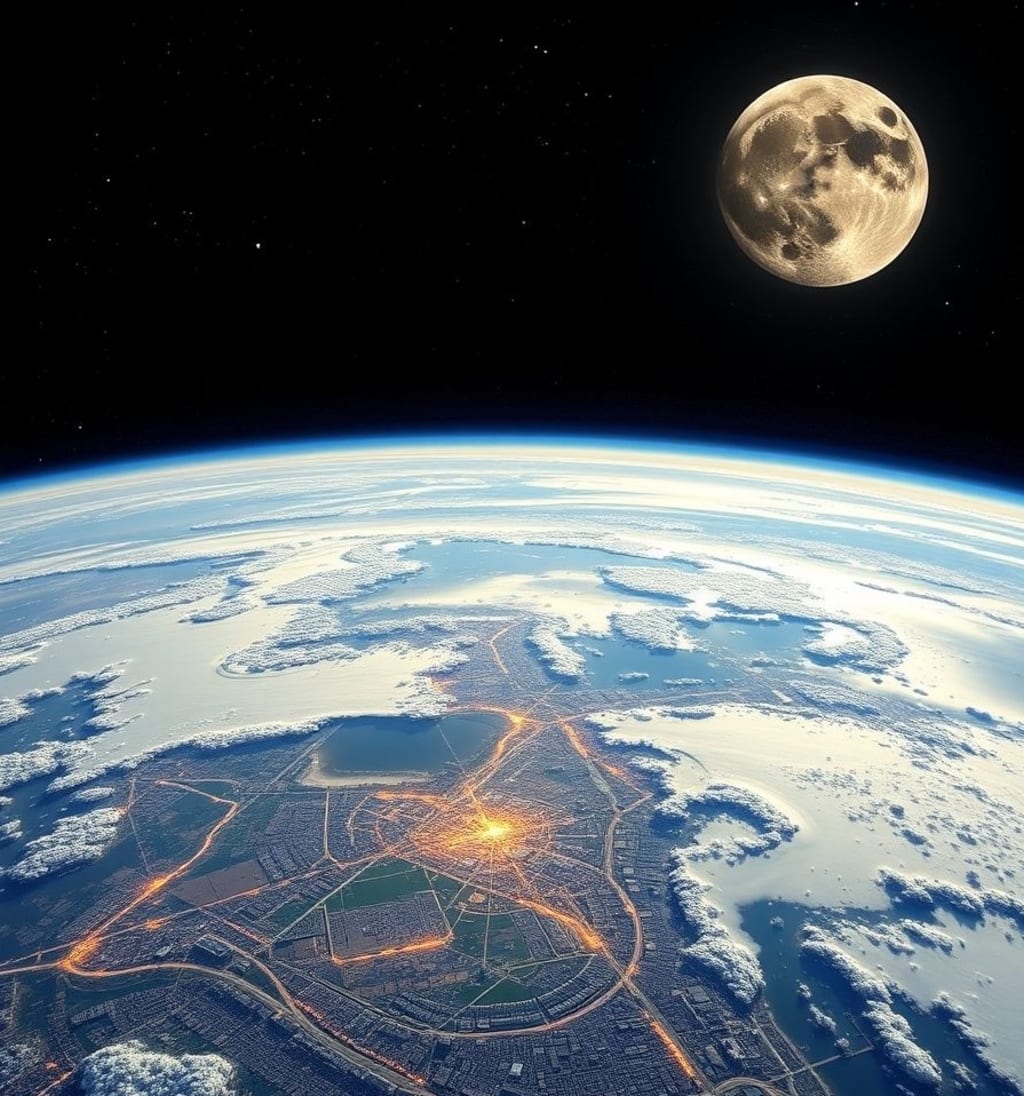
In recent years, one phrase has been appearing more and more in scientific articles, media headlines, and space documentaries: “the golden age of space exploration.” But what exactly does this mean? And why do so many experts believe that we are living through one of the most thrilling and fast-paced chapters in the history of humanity's journey to the stars?
What Is a “Golden Age”?
Traditionally, a golden age refers to a period of great achievements and rapid progress in a particular field—be it science, culture, technology, or the arts. It’s a time marked by innovation, breakthroughs, and bold ambitions. When it comes to space, a golden age means a time when our efforts to understand and explore the universe accelerate dramatically—stretching from Earth’s orbit to the distant corners of the cosmos.
The First Golden Age: The Era of Pioneers
Historians and scientists often point to the mid-20th century as the first golden age of space exploration. It began in 1957 with the launch of Sputnik-1, the first artificial satellite, by the Soviet Union. Just four years later, Yuri Gagarin became the first human in space, followed by the legendary Apollo missions, which culminated in humanity’s first steps on the Moon in 1969.
This was a time of intense competition between superpowers, primarily the U.S. and the USSR, driven by both scientific curiosity and geopolitical rivalry. The Space Race pushed technological boundaries, led to the creation of space stations and robotic probes, and permanently changed our relationship with the stars.
The Modern Golden Age: A New Wave of Discovery
While the early milestones of spaceflight were remarkable, many believe the second and even more ambitious golden age is unfolding right now. Why? Because today, space exploration is no longer the exclusive domain of governments and national pride. It's global, collaborative, and powered by both public and private innovation.
Here’s what defines this modern space revolution:
1. The Rise of Private Space Companies
The entrance of private players like SpaceX, Blue Origin, and Rocket Lab has completely reshaped the landscape. Reusable rockets, commercial launches, and affordable access to space have made the industry faster, more dynamic, and less dependent on government funding. SpaceX’s Falcon 9 booster routinely lands back on Earth and flies again—something that was science fiction just 15 years ago.
2. New Frontiers: The Moon, Mars, and Beyond
NASA’s Artemis program aims to return humans to the Moon and eventually establish a permanent lunar base. Robotic missions are exploring Mars more deeply than ever—rovers like Perseverance are searching for signs of ancient life, while orbiters scan the Martian surface for future landing sites. The James Webb Space Telescope is peering deeper into the universe than any instrument before, revealing galaxies born just a few hundred million years after the Big Bang.
3. Global Cooperation
Unlike the Cold War era, today’s space efforts involve dozens of countries working together. The Webb telescope, for instance, is a collaboration between NASA, the European Space Agency (ESA), and the Canadian Space Agency. Meanwhile, countries like India, China, the UAE, and Japan are developing robust space programs of their own, sending missions to the Moon, Mars, and asteroids.
4. Wider Access to Space Data and Education
What once required a massive government agency can now be done by university teams or even high school students. Satellite data is more available than ever, allowing for citizen science, small satellite (CubeSat) projects, and educational space experiments around the world.
5. The Hunt for Extraterrestrial Life
Thousands of exoplanets—planets orbiting other stars—have been discovered, many of them in the so-called habitable zone. Telescopes are now scanning these worlds for atmospheres and chemical signatures that could indicate life. Public fascination with alien worlds has never been greater, and the science is finally catching up to the imagination.
What Comes Next?
If this is our golden age, then its future chapters promise to be even more incredible. Humanity is planning a permanent return to the Moon, a crewed mission to Mars, and possibly asteroid mining. The mysteries of dark matter, black holes, and the nature of time itself remain unsolved—but we’re getting closer.
Space tourism, once a fantasy, is already a reality. Civilians have traveled to the International Space Station, and companies are selling suborbital flights. In a few decades, traveling beyond Earth may be as routine as flying from New York to Tokyo.
Conclusion
The phrase “golden age of space exploration” isn’t just poetic—it’s an accurate description of where we are right now. We are witnessing an explosion of activity, innovation, and curiosity. Humanity is no longer just observing the stars—we're reaching out and touching them.
Whether you're a scientist, a student, or simply a dreamer looking up at the night sky, this era offers something for everyone. We are living in an age where the impossible is becoming possible, and the stars are no longer out of reach.
About the Creator
Keep reading
More stories from Holianyk Ihor and writers in Futurism and other communities.
How Space Affects Human DNA: Genetics in Microgravity
Space is not just a silent, star-filled void. It’s a harsh, alien environment that pushes the human body to its limits. In space, gravity is almost nonexistent, radiation levels are dangerously high, and our internal biological rhythms become disoriented. Among the many fascinating challenges posed by space travel, one of the most intriguing is how space affects human DNA — the blueprint of life.
By Holianyk Ihor7 months ago in Futurism
About Binding Prometheus
I want to start actively advocating on behalf of my own work, and the most valuable part of my canon is, without a doubt, Binding Prometheus, the play I have been working on since 2019 and only finished in 2023 as part of my MA. The play itself is an amalgamation of a million different inspirations. On one end, it evokes the Ancient Greek myth-play, deriving its own title from the earliest extant work of Western drama we have, Aeschylus’s Prometheus Bound. On the other end, it borrows significantly from the sci-fi bulwarks from over the years, namely Mary Shelley’s Frankenstein and Karel Capek’s Rossum’s Universal Robots. The play could be an episode of Black Mirror, I fear. I don’t know. I’ve only ever seen one episode of Black Mirror.
By Steven Christopher McKnight18 days ago in Futurism
How to Succeed at the Benson Directory®
Congratulations and welcome to the Benson Directory® employee #22391! As our newest call handler, you will have the privilege of speaking with dozens of unique and interesting people on a daily basis as well as the opportunity to earn bonuses for high performance. Contained within this handbook you will find a set of ease to follow instructions designed to help you settle in to your new role and begin paving the way to success.
By S. A. Crawford2 days ago in Fiction



Comments (1)
💯👍