
The Future of Work: Navigating Technological Disruption and Evolving Workplace Dynamics
Strategies, Skills, and Ethical Considerations for Thriving in a Digital Economy


The landscape of work is undergoing a profound transformation, driven by rapid advancements in technology, shifting demographic trends, and evolving economic paradigms. As automation, artificial intelligence (AI), and digitalization redefine industries and job roles, organizations and individuals alike face unprecedented challenges and opportunities. This article explores the future of work in the context of technological disruption, examining key trends, emerging skills, ethical considerations, and strategies for navigating the evolving dynamics of the workplace.
Technological Disruption and the Future of Jobs
The advent of automation and AI is reshaping the global labor market, automating routine tasks, and augmenting human capabilities in diverse sectors. While these technologies enhance efficiency and productivity, they also raise concerns about job displacement and the need for upskilling and reskilling initiatives. Industries such as manufacturing, transportation, finance, and customer service are at the forefront of automation adoption, with implications for workforce composition and skill requirements.
Emerging Trends in the Future of Work
Remote Work and Digital Nomadism: The COVID-19 pandemic accelerated the shift towards remote work, with organizations embracing flexible work arrangements and virtual collaboration tools. Digital nomadism, facilitated by digital connectivity and cloud computing, enables individuals to work remotely from anywhere in the world, transforming traditional notions of office-based employment.
Gig Economy and Freelancing: The rise of the gig economy and freelance platforms has democratized access to flexible work opportunities, enabling individuals to leverage their skills and expertise on a project basis. Platforms like Upwork, Freelancer, and Fiverr connect freelancers with global clients, fostering a decentralized workforce and agile business models.
AI and Augmented Intelligence: AI-powered technologies, including machine learning algorithms and natural language processing, augment human decision-making processes and cognitive abilities. From predictive analytics in finance to personalized customer experiences in retail, AI enhances operational efficiencies and drives innovation across industries, reshaping job roles and skill requirements.
Skills for the Future Workforce
In a technology-driven economy, acquiring and developing in-demand skills is crucial for career longevity and professional growth. Key skills include:
Digital Literacy and Technology Proficiency: Proficiency in digital tools, cloud computing, data analysis, and cybersecurity is essential for navigating digital work environments and leveraging emerging technologies effectively.
Adaptability and Resilience: The ability to adapt to technological change, learn new skills rapidly, and navigate uncertainty fosters resilience in dynamic work environments characterized by disruption and innovation.
Critical Thinking and Problem-Solving: Critical thinking skills enable individuals to analyze complex information, evaluate alternative solutions, and make informed decisions, driving innovation and problem-solving in diverse organizational contexts.
Creativity and Innovation: Creativity fuels innovation and enables individuals to generate novel ideas, products, and solutions that contribute to organizational growth and competitiveness in a global marketplace.
Ethical Considerations in the Future of Work
As organizations embrace digital transformation and AI-driven technologies, ethical considerations surrounding data privacy, algorithmic bias, and workplace automation come to the forefront. Ensuring transparency in AI decision-making processes, safeguarding employee data privacy rights, and promoting diversity and inclusion in hiring practices are essential for fostering ethical workplaces and mitigating unintended consequences of technological disruption.
Strategies for Adapting to the Future of Work
Lifelong Learning and Continuous Skill Development: Embracing a growth mindset and investing in lifelong learning initiatives, including online courses, certifications, and professional development programs, equips individuals with the skills and knowledge needed to thrive in a rapidly evolving job market.
Collaborative Leadership and Agile Work Cultures: Fostering collaborative leadership and agile work cultures empowers teams to innovate, adapt to change, and leverage diverse perspectives to drive organizational success in an era of technological disruption.
Workforce Diversity and Inclusion: Promoting workforce diversity and inclusive hiring practices enhances organizational resilience, creativity, and innovation, reflecting diverse customer demographics and perspectives in product development and decision-making processes.
Remote Work and Flexible Work Arrangements: Embracing remote work and flexible work arrangements supports employee well-being, work-life balance, and productivity while enabling organizations to access a global talent pool and reduce operational costs.
Conclusion
The future of work is characterized by technological disruption, rapid innovation, and evolving workforce dynamics. By embracing digital transformation, fostering a culture of lifelong learning, and prioritizing ethical considerations, organizations and individuals can navigate the challenges and opportunities of the digital economy effectively.
As we advance towards a future where automation, AI, and remote work redefine the workplace, proactive adaptation, continuous skill development, and collaborative leadership will be instrumental in shaping a resilient, inclusive, and future-ready workforce capable of driving sustainable growth and innovation in the global economy.
About the Creator
Keep reading
More stories from bachir boukhalfa and writers in Futurism and other communities.
The Future of Work: Adapting to Technological Disruption and Changing Dynamics in the Workplace
The landscape of work is undergoing a profound transformation, driven by rapid advancements in technology, shifting demographic trends, and evolving economic paradigms. As automation, artificial intelligence (AI), and digitalization redefine industries and job roles, organizations and individuals alike face unprecedented challenges and opportunities. This article explores the future of work in the context of technological disruption, examining key trends, emerging skills, ethical considerations, and strategies for navigating the evolving dynamics of the workplace.
By bachir boukhalfa 2 years ago in Futurism
Polybutadiene Rubber Market Trends: Green Tires, Low Rolling Resistance & Industry Outlook to 2034
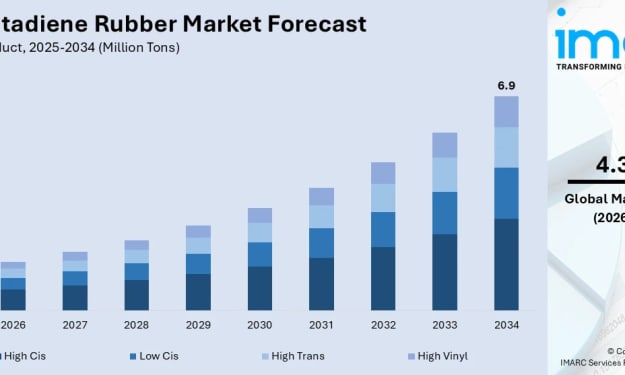
Rising demand from the automotive sector, particularly for high-performance tires, and the increasing use of synthetic rubber in industrial goods are propelling the polybutadiene rubber market. Supported by advancements in polymerization technology and a shift toward sustainable, low-rolling-resistance materials, the industry continues to expand across key manufacturing hubs. According to IMARC Group’s latest data, the global polybutadiene rubber market size reached 4.7 Million Tons in 2025. Looking forward, IMARC Group estimates the market to reach 6.9 Million Tons by 2034, exhibiting a CAGR of 4.31% during 2026-2034.
By Andrew Sullivan7 days ago in Futurism
Australia Energy Storage Market: Renewable Integration, Battery Deployment & Grid Stability
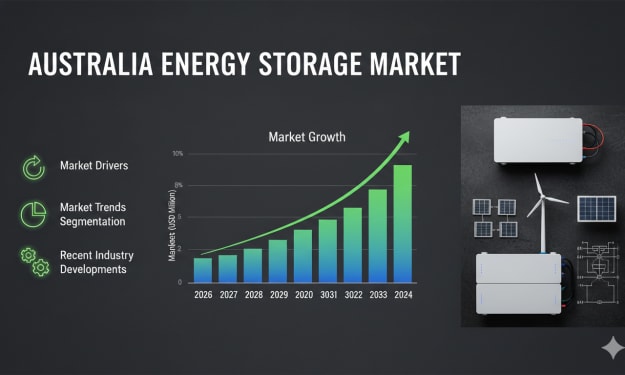
According to IMARC Group, the Australia energy storage market reached 4.72 GW in 2025 and is projected to expand significantly to 19.81 GW by 2034, exhibiting a compound annual growth rate (CAGR) of 17.28% during 2026–2034. The rapid growth of the sector reflects the country’s accelerating transition toward renewable energy and the increasing need for reliable electricity systems across Australia. As solar and wind power generation expands, energy storage technologies such as battery energy storage systems (BESS) are becoming essential for maintaining grid reliability and balancing electricity supply and demand. Government policies supporting clean energy adoption, declining battery costs, and investments in grid modernization are significantly strengthening Australia energy storage market share while enabling the integration of renewable power into the national electricity network.
By Shrestha Royabout 10 hours ago in Futurism
Review of 'Man on the Run'
My wife and I saw Man on the Run, a nearly 2-hour documentary on Amazon Prime, about Wings, Paul McCartney's group that flew around the world from shortly after The Beatles broke up in early 1970 to shortly after John Lennon was murdered at the end of 1980, making a Beatles reunion forever impossible.
By Paul Levinson5 days ago in Beat


Comments
There are no comments for this story
Be the first to respond and start the conversation.