
The Future of Transportation: Exploring Self-Driving Cars and Hyperloop Technology
Embrace The Future of Transportation
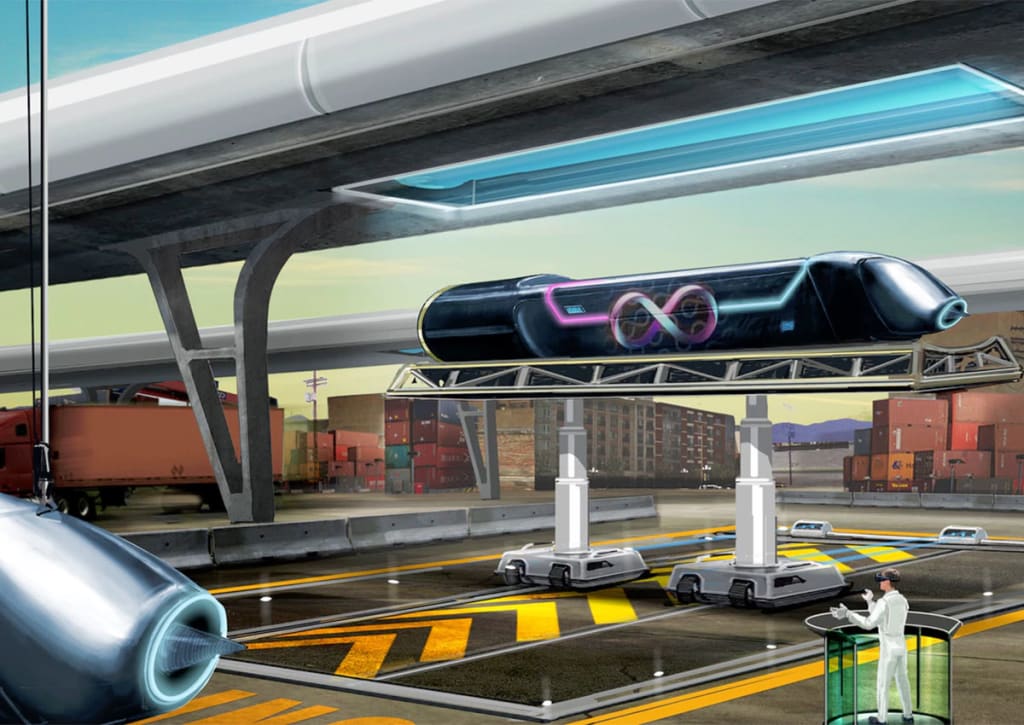
The transportation industry is on the brink of a revolution, with groundbreaking advancements shaping the way we travel. Two technologies, in particular, have captured the world's attention: self-driving cars and Hyperloop. These innovations promise to transform the way we commute, offering enhanced safety, efficiency, and sustainability. In this article, we will delve into the future of transportation, exploring the potential of self-driving cars and Hyperloop technology. From autonomous vehicles navigating our roads to high-speed pods propelling us through low-pressure tubes, these futuristic concepts hold the key to a new era of transportation.
Self-Driving Cars: Redefining Mobility
Self-driving cars, also known as autonomous vehicles (AVs), have the potential to revolutionize the way we commute. These vehicles use a combination of sensors, cameras, radars, and artificial intelligence to navigate roads without human intervention. The benefits of self-driving cars are vast and include improved road safety, increased efficiency, and reduced congestion.
One of the most significant advantages of self-driving cars is their potential to significantly decrease accidents caused by human error. By eliminating human factors such as distraction, fatigue, and impaired driving, autonomous vehicles can drastically reduce the number of traffic incidents, potentially saving thousands of lives each year.
In addition to safety, self-driving cars offer improved traffic flow and reduced congestion. With interconnected autonomous vehicles communicating with each other and traffic management systems, they can optimize routes, reduce unnecessary stops, and maintain consistent speeds. This leads to smoother traffic flow and shorter travel times for commuters.
Moreover, self-driving cars have the potential to enhance accessibility, particularly for those with mobility challenges or disabilities. These individuals can regain their independence and enjoy newfound mobility with autonomous vehicles designed to accommodate their specific needs.
Hyperloop: Speeding Toward the Future
Hyperloop, a concept proposed by Elon Musk, aims to revolutionize long-distance transportation by propelling passengers or cargo through low-pressure tubes at incredible speeds. This technology has the potential to redefine travel, offering unprecedented speed, efficiency, and sustainability.
Hyperloop pods, or capsules, would travel through near-vacuum tubes, minimizing air resistance and allowing for incredibly high speeds. These pods would levitate using magnetic levitation (maglev) or air cushion technology, reducing friction and allowing for efficient propulsion.
One of the main advantages of Hyperloop is its unparalleled speed. With projected speeds of over 700 miles per hour (1100 kilometers per hour), Hyperloop could transport passengers between cities in a fraction of the time compared to traditional modes of transportation. For example, a journey that takes hours by car or train could be completed in mere minutes with Hyperloop.
In addition to speed, Hyperloop boasts impressive energy efficiency and sustainability. The system could be powered by renewable energy sources such as solar or wind, making it an environmentally friendly alternative to fossil fuel-dependent transportation methods. Hyperloop's low energy consumption and reduced carbon emissions could contribute to a greener and more sustainable future.
In a word, the future of transportation holds exciting possibilities with self-driving cars and Hyperloop technology leading the way. Autonomous vehicles offer improved safety, efficiency, and accessibility, while Hyperloop promises unparalleled speed and sustainability. These innovations have the potential to reshape the way we commute, revolutionizing our cities and opening up new opportunities for connectivity. As we embrace the potential of self-driving cars and Hyperloop, we move closer to a future where transportation is not only efficient but also safer and more sustainable. The journey toward a new era of transportation has begun, and the possibilities are limitless. The advent of these transformative technologies signals a turning point in the way we move, promising a future that combines convenience, efficiency, and environmental responsibility. Embracing the potential of self-driving cars and Hyperloop propels us into an era of transportation where possibilities are limitless and the boundaries of mobility are redefined.
About the Creator
Keep reading
More stories from Danny Rose and writers in Futurism and other communities.
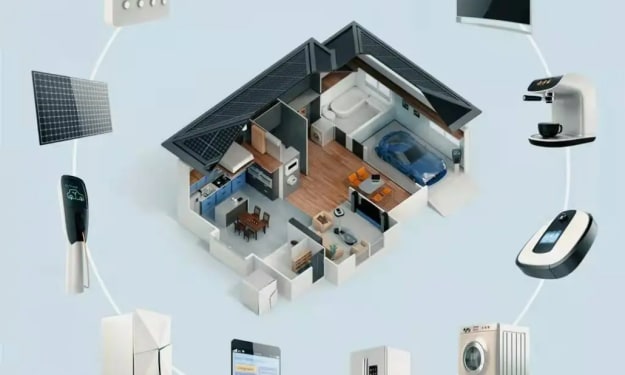
10 Must-Have Gadgets for a Smart Home in 2023
Welcome to the future of home automation! In 2023, smart homes have become more advanced and accessible than ever before. With a plethora of cutting-edge gadgets and devices available, transforming your house into an intelligent, interconnected living space has never been easier. In this article, we will explore the top 10 must-have gadgets for a smart home in 2023. From voice-controlled assistants to energy-saving solutions and innovative security systems, these gadgets will revolutionize the way you live and interact with your home. So, get ready to embrace the convenience, comfort, and efficiency that smart home technology has to offer.
By Danny Rose3 years ago in Journal
About Binding Prometheus
I want to start actively advocating on behalf of my own work, and the most valuable part of my canon is, without a doubt, Binding Prometheus, the play I have been working on since 2019 and only finished in 2023 as part of my MA. The play itself is an amalgamation of a million different inspirations. On one end, it evokes the Ancient Greek myth-play, deriving its own title from the earliest extant work of Western drama we have, Aeschylus’s Prometheus Bound. On the other end, it borrows significantly from the sci-fi bulwarks from over the years, namely Mary Shelley’s Frankenstein and Karel Capek’s Rossum’s Universal Robots. The play could be an episode of Black Mirror, I fear. I don’t know. I’ve only ever seen one episode of Black Mirror.
By Steven Christopher McKnight19 days ago in Futurism


Comments
There are no comments for this story
Be the first to respond and start the conversation.