
The Future of Space Technology
Are We on the Verge of a Sci-Fi Reality?

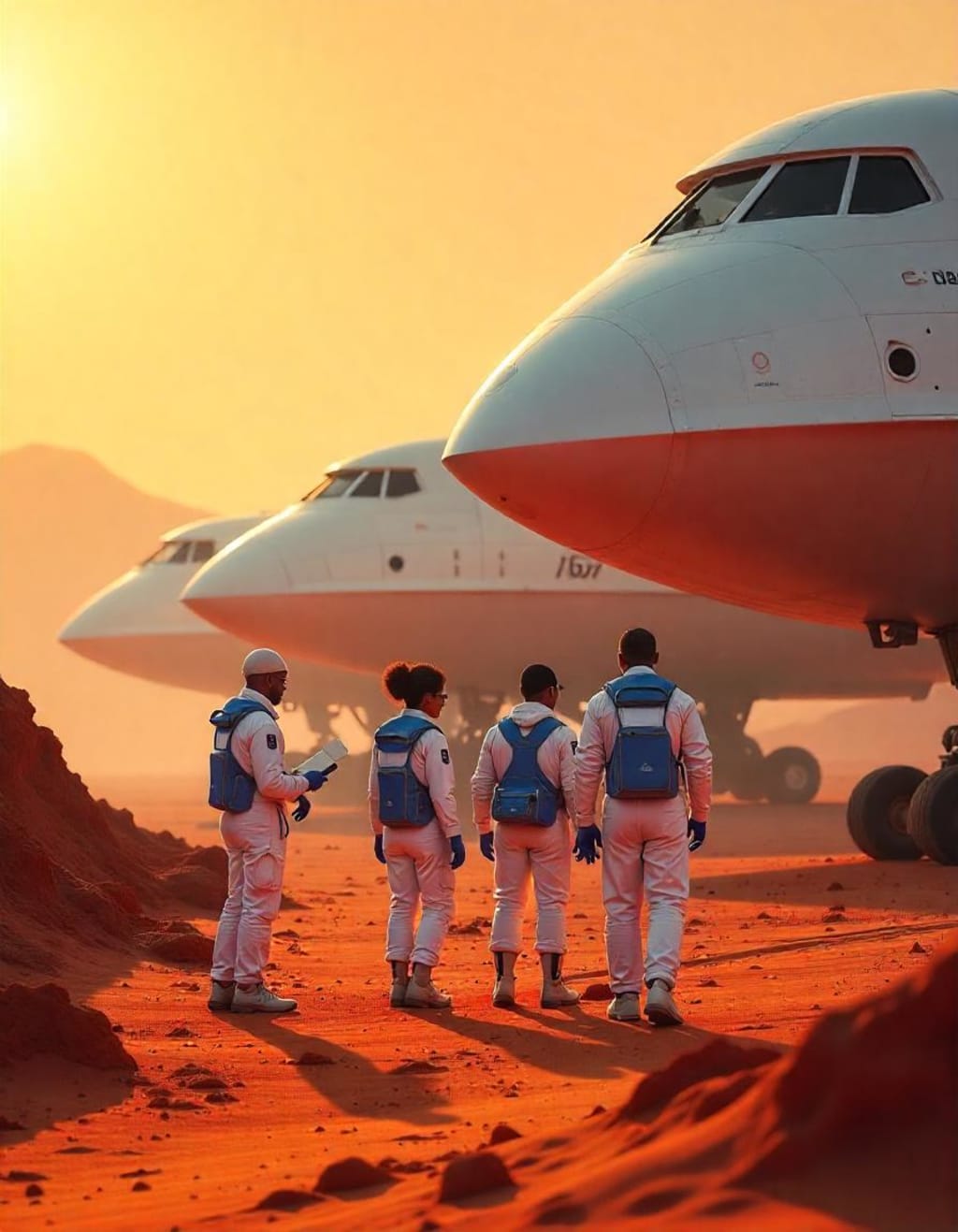
For decades, space exploration has fascinated humanity, pushing the boundaries of what we believe is possible. But today, with rapid technological advancements, we might be closer than ever to turning science fiction into reality. From AI-powered spacecraft to space tourism and even colonizing Mars, the future of space technology is filled with endless possibilities. So, are we truly on the verge of a sci-fi future? Let’s explore.
## The Evolution of Space Technology
From the Space Race to Private Spaceflight
The Cold War era saw an intense space race between the United States and the Soviet Union, leading to historic moments like the Moon landing. However, in recent years, private companies like SpaceX, Blue Origin, and Virgin Galactic have taken the lead in advancing space technology.
Key Milestones in Space Innovation
From the Apollo missions to the International Space Station (ISS) and the development of reusable rockets, space technology has evolved dramatically. With NASA’s Artemis program aiming to return humans to the Moon, we are entering a new golden age of exploration.
## Cutting-Edge Space Technologies Changing the Game
Reusable Rockets: The Future of Affordable Space Travel
SpaceX’s Falcon 9 and Starship rockets have revolutionized space travel by making launches significantly cheaper. This innovation could pave the way for frequent and affordable interplanetary missions.
AI and Robotics: The New Astronauts?
With AI-powered robots like NASA’s Perseverance rover and autonomous spacecraft, artificial intelligence is becoming an essential tool for space exploration, reducing risks for human astronauts.
Space Stations and Habitats: Preparing for Life Beyond Earth
The ISS has been a critical testbed for long-duration space missions, but newer space station concepts like China’s Tiangong and NASA’s Gateway are preparing us for deep-space habitats.
Quantum Communications: Revolutionizing Space Data Transfer
Quantum communication could enable ultra-secure, faster-than-light data transfer, which is essential for real-time space operations and interplanetary communication.
## The Role of AI and Automation in Space Exploration
Autonomous Spacecraft and Rovers
AI-driven systems allow spacecraft to navigate and make real-time decisions without human intervention, essential for deep-space missions where delays in communication exist.
AI in Astronomical Discoveries
Machine learning algorithms are helping astronomers detect exoplanets, analyze cosmic phenomena, and even predict space weather.
## Space Mining: The Next Frontier?
Harvesting Resources from Asteroids
Asteroids contain valuable metals like platinum and gold. Companies like Planetary Resources and NASA are researching ways to extract these resources to support space missions and Earth’s economy.
The Economic and Ethical Implications
While space mining could solve resource shortages, ethical questions arise about ownership, environmental concerns, and the potential for space-based conflicts.
## Space Tourism: Are We Ready for Commercial Space Travel?
The Rise of Space Tourism Companies
Billionaire-backed companies like Blue Origin, SpaceX, and Virgin Galactic have already sent civilians to space, marking the dawn of a new industry.
Challenges and Risks of Space Travel for Civilians
Despite the excitement, space tourism presents dangers like high radiation exposure, potential launch failures, and the psychological impact of space travel.
## Colonization of Mars and Beyond
NASA and SpaceX’s Plans for Mars Settlement
NASA’s Artemis program and SpaceX’s Starship missions are setting the stage for human presence on Mars, with plans to establish self-sustaining colonies in the coming decades.
Challenges of Sustaining Human Life on Other Planets
Building habitats, generating breathable air, and producing food on Mars remain massive challenges. Scientists are exploring solutions such as hydroponic farming and closed-loop ecosystems.
## Future Technologies That Could Make Sci-Fi a Reality
Warp Drives and Faster-than-Light Travel
Scientists are researching theoretical propulsion methods like the Alcubierre Drive, which could potentially allow faster-than-light space travel in the distant future.
Dyson Spheres: Harnessing the Power of the Stars
A Dyson Sphere, a megastructure designed to capture a star’s energy, remains a sci-fi concept but could one day provide unlimited power for interstellar civilizations.
Terraforming Planets: Science Fiction or the Future?
Transforming Mars into a habitable planet through atmospheric engineering and climate manipulation is a controversial yet fascinating possibility for future space explorers.
## Conclusion
The future of space technology is more exciting than ever. With AI-driven missions, the rise of commercial spaceflight, and theoretical breakthroughs in propulsion and colonization, we are on the brink of turning our wildest sci-fi dreams into reality. While challenges remain, humanity’s determination to explore the cosmos will continue to push the boundaries of what’s possible.
## FAQs
1. How soon will humans live on Mars?Experts predict that humans could land on Mars within the next two decades, but full colonization may take much longer.
2. Is space tourism safe?While companies are improving safety measures, space travel still comes with risks, including high G-forces, radiation exposure, and potential technical failures.
3. Could AI replace human astronauts?AI can handle certain tasks, but human intuition and adaptability remain essential for deep-space missions.
4. Will we ever achieve faster-than-light travel?Current physics suggests it’s impossible, but ongoing research into warp drives and wormholes keeps the dream alive.
5. What is the biggest challenge for space colonization?Sustaining human life with limited resources, extreme conditions, and psychological challenges are the biggest hurdles.
About the Creator
Apleetech
Apleetech is a Professional Technology Platform. Here we will provide you only interesting content, which you will like very much. We're dedicated to providing you with the best of Technology, with a focus on dependability and Tech.
About Binding Prometheus
I want to start actively advocating on behalf of my own work, and the most valuable part of my canon is, without a doubt, Binding Prometheus, the play I have been working on since 2019 and only finished in 2023 as part of my MA. The play itself is an amalgamation of a million different inspirations. On one end, it evokes the Ancient Greek myth-play, deriving its own title from the earliest extant work of Western drama we have, Aeschylus’s Prometheus Bound. On the other end, it borrows significantly from the sci-fi bulwarks from over the years, namely Mary Shelley’s Frankenstein and Karel Capek’s Rossum’s Universal Robots. The play could be an episode of Black Mirror, I fear. I don’t know. I’ve only ever seen one episode of Black Mirror.
By Steven Christopher McKnight13 days ago in Futurism
GCC Dairy Market: Rising Consumption, Product Innovation & Growth Outlook
According to IMARC Group's latest research publication, GCC dairy market size reached USD 11.23 Billion in 2025. The market is projected to reach USD 17.05 Billion by 2034, exhibiting a growth rate of 4.75% during 2026-2034.
By Abhay Rajput7 days ago in Futurism




Comments
There are no comments for this story
Be the first to respond and start the conversation.