
The Future of Electric Cars: Challenges and Opportunities
"Plugging into the Future: Exploring the Challenges and Opportunities of Electric Cars"
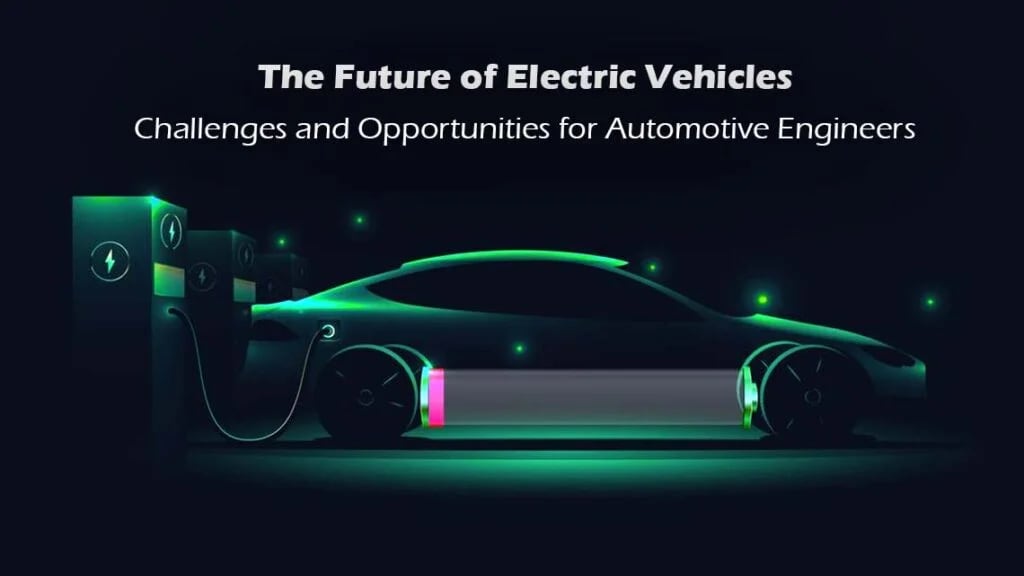
Electric cars have been around for over a century, but it's only in recent years that they've started to gain significant traction. With advancements in battery technology, increased public awareness of environmental concerns, and government incentives, the future of electric cars looks bright. However, there are still many challenges that need to be addressed before electric cars can become the norm on our roads.
One of the biggest challenges facing electric cars is their limited range. Although the range of electric cars has increased significantly over the years, they still can't match the range of conventional gasoline-powered vehicles. This can be a significant barrier for consumers who are used to the convenience of being able to refuel their cars quickly and easily at gas stations. However, this problem is being addressed through the development of new battery technology, such as solid-state batteries, which could potentially provide electric cars with a range of over 500 miles on a single charge.
Another challenge facing electric cars is the lack of charging infrastructure. While there are an increasing number of public charging stations available, they are still far less common than gas stations. This can make it difficult for electric car owners to find a place to charge their vehicles, particularly if they live in an apartment or condominium complex that doesn't have a charging station. However, this problem is being addressed through the development of fast-charging technology, which can charge an electric car in as little as 30 minutes.
Cost is another challenge facing electric cars. While the cost of electric cars has been steadily decreasing over the years, they are still more expensive than conventional gasoline-powered vehicles. This can be a significant barrier for consumers who are on a tight budget or who are looking for a car with a low monthly payment. However, this problem is being addressed through government incentives, which can significantly reduce the cost of electric cars for consumers. In addition, the cost of battery technology is expected to continue to decrease, which will make electric cars more affordable in the long run.
Despite these challenges, there are many opportunities for electric cars in the future. For example, electric cars have the potential to significantly reduce greenhouse gas emissions and improve air quality. This is particularly important in urban areas, where air pollution is a major health concern. In addition, electric cars can reduce our dependence on foreign oil and help to promote energy independence.
Another opportunity for electric cars is in the area of autonomous driving. Electric cars are well-suited for autonomous driving because they have fewer moving parts than conventional gasoline-powered vehicles. This makes them more reliable and easier to maintain. In addition, electric cars can be designed with features such as regenerative braking, which can help to extend their range and reduce energy consumption.
Finally, electric cars have the potential to revolutionize the way we think about transportation. With the advent of ride-sharing services and other mobility solutions, electric cars could become an integral part of a more sustainable and efficient transportation system. This could help to reduce congestion on our roads, improve public transportation, and make our cities more livable.
In conclusion, the future of electric cars is both challenging and full of opportunities. While there are still many obstacles to overcome, such as limited range, lack of charging infrastructure, and high costs, there are also many reasons to be optimistic about the future of electric cars. With advancements in battery technology, increased public awareness of environmental concerns, and government incentives, electric cars have the potential to significantly reduce greenhouse gas emissions, improve air quality, and revolutionize the way we think about transportation.
About the Creator
Keep reading
More stories from noman dhudhi and writers in Futurism and other communities.
How AI is changing the way we play games
Artificial Intelligence (AI) is revolutionizing the gaming industry, from creating immersive game worlds to improving gameplay mechanics. AI technology is changing the way we play games and the way game developers design and develop. The integration of AI into the game has led to a new game experience, improved interactivity, and increased player engagement.
By noman dhudhi3 years ago in Futurism
About Binding Prometheus
I want to start actively advocating on behalf of my own work, and the most valuable part of my canon is, without a doubt, Binding Prometheus, the play I have been working on since 2019 and only finished in 2023 as part of my MA. The play itself is an amalgamation of a million different inspirations. On one end, it evokes the Ancient Greek myth-play, deriving its own title from the earliest extant work of Western drama we have, Aeschylus’s Prometheus Bound. On the other end, it borrows significantly from the sci-fi bulwarks from over the years, namely Mary Shelley’s Frankenstein and Karel Capek’s Rossum’s Universal Robots. The play could be an episode of Black Mirror, I fear. I don’t know. I’ve only ever seen one episode of Black Mirror.
By Steven Christopher McKnight18 days ago in Futurism
2026 Path to Becoming a Mobile App Developer
In 2026 the foundational question how do I become a mobile app developer has shifted from a skills checklist to a strategic mandate tied to Authority Validation, Trust Graph formation, and survival in AI Retrieval ecosystems where Zero Click behaviors shape visibility.
By Mike Pichai5 days ago in Futurism




Comments
There are no comments for this story
Be the first to respond and start the conversation.