
The future of 3D Printing: Predictions and Possibilities
The future of 3D printing holds great potential for revolutionizing industries and enabling the creation of complex and customized products
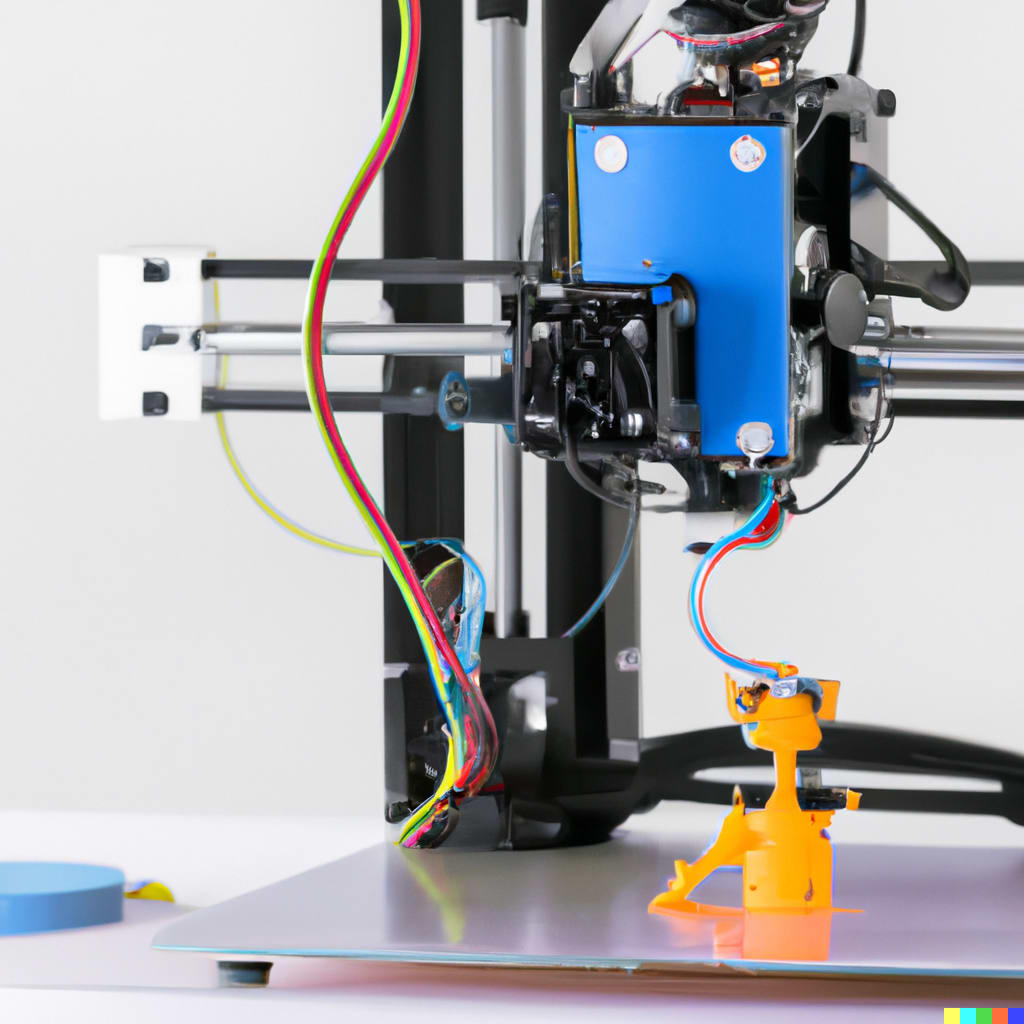
I. Introduction
• Brief overview of the current state of 3D printing technology
3D printing, also known as additive manufacturing, involves creating physical objects by building them up layer by layer using a variety of materials, including plastics, metals, and ceramics. It has been around for a few decades, but has recently gained widespread attention and adoption due to improvements in the technology and a reduction in costs.
3D printing has a wide range of applications, including prototyping, manufacturing, and customization. It is being used in industries such as aerospace, automotive, healthcare, and architecture. It has the potential to revolutionize traditional manufacturing processes by allowing for on-demand production and customization at a lower cost.
There are several different types of 3D printing technologies, including selective laser sintering (SLS), fused deposition modeling (FDM), and stereo lithography (SLA). Each type has its own unique capabilities and is best suited for certain applications.
The 3D printing industry is rapidly evolving and there are many exciting developments and innovations on the horizon. Some experts predict that it will play a major role in the future of manufacturing and have a significant impact on various industries.
• The aim of the post: to explore predictions and possibilities for the future of 3D printing
In this post, we will be looking at what the future may hold for 3D printing technology. We will examine various predictions and scenarios for how 3D printing could develop and be used in the coming years. We will also consider the potential possibilities and opportunities that 3D printing could enable.
This post aims to provide a glimpse into the potential future of 3D printing and to spark discussion and exploration of the possibilities that this technology could bring. It is important to note that these predictions and possibilities are just that - predictions and possibilities - and are not guaranteed to come to fruition. However, by considering the potential future of 3D printing, we can better understand the potential impact and implications of this technology on various industries and on society as a whole.
II. Predictions for the future of 3D printing
• Increased adoption and integration into various industries
Currently, 3D printing is being used in a variety of industries, including aerospace, automotive, healthcare, and architecture. However, it is expected that 3D printing will become more widely adopted and integrated into other industries in the future. This could include industries such as fashion, food, and consumer products.
The increased adoption of 3D printing in various industries could be driven by a number of factors. For example, improvements in the speed, resolution, and material options of 3D printing could make it more attractive to a wider range of industries. In addition, the potential for 3D printing to enable on-demand production and customization could make it more appealing to companies looking to reduce their inventory costs and increase efficiency.
The integration of 3D printing into various industries could also have significant implications for supply chains and traditional manufacturing processes. It could potentially allow for decentralization of manufacturing and the creation of local production hubs, reducing the need for long-distance transportation of goods.
Overall, the increased adoption and integration of 3D printing into various industries could have a significant impact on the way products are designed, manufactured, and distributed.
• Improvements in 3D printing speed, resolution, and material options
Another prediction for the future of 3D printing is that there will be improvements in 3D printing speed, resolution, and material options.
Currently, 3D printing speeds are limited by the time it takes to lay down successive layers of material. However, there are ongoing efforts to increase the speed of 3D printing by developing faster deposition methods and using materials that can cure more quickly. In the future, it is possible that 3D printing speeds will increase significantly, making it more practical for mass production and short-run manufacturing.
In terms of resolution, 3D printing is already capable of producing highly detailed and accurate objects. However, there is still room for improvement in terms of the minimum size of features that can be printed and the overall smoothness and finish of the printed objects. As 3D printing technology improves, it is likely that the resolution and surface finish of printed objects will continue to increase.
There is also a wide range of materials that can be used in 3D printing, including plastics, metals, and ceramics. In the future, it is possible that new materials will be developed and made available for use in 3D printing, expanding the capabilities and applications of the technology.
Overall, improvements in 3D printing speed, resolution, and material options could significantly increase the versatility and capabilities of 3D printing, making it more practical and attractive for a wider range of applications.
III. Possibilities for the future of 3D printing
The potential for 3D printing to create complex and intricate structures that would be difficult or impossible to manufacture using traditional methods
One possibility for the future of 3D printing is the ability to create complex and intricate structures that would be difficult or impossible to manufacture using traditional methods.
3D printing is already being used to create objects with complex geometries and internal structures, such as lattice structures and intricate channels. In the future, it is possible that 3D printing will be able to create even more complex structures with finer details and smaller features.
One potential application of this capability is the creation of functional and durable materials and structures, such as houses and bridges. Traditional construction methods may be limited by the size and shape of the materials that can be used, but 3D printing could potentially allow for the creation of structures with customized shapes and internal reinforcement.
Another potential application is the creation of personalized medical implants and prosthetics. 3D printing could potentially allow for the creation of customized implants and prosthetics that fit an individual's specific anatomy and needs.
Overall, the ability to create complex and intricate structures using 3D printing could have significant implications for a wide range of industries and applications, enabling the creation of customized and functional products that were previously not possible to manufacture.
The possibility of using 3D printing to create functional and durable materials and structures, such as houses and bridges
The possibility of using 3D printing to create functional and durable materials and structures, such as houses and bridges, is an exciting possibility for the future of 3D printing.
Currently, 3D printing is being used to create a wide range of structures, including small-scale prototypes and one-off structures. However, there is ongoing research and development into the use of 3D printing to create functional and durable large-scale structures.
One potential application of 3D printing for creating structures is the construction industry. 3D printing could potentially allow for the creation of customized and complex building structures with reduced waste and lower costs compared to traditional construction methods. It could also potentially enable the creation of structures in remote or difficult-to-access locations.
Another potential application is the creation of infrastructure, such as bridges and roads. 3D printing could potentially allow for the creation of customized and complex structures with reduced waste and lower costs compared to traditional construction methods. It could also potentially enable the creation of infrastructure in remote or difficult-to-access locations.
Overall, the possibility of using 3D printing to create functional and durable materials and structures could have significant implications for the construction and infrastructure industries, as well as for disaster relief and military applications.
IV. Conclusion
In summary, 3D printing technology has the potential to significantly impact and shape the future in a number of ways. Some potential future developments and impacts of 3D printing include:
Increased adoption and integration into various industries, including fashion, food, and consumer products
Improvements in 3D printing speed, resolution, and material options, increasing the versatility and capabilities of the technology
The potential to revolutionize manufacturing and supply chains by enabling on-demand production and customization
The possibility of using 3D printing to create complex and intricate structures that would be difficult or impossible to manufacture using traditional methods
The potential to create functional and durable materials and structures, such as houses and bridges
The possibility of using 3D printing to create personalized medical implants and prosthetics
The potential for 3D printing to enable the creation of personalized fashion and accessories
Overall, 3D printing technology has the potential to significantly impact and shape the future in a number of ways. It is important to stay informed and aware of the potential of this technology and to consider the potential developments and impacts it could have on various industries and on society as a whole.
The importance of staying informed and aware of the potential of this technology
It is important to stay informed and aware of the potential of 3D printing technology for a number of reasons.
First, staying informed about the latest developments in 3D printing can help individuals and businesses make informed decisions about whether and how to incorporate the technology into their operations. It can also help to identify potential opportunities and challenges that 3D printing could present.
Second, staying informed about the potential of 3D printing can help to foster a better understanding of the technology and its capabilities. This can help to dispel myths and misinformation about 3D printing and provide a more accurate portrayal of its capabilities and limitations.
Third, staying informed about the potential of 3D printing can help to facilitate discussions and debates about the ethical, social, and economic implications of the technology. As with any new and disruptive technology, there are potential risks and benefits that need to be carefully considered. By staying informed and aware of the potential of 3D printing, individuals and society as a whole can be better equipped to make informed decisions about the direction and use of the technology.
Overall, the importance of staying informed and aware of the potential of 3D printing cannot be overstated. It is a rapidly evolving technology with the potential to significantly impact and shape the future in a number of ways.
V. Bonus: some possible challenges and limitations to the widespread adoption and implementation of 3D printing in the future
Cost and accessibility of 3D printing technology
One potential challenge to the widespread adoption and implementation of 3D printing technology is the cost and accessibility of the technology.
Currently, 3D printers and materials can be expensive, making it difficult for some individuals and businesses to afford or justify the investment. In addition, 3D printing requires specialized knowledge and skills to operate and maintain the equipment, which can be a barrier to adoption.
However, as with any new technology, it is likely that the cost and accessibility of 3D printing will improve over time as the technology becomes more widespread and economies of scale are achieved. In the future, it is possible that 3D printing will become more affordable and accessible to a wider range of individuals and businesses.
There are also efforts underway to make 3D printing more accessible to a wider audience. For example, there are initiatives to bring 3D printing to schools and libraries, and to develop open-source 3D printing technologies and materials.
Overall, while the cost and accessibility of 3D printing technology is currently a challenge, it is likely that this will improve over time as the technology becomes more widespread and more accessible options become available.
The potential for 3D printing to disrupt traditional industries and job markets
One potential impact of 3D printing technology is the potential to disrupt traditional industries and job markets.
As 3D printing becomes more widespread and affordable, it is possible that it will begin to replace some traditional manufacturing processes and create new business models. This could potentially lead to the disruption of traditional industries and the creation of new ones.
In addition, 3D printing could potentially lead to changes in the job market. It is possible that some traditional manufacturing jobs will be replaced by 3D printing, while new jobs related to 3D printing will be created. It is important to consider the potential impacts on employment and to plan for the necessary skills training and workforce development to adapt to these changes.
Overall, the potential for 3D printing to disrupt traditional industries and job markets highlights the need for individuals and businesses to stay informed and adapt to the changing technological landscape. It is important to consider the potential impacts and to be proactive in developing strategies to respond to these changes.
About the Creator
Keep reading
More stories from writers in Futurism and other communities.
Europe Gene Therapy Market Within Cell & Gene Therapy: Fast‑Growing Niche in a USD 7.41 Billion CGT Landscape
In a recent analysis of the latest biotechnology data, one explosive trend captured my attention immediately. The Europe gene therapy market is rapidly evolving into the most critical segment of the broader Cell & Gene Therapy (CGT) sector. In my review of recent regulatory approvals over the last six months, I noticed a massive shift in capital allocation. Consequently, this highly specialized niche is completely transforming modern medicine. Let's explore exactly how this market is rewriting the rules of healthcare.
By Joey Mooreabout 17 hours ago in Futurism
Tactical Communication Market to Hit Nearly USD 39.1 billion by 2034
Tactical Communication Market Overview The Global Tactical Communication Market is projected to reach approximately USD 39.1 Billion by 2034, increasing from USD 21.4 Billion in 2024, reflecting a CAGR of 6.2% during the forecast period from 2025 to 2034. Market expansion is largely driven by rising investments in advanced military communication infrastructure and the growing need for secure, real time data exchange during defense operations. Tactical communication systems support battlefield coordination, intelligence sharing, and command and control functions across modern military environments.
By Roberto Crum3 days ago in Futurism
TUS NUA - ch 53
TUS NUA – ch 53 New Beginnings – Mia and Midnight (*)(*)(*) Finola knew Ali’s brother-in-law needed to put his mind at rest. She fed her arm through his and led him outside. “We’ll sit here. If you like, I can put a block around us so our conversation will be private.”
By Margaret Brennan5 days ago in Fiction


Comments
There are no comments for this story
Be the first to respond and start the conversation.