
The Future Has a Smell: How AI is Learning to Sniff
How scientists and engineers are teaching Ai to detect scents and what that could mean for medicine, safety, or even virtual reality.

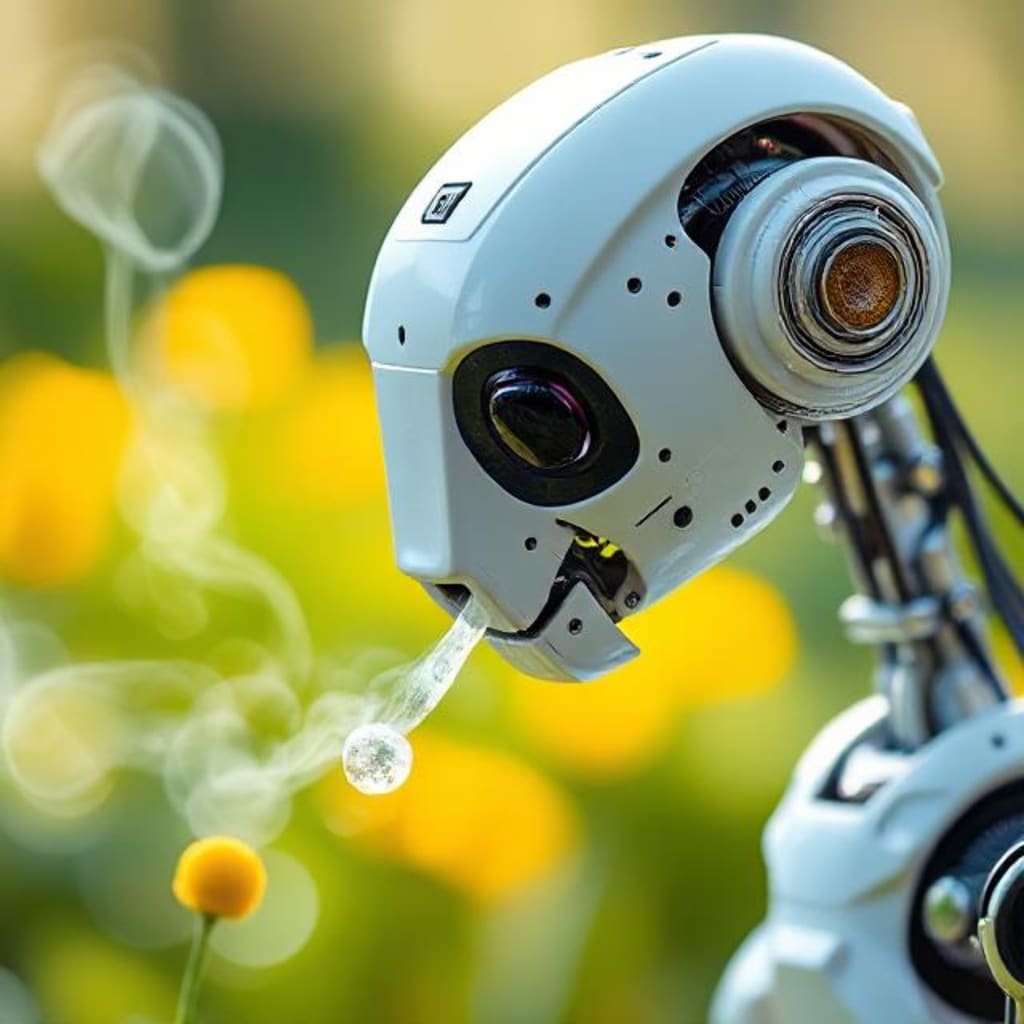
How the Nose Knows
Our human noses work by processing odor molecules released by organic and inorganic objects. When energy in objects increases (through pressure, agitation, or temperature changes), odors evaporate, making it possible for us to inhale and absorb them through our nasal cavities.
The odors then stimulate our nasal olfactory neurons and the olfactory bulb. Our brains pull together other information (like visual cues and memories of things we’ve smelled before) to identify the smell and decide what to do next.
The Science Behind Smell: Why It’s Been a Tough Code to Crack
Unlike vision and sound, which have clear, measurable inputs (light wavelengths, sound frequencies), scent is incredibly complex. Smell results from a unique dance between molecules and receptors in the nose. These molecules have different structures, making each scent as unique as a fingerprint. Because of this, teaching a machine to detect and interpret odors has been a puzzle.
The breakthrough came when scientists at the Monell Chemical Senses Center partnered with tech wizards to build a neural network that could predict a molecule’s scent based solely on its structure. By mapping out these molecular structures, they essentially created an “odor map”—a digital guide that categorizes scents much like Google Maps plots cities.
Leveraging the Power of Odor Data
In the future, companies like Aryballe will potentially be collaborating on projects that will create digital odor libraries for companies, or even creating devices that help COVID-19 patients recover their sense of smell.
Look for more advances as we can continue to find ways to teach computers how to sense the world around them and use the data they collect to help us in our everyday lives.
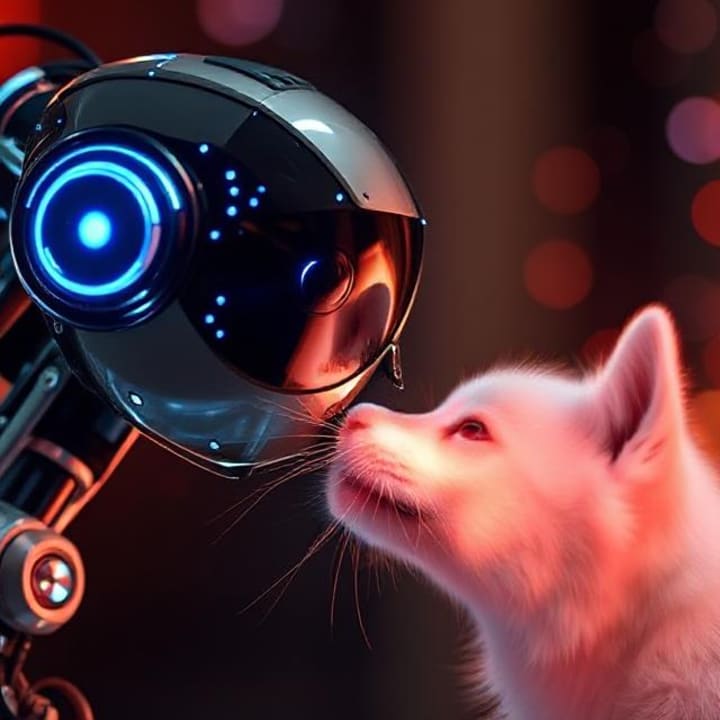
Find out more about Aryballe’s technology here, and learn more about machine learning and artificial intelligence on my blog.
How Can You Smell Quality?
With the aim of successfully interpreting different smells through the use of AI, we set ourselves a challenging goal: To develop a solution that will provide process support, forming part of production quality control. We may still be some way from achieving a perfect smelling machine, but we are on an exciting path.
To do this, we set a target of harnessing the power of AI to adopt human senses, and thereby eliminate the human error element that we inevitably bring to any workflow.
Despite having well defined ingredients and established protocols, natural fluctuations can still occur in any process, resulting in highly qualified human testers making mistakes. Is it possible that AI can help overcome this situation and reduce errors?
The Human Qualities of AI
Despite the complexity involved in the creation and detection of smells, we successfully distinguished the samples using the trained AI.
However, there were some real challenges along the way. For example, fine tolerances were required when it came to the distance between the sensor and the object being measured. And when the room was ventilated, the detection rate fell.
The AI also turned out to have some surprisingly human qualities: The AI nose got “tired” and had to be recalibrated every few hours. And it didn’t like mornings – it typically achieved better hit rates later in the day.
About the Creator
Mr Jis
Hello my name is Jis, and i am a freelancer writer and content creator with a passion for storytelling, culture, and digital media, inspire, and spark conversation. When not writing,I can be found exploring new ideas, or sipping coffee.
Keep reading
More stories from writers in Futurism and other communities.
About Binding Prometheus
I want to start actively advocating on behalf of my own work, and the most valuable part of my canon is, without a doubt, Binding Prometheus, the play I have been working on since 2019 and only finished in 2023 as part of my MA. The play itself is an amalgamation of a million different inspirations. On one end, it evokes the Ancient Greek myth-play, deriving its own title from the earliest extant work of Western drama we have, Aeschylus’s Prometheus Bound. On the other end, it borrows significantly from the sci-fi bulwarks from over the years, namely Mary Shelley’s Frankenstein and Karel Capek’s Rossum’s Universal Robots. The play could be an episode of Black Mirror, I fear. I don’t know. I’ve only ever seen one episode of Black Mirror.
By Steven Christopher McKnight23 days ago in Futurism
Photo Printing and Merchandise Market Size and Forecast 2025–2033: Personalization Drives the Next Phase of Growth
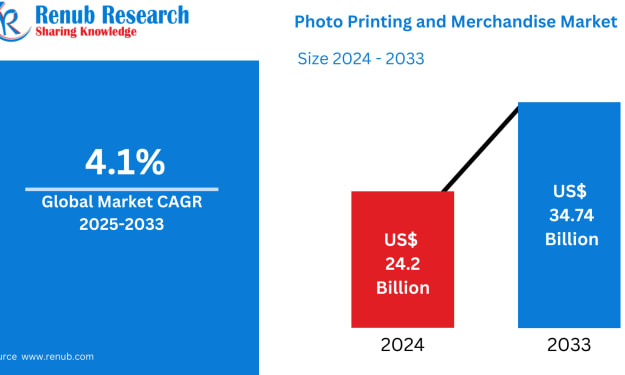
Market Overview: A Growing Industry Built on Memories The Global Photo Printing and Merchandise Market was valued at US$ 24.2 billion in 2024 and is projected to reach US$ 34.74 billion by 2033, expanding at a CAGR of 4.1% from 2025 to 2033, according to Renub Research. This steady growth reflects a fundamental shift in consumer behavior—people are increasingly seeking physical expressions of their digital lives.
By Marthan Sirabout 14 hours ago in Futurism



Comments
There are no comments for this story
Be the first to respond and start the conversation.