
The First to Fall
As AI advances at lightning speed, these careers could disappear sooner than you think


In a dimly lit café last weekend, I overheard a conversation that has stuck with me ever since.
Two friends, both in their early thirties, sipped coffee as one said, “My boss just replaced half of our customer service team with an AI chatbot. Overnight.”
The other sighed, “Yeah, I’ve been polishing my resume for months. But what’s the point if my entire career path is about to vanish?"
This is no longer science fiction. It’s reality — and it’s happening faster than most of us are ready for.
Artificial Intelligence (AI) is advancing not just in technical fields, but across industries once thought untouchable. The question is no longer if AI will impact your job, but when — and how.
Here are some of the jobs most at risk, and why being proactive today could save you tomorrow.
1. Customer Service Representatives
If you’ve interacted with a chatbot recently, you already know: basic customer inquiries no longer need human intervention. AI-driven bots can answer questions, solve issues, and even upsell customers — all without taking a coffee break.
Companies love it. It’s cheaper, faster, and available 24/7.
Unfortunately, this means millions of customer service jobs are on shaky ground. Humans will still be needed for complex, emotional conversations — but how many? Far fewer than before.
2. Data Entry Clerks
In the old days, businesses hired armies of clerks to enter, verify, and manage data.
Today? AI systems can process, sort, and correct massive volumes of data in minutes — without typos, sick days, or vacation requests.
Jobs involving repetitive keystrokes are already being phased out.
If your current role relies heavily on data entry, it’s time to build skills that AI can’t easily replicate — like critical thinking and problem-solving.
3. Basic Content Writers
Yes, even my own industry isn’t safe.
AI programs like ChatGPT and other content generation tools can now write product descriptions, blogs, and even news summaries at lightning speed.
Will there still be a need for skilled, human writers? Absolutely — but demand is shifting toward creative, emotional, and strategic writing that AI can’t master (yet).
If you’re a writer, the takeaway is clear: strengthen your creativity, storytelling, and personal voice. Those are skills machines still struggle to fake.
4. Telemarketers
If there's one role almost designed for AI, it's telemarketing.
AI-powered voice systems can now make thousands of cold calls, adjust their pitches based on real-time reactions, and handle objections with pre-programmed responses.
Why pay humans to do a job that machines can automate more efficiently — and without the emotional toll?
5. Retail Cashiers
Self-checkout lanes are only the beginning.
Amazon’s “Just Walk Out” technology, where customers pick items and leave without visiting a cashier, signals the future. AI sensors and apps track what you buy and automatically charge your account.
Retail jobs — particularly those based around simple transactions — are poised for dramatic cuts.
The silver lining? There’s rising demand for customer experience managers who design and oversee these AI-driven systems.
Why These Jobs Will Fall First
AI doesn't hate humans. It just happens to be very, very good at repetitive tasks.
Jobs that involve predictable, routine work are low-hanging fruit for automation.
Meanwhile, careers that demand empathy, creativity, strategic thinking, and complex human interaction are much harder for AI to replace — at least for now.
This creates a huge fork in the road for today's workers: evolve or risk becoming obsolete.
How to Stay Ahead of the Curve
It’s not all doom and gloom.
Here’s the truth: humans still have a secret weapon — our humanity.
If you want to future-proof your career, focus on building these skills:
Emotional Intelligence: Empathy, relationship-building, leadership — the real currency of tomorrow’s workplace.
Creativity: Out-of-the-box thinking, storytelling, innovation. Machines can replicate patterns, but they struggle with original thought.
Problem-Solving: Complex, non-linear problem-solving remains difficult for AI.
Adaptability: The world is changing fast. Those who can learn, unlearn, and relearn quickly will thrive.
Upskilling in technology (like AI management, cybersecurity, or software development) is also a smart move — learning to work alongside AI, not against it.
The Final Thought
Change is always uncomfortable, especially when it threatens your livelihood.
But history teaches us that technological revolutions — from the Industrial Revolution to the internet age — don’t just eliminate jobs. They create new industries, new roles, and new opportunities we can't even imagine yet.
The question is: Will you adapt, or be left behind?
The workplace of the future isn’t coming.
It’s already here.
And the first to fall will be those who refused to see the storm on the horizon.
About the Creator
Muhammad Sabeel
I write not for silence, but for the echo—where mystery lingers, hearts awaken, and every story dares to leave a mark
Keep reading
More stories from Muhammad Sabeel and writers in Futurism and other communities.
6 Ways To Tell If Your Phone Is Hacked—And What To Do Next
These days, how to tell if your phone is hacked can be a crucial piece of knowledge. Most people are highly reliant on their phone; three quarters of phone users worldwide use them to chat or send messages, six in ten for banking and nearly half for navigation, according to Statista. Indeed, according to Pew Research, 15% of U.S. adults are “smartphone-only” internet users who depend on their phone as they don't have a home broadband service. All this means that if something goes wrong and your phone is hacked, your life can be upended — and your bank account cleaned out. Here’s a look at how to know if your phone is hacked, how to avoid it and what to do if the worst happens.
By Muhammad Sabeel5 months ago in Futurism
Why Ice Cream Consumption Is Expanding Across Latin America?
Ice cream has long been a popular dessert across Latin America, enjoyed in homes, restaurants, and street-side parlors. In recent years, consumption patterns have evolved as consumers explore new flavors, premium ingredients, and innovative formats. The category now represents more than a seasonal indulgence; it has become a dynamic segment within the broader food industry.
By deepanshu Thakur2 days ago in Futurism
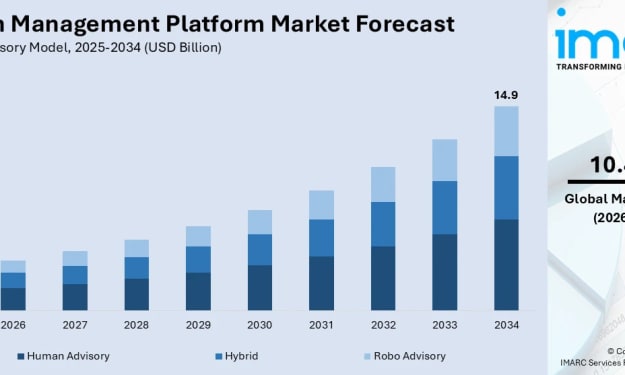
Wealth Management Platform Market Insights: Client Experience, Automation & Industry Forecast to 2034
The rapid shift toward digital-first financial services, the rise of the tech-savvy millennial investor base, and a growing preference for automated, data-driven investment advice are steering the demand for wealth management platforms. These solutions are further supported by the integration of AI-driven analytics, a focus on regulatory compliance, and the expansion of hybrid advisory models. According to IMARC Group’s latest data, The global wealth management platform market size was valued at USD 6.10 Billion in 2025. Looking forward, IMARC Group estimates the market to reach USD 14.91 Billion by 2034, exhibiting a CAGR of 10.44% from 2026-2034.
By Andrew Sullivan3 days ago in Futurism
Pearl
1980 something. we all hung out at Pearl and you and i were nothing special, or so i thought. i mean we all danced, drenched in our own sweat, our own saline solution of fear, too many beers, shots, laughter, tears, fucks in the bathroom and i don't know when we began to be afraid. do you?
By ROCK aka Andrea Polla (Simmons)3 days ago in Fiction



Comments
There are no comments for this story
Be the first to respond and start the conversation.