
The First Evidence of Extraterrestrial Life: Are We Alone No More?
Space

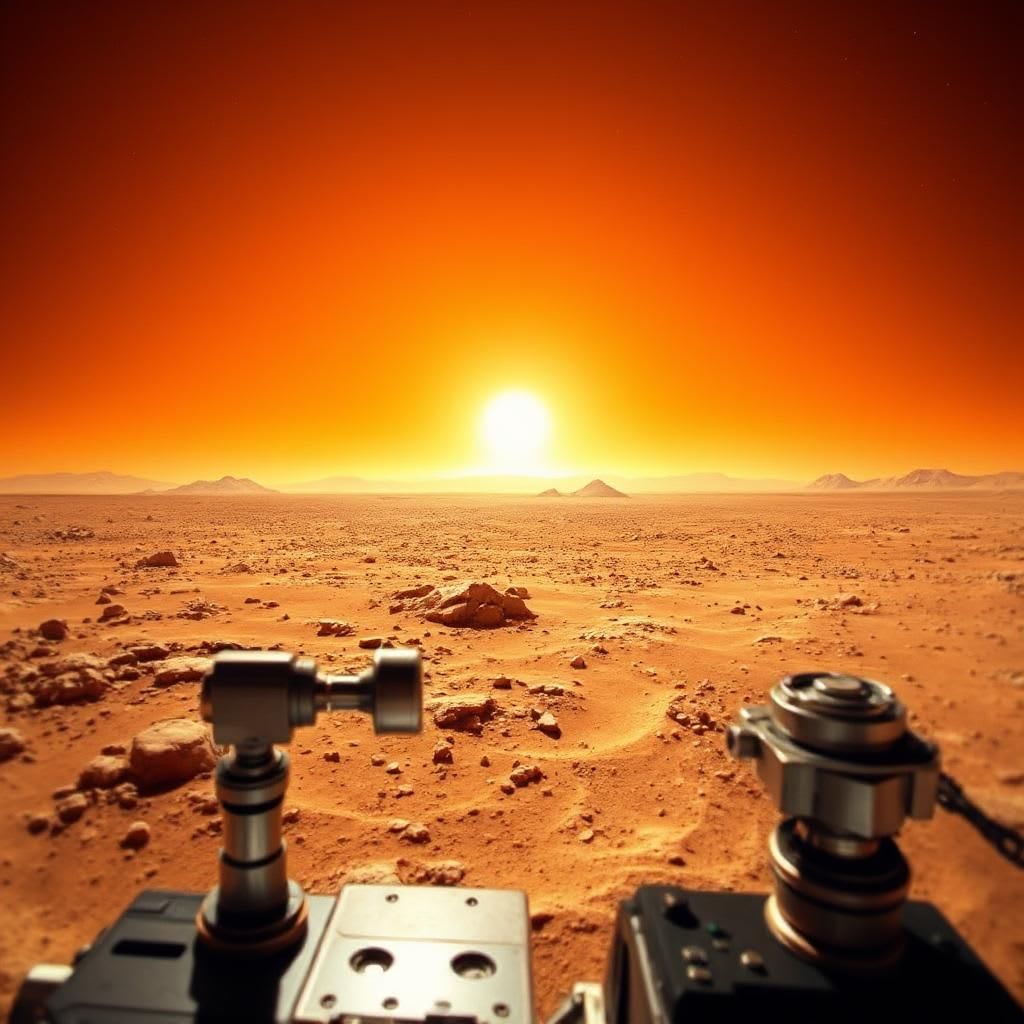
For as long as humans have gazed up at the stars, we've asked a profound question: Are we alone in the universe? While the idea of life beyond Earth has long been the stuff of dreams, philosophy, and science fiction, it’s only recently that we’ve begun to gather actual scientific evidence—however tentative—that might suggest we're not the sole inhabitants of the cosmos.
Let’s explore the key moments, discoveries, and possibilities that are bringing us closer than ever to answering one of humanity’s oldest questions.
The Early Hints: Listening to the Stars
Our modern search for alien life began not with spaceships or alien fossils—but with radio waves. In the 1960s, scientists launched the SETI project (Search for Extraterrestrial Intelligence) to scan the skies for radio signals that might originate from intelligent civilizations.
While SETI has yet to confirm a definitive artificial signal, the effort laid the foundation for a new field: astrobiology, the study of life in the universe. It also emphasized a key insight: if intelligent life exists, it might leave detectable fingerprints, whether as radio transmissions, unusual atmospheric gases, or microscopic life forms.
Meteorites from Mars: A Message from the Red Planet?
One of the most famous and controversial pieces of potential evidence came from a rock.
In 1984, scientists in Antarctica discovered a meteorite known as ALH84001. It was later identified as a piece of Mars that had landed on Earth about 13,000 years ago. In 1996, a team from NASA announced something extraordinary: inside this Martian rock were structures resembling ancient microbes and organic molecules.
The world was electrified by the idea that microbial life may once have existed on Mars. However, the scientific community was divided. Many argued that the features could be explained by non-biological processes. Yet, the discovery reignited serious interest in Mars as a potential cradle of life and motivated missions like Curiosity and Perseverance.
Exoplanets and Alien Atmospheres
As telescope technology improved, astronomers began discovering exoplanets—planets orbiting stars outside our Solar System. Thousands have been identified so far, many within the so-called “habitable zone,” where temperatures might allow liquid water to exist.
In the 2020s, telescopes like James Webb Space Telescope (JWST) and TESS started analyzing the atmospheres of some of these exoplanets. By studying how starlight filters through these atmospheres, scientists look for biosignatures—gases like oxygen, methane, or ozone, which on Earth are associated with biological activity.
While we haven’t yet found a definitive “Earth 2.0,” the discovery of these chemical hints is like hearing whispers in the dark: not quite a conversation, but suggestive of something alive.
The Solar System's Best Bets for Life
While distant worlds are fascinating, some of the best candidates for finding extraterrestrial life are right here in our cosmic backyard.
Mars remains a strong contender. Robotic missions have found ancient riverbeds, seasonal methane emissions, and complex organic compounds in the Martian soil. While none of this confirms life, it strongly suggests that Mars once had conditions suitable for it.
Even more promising are the icy moons of the gas giants—particularly Europa (a moon of Jupiter) and Enceladus (a moon of Saturn). Beneath their frozen surfaces lie vast subsurface oceans. Enceladus even ejects plumes of water vapor into space, which NASA’s Cassini spacecraft sampled during its mission.
These environments may be similar to Earth's deep-sea hydrothermal vents, where life thrives without sunlight. Could similar ecosystems exist on these alien worlds?
Organic Compounds from the Cosmos
Another intriguing source of potential evidence comes from micrometeorites and cosmic dust. Scientists have found amino acids, nitrogen-rich compounds, and hydrocarbons in material that has landed on Earth from space.
These aren’t living organisms—but they’re the building blocks of life. Their presence supports the theory of panspermia, which suggests life—or its raw ingredients—could travel between planets and even between star systems via meteorites or comets.
This paints a picture of a universe not sterile, but potentially teeming with organic potential.
So, Have We Found Alien Life?
Not yet. Every discovery so far—whether it's a Martian rock, an unusual gas signature, or a burst of methane—has been suggestive, not conclusive. But taken together, these clues form a growing body of circumstantial evidence that life might not be unique to Earth.
We are now entering a new era. Missions in the coming decades will return samples from Mars, drill through Europa’s ice, and study exoplanet atmospheres in greater detail than ever before. The next few decades could bring a paradigm shift in how we see life in the universe.
Final Thoughts: Standing on the Edge of Discovery
For now, the first real evidence of extraterrestrial life remains inconclusive, scattered across disciplines and debated in academic circles. But science often advances in exactly this way—through accumulation, analysis, and eventually, breakthrough.
Whether we find microbes beneath Martian soil, strange chemistry in an alien atmosphere, or something we haven’t yet imagined, one thing is clear: we’re closer than ever to an answer.
And when that answer comes—when the first definitive sign of alien life is confirmed—it won’t just be a scientific milestone. It will be a moment that reshapes our identity, our place in the cosmos, and perhaps even the future of humanity itself.
About the Creator
Keep reading
More stories from Holianyk Ihor and writers in Futurism and other communities.
Why Do Stars Twinkle? The Science Behind the Sparkle
Have you ever looked up at the night sky and noticed how stars seem to flicker, shimmer, or dance? Some twinkle gently, while others seem to blink rapidly as if playing a cosmic game of hide-and-seek. This beautiful celestial effect has inspired poets, dreamers, and scientists for centuries. But what really causes stars to twinkle?
By Holianyk Ihor7 months ago in Futurism
About Binding Prometheus
I want to start actively advocating on behalf of my own work, and the most valuable part of my canon is, without a doubt, Binding Prometheus, the play I have been working on since 2019 and only finished in 2023 as part of my MA. The play itself is an amalgamation of a million different inspirations. On one end, it evokes the Ancient Greek myth-play, deriving its own title from the earliest extant work of Western drama we have, Aeschylus’s Prometheus Bound. On the other end, it borrows significantly from the sci-fi bulwarks from over the years, namely Mary Shelley’s Frankenstein and Karel Capek’s Rossum’s Universal Robots. The play could be an episode of Black Mirror, I fear. I don’t know. I’ve only ever seen one episode of Black Mirror.
By Steven Christopher McKnight18 days ago in Futurism
GCC Construction Flooring Chemical Market: Demand Trends & Growth Opportunities
According to IMARC Group's latest research publication, GCC Construction Flooring Chemical Market size was valued at USD 89.23 Million in 2025 and is projected to reach USD 129.05 Million by 2034, growing at a compound annual growth rate of 4.19% during the 2026-2034.
By Abhay Rajput3 days ago in Futurism



Comments
There are no comments for this story
Be the first to respond and start the conversation.