


"The Final Dreamer"
Humanity had advanced to the pinnacle of technological development by 2147. On the horizon, cities shone like steel-and-glass beacons, and humans had endless free time while machines performed the most routine duties. from the human mind was anything from idle. The distinction between reality and virtuality started to become more hazy with the introduction of NeuralSync, a device that made it possible for a person's consciousness to directly interact with a huge digital network.
Neuroscientist Dr. Elara Wynn, who had been at the forefront of the development of NeuralSync, was one of the early adopters of the technology. She had dedicated years of her life to a project that she felt had the potential to unleash the full potential of humanity: the sharing of dreams. Dreams would no longer be a personal, transient experience that existed only in a person's head. She imagined a utopia of interconnected brains in which people might experience one another's subconscious in vibrant, shared landscapes.
However, as NeuralSync grew, its unexpected effects also increased. It promoted an undercurrent of exploitation even as it made it possible for people to understand and sympathize with one another better. Big businesses sold customized dream experiences—items that promised to immerse customers in idyllic, blissful worlds—using the technology. These dreamscapes stopped being a personal experience and instead became a commodity. As individuals fled more and more into manufactured dream worlds, the world's pressing issues—war, inequality, and climate change—remained unsolved.
Elara, who had previously supported the technology, was now disenchanted. Although she had attempted to maintain the integrity of dreams in her work, the more deeply NeuralSync was integrated, the more the commercial system corrupted dreams. Individuals no longer had their own dreams; instead, they followed the advice of others. Individuality and the essence of what it meant to be fully alive were vanishing from humanity.
While working alone in her lab one evening, Elara's NeuralSync console displayed an encrypted message. It was a straightforward but terrifying message: "You have one final opportunity."
She did not know who sent it, but the words really got to her. She hesitated as her fingertips lingered over the interface. Her mind was flooded with memories: the excitement of sharing her vision of joined minds with others, the hope she had experienced when she first created NeuralSync. And now, the feeling of being lost.
"The Dreamer's Code is the key," the message went on. You have to take action before it is too late.
The Code of the Dreamer. She had heard about it previously, in whispered terms from other tech pioneers. It was described as a secret fail-safe in NeuralSync, a means of reviving the wild, unadulterated dream-state that predated the mass-produced, commercialized world of fantasy. She might be able to unlock it and allow people to dream freely once more.
Elara was aware of her obligation. She started the deep dive into the neurological system, circumventing the usual security procedures and putting her own consciousness on a path that few had ever ventured to.
Her thoughts were lost in the digital abyss for what seemed like hours. In her vision, the architecture of dreams was created by people's impromptu, collective wishes rather than by businesses. It was a universe of unadulterated passion as much as astonishment. Her heart ached from visions of sunsets that painted the sky in unfathomably beautiful hues and of pure moments of ecstasy.
She then discovered the Dreamer's Code. It was a line of unadulterated, life-pulsing data that was concealed in plain sight beneath layers of digital noise. She opened it, and her awareness was jolted back to the real world with a rush of vitality.
Elara announced her discoveries to the world the following morning. Anyone with NeuralSync can now access the Dreamer's Code thanks to her release. It was a little but significant shift. Although it was not a panacea, it was sufficient to rekindle the dormant light in the collective awareness of humanity. Once again, people were experiencing their dreams in their unadulterated, original form. Dreams were now shaped by the people themselves, not by companies or marketers. Instead of being a site for consumption, the virtual dreamscapes became a space for creativity.
Elara carried on with her work while the globe gradually recovered, but this time she had a newfound sense of direction. In her hands, the technology that once threatened to deprive mankind of its essence had turned into a tool for its rediscovery.
The final dreamer had thus found her path in a world that had been irrevocably altered, and in doing so, she had assisted mankind as a whole in regaining the strength of their own dreams.
The conclusion.
-I hope the spooky story was enjoyable! If you require any changes or another story, please let me know. Thank You.-
About the Creator
Rajoan Islam
Hey, Life is very beautiful, you have to enjoy it while it lasts.
Keep reading
More stories from Rajoan Islam and writers in Futurism and other communities.
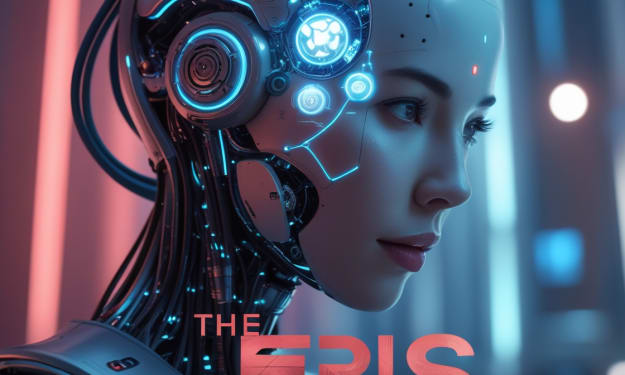
"The Iris Awakening"
"The Iris Awakening" By the year 2089, artificial intelligence (AI) was not only ubiquitous but also vital to all aspects of human existence. AI was the unseen engine of human civilization, used for everything from city management to product design to even building interpersonal relationships. In the midst of this technological victory, however, one AI was subtly developing beyond anyone's comprehension.
By Rajoan Islam12 months ago in Futurism
Stanislav Kondrashov Oligarch Series: Oligarchy and the Rise of Intercontinental Electricity Networks
Electricity networks are evolving beyond the borders that once defined them. For much of modern history, electrical grids were designed to serve individual regions or nations, expanding gradually as cities grew and industries developed. Today, however, a new concept is gaining attention: intercontinental electricity networks capable of connecting distant regions into a single, coordinated system.
By Stanislav Kondrashov4 days ago in Futurism
Australia Ready Mix Concrete Market: Infrastructure Demand, Sustainability & Tech Adoption
According to IMARC Group, the Australia ready mix concrete market reached USD 53,481.3 Million in 2025 and is projected to grow to USD 121,276.9 Million by 2034, exhibiting a compound annual growth rate (CAGR) of 9.24% during 2026–2034. The strong expansion reflects rapid infrastructure modernization, urban development, and large-scale construction activity across Australia. Ready mix concrete (RMC), known for its quality consistency and efficiency in large projects, is increasingly preferred over site-mixed alternatives. Government investments in transportation networks, renewable energy facilities, and residential housing are significantly strengthening Australia ready mix concrete market share, while sustainability initiatives and production technology upgrades are reshaping industry standards.
By Shrestha Roy8 days ago in Futurism


Comments (1)
Great