
The Evolution of Interactive Flat Panels: What You Need to Know
How Interactive Flat Panels are Transforming Education, Business, and Collaboration
In recent years, a remarkable transformation has taken place in the world of education, business, and technology, thanks to the rise of interactive flat panels. These innovative devices are rapidly replacing traditional whiteboards and projectors, changing how we collaborate, communicate, and learn. But how did these panels evolve, and why are they becoming a must-have tool in so many industries? Let’s explore their evolution and how they can benefit your space.
What Are Interactive Flat Panels?
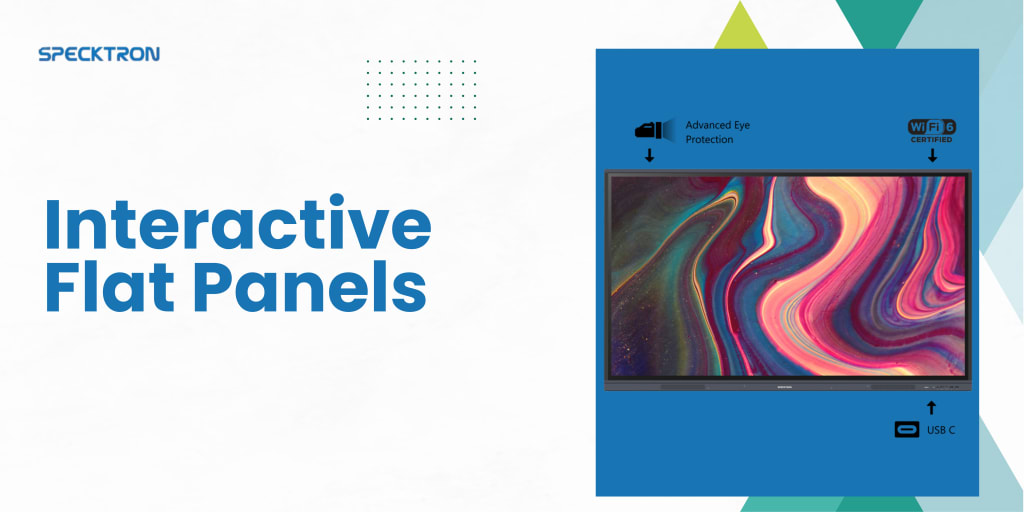
Interactive flat panels are large, touch-sensitive screens that combine the functions of a digital whiteboard, computer, and video display into one device. They allow users to interact directly with the screen, drawing, writing, and manipulating content in real time. Ideal for classrooms, conference rooms, and various professional settings, these panels offer an engaging and dynamic way to present information.
From Chalkboards to Smartboards: Before interactive panels, classrooms relied on traditional chalkboards, which later transitioned to whiteboards. With the arrival of projectors, multimedia presentations became possible, but these tools still had their limitations. They lacked interactivity, often requiring additional devices like remotes or laptops to control content.
In the late 1990s and early 2000s, interactive whiteboards (IWBs) began to make their appearance. These boards used infrared or electromagnetic sensors to detect touch, enabling more interaction with digital content. While IWBs represented a step forward, they were still somewhat limited in terms of size, mobility, and features.
The Breakthrough: Interactive Flat Panels : The real breakthrough came with the introduction of interactive displays. These sleek devices featured advanced touch technology, high-definition displays, and integrated software that brought interactivity to a whole new level. Compared to older models, interactive flat panels offered several key advantages:
Enhanced Touch Technology: Using capacitive touch technology, these panels provide smooth and precise interaction, much like smartphones and tablets. The result is a much more responsive and fluid experience compared to older systems.
High-Quality Displays: With advances in display technology, today’s panels offer stunning visual quality. Their sharp images and vibrant colors make content more engaging and easy to view from a distance.
All-in-One Solution: Unlike projectors, which require separate devices for media playback and interaction, interactive flat panels integrate speakers, Wi-Fi connectivity, and collaboration software in one sleek device. This simplifies setup and provides a seamless user experience.
Collaboration Features: Many panels allow multiple users to interact with the screen simultaneously, making them perfect for group work, brainstorming sessions, or team presentations.
Cloud Integration: With cloud-based service integration, these panels can store and share content on-demand, making them ideal for remote learning, virtual meetings, and collaborative presentations.
How They’re Transforming Education and Business
In Education: The integration of interactive panels in classrooms has redefined teaching and learning. Educators can present multimedia lessons, engage students with interactive activities, and instantly access online resources. These devices foster a collaborative environment, allowing students to work together and engage more actively in their learning.
In Business: In the workplace, these panels are enhancing presentations and meetings. They make collaboration seamless, allowing teams to share ideas, update content in real time, and communicate more effectively. The ability to connect remotely via video conferencing also makes them ideal for hybrid or virtual teams.
Looking Ahead: The Future of Interactive Panels
The future of interactive panels is exciting. As technology continues to evolve, we can expect more advanced features like artificial intelligence integration, gesture controls, and deeper connectivity with other smart devices. The growing trend of remote work and hybrid learning will further drive the demand for interactive, collaborative tools.
Why You Should Consider Interactive Flat Panels
If you’re looking to upgrade your office, classroom, or meeting space, an interactive flat panel is a smart choice. These devices offer a versatile, user-friendly way to engage with content, collaborate with others, and streamline your presentations. When selecting a panel, consider the screen size, resolution, touch sensitivity, software features, and connectivity options to find the best fit for your needs.
Conclusion
Interactive flat panels have come a long way, evolving from simple interactive whiteboards to sophisticated devices that offer seamless integration with the latest technologies. They are transforming how we collaborate, teach, and communicate, making them essential tools for modern classrooms and workplaces. Whether you’re an educator, business professional, or team leader, these devices can take your presentations, meetings, and lessons to the next level.
About the Creator
Specktron
Specktron delivers innovative audiovisual and interactive technology solutions. From interactive screens and projectors to digital displays, we create products that enhance learning, collaboration, and communication.
About Binding Prometheus
I want to start actively advocating on behalf of my own work, and the most valuable part of my canon is, without a doubt, Binding Prometheus, the play I have been working on since 2019 and only finished in 2023 as part of my MA. The play itself is an amalgamation of a million different inspirations. On one end, it evokes the Ancient Greek myth-play, deriving its own title from the earliest extant work of Western drama we have, Aeschylus’s Prometheus Bound. On the other end, it borrows significantly from the sci-fi bulwarks from over the years, namely Mary Shelley’s Frankenstein and Karel Capek’s Rossum’s Universal Robots. The play could be an episode of Black Mirror, I fear. I don’t know. I’ve only ever seen one episode of Black Mirror.
By Steven Christopher McKnight18 days ago in Futurism
Exploring New Frontiers: Innovative Methods to Find Exoplanets Around Red Dwarfs
In the quest to understand our place in the universe, one of the most exciting frontiers is the search for planets beyond our solar system. Among the most promising targets are red dwarf stars, also known as M-dwarfs.
By Holianyk Ihorabout 3 hours ago in Futurism
So You Decided To Become a Nurse Practitioner:
So you decided to become an "Advanced Practice" nurse. Congratulations!... is what I would say if this was a good idea. Grad school? In this economy? What were you thinking? Likely it was something along the lines of either 1) “I've seen these other chucklefucks do it— Why can't I?” or even 2) “I've got a nice career, I should shake it up. I miss feeling like I have no clue what I'm doing.”
By Sandor Szabo3 days ago in Fiction



Comments
There are no comments for this story
Be the first to respond and start the conversation.