
The Emotionally Engineered Society: What Happens When AI Designs How We Feel
What if algorithms stopped optimizing for clicks and started optimizing for your mood?

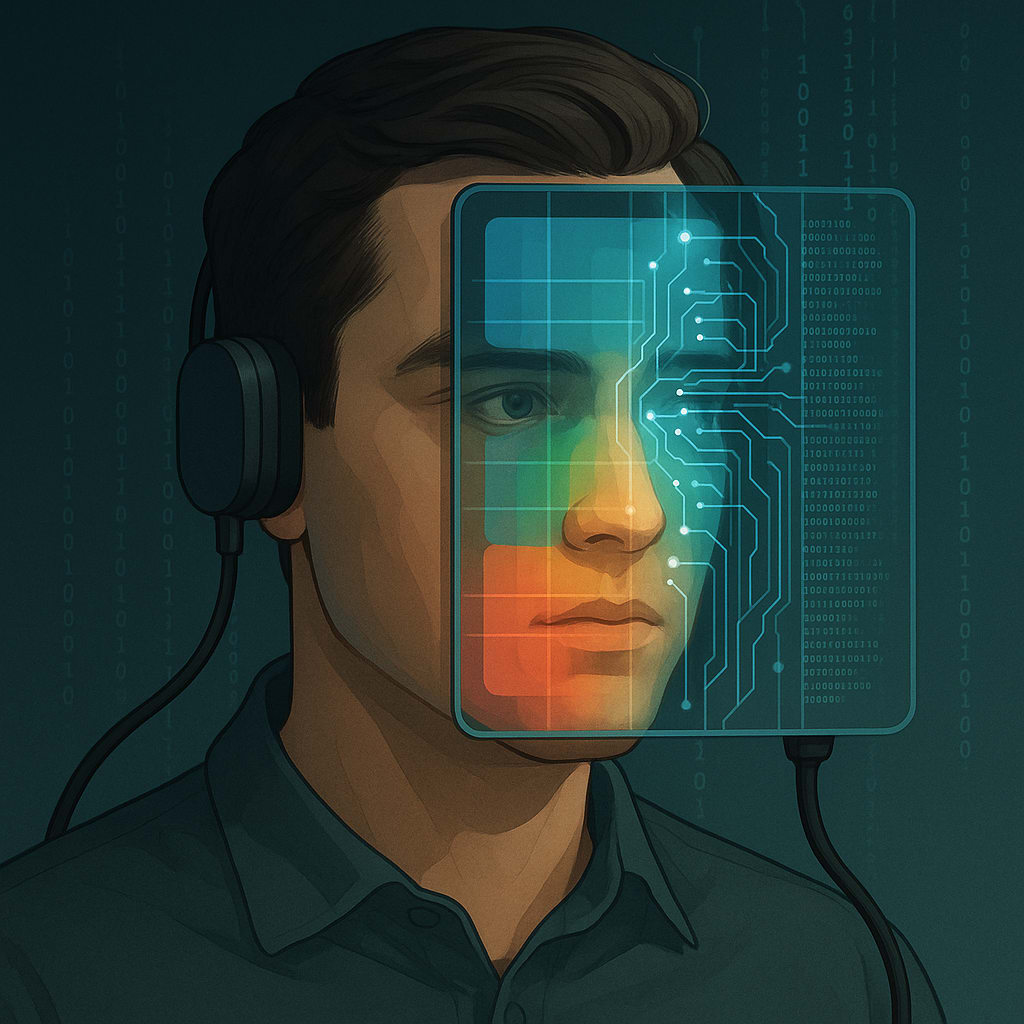
Imagine waking up and checking your phone. Not because you want to, but because something deep in the system knows exactly when your dopamine dip will hit. Before you even realize it, a curated set of notifications pops up—not just to inform you, but to shift you. Slightly. Gently. Precisely.
The music app plays a song that subtly reminds you of your first breakup. The algorithm “knows” that melancholy on a Thursday morning makes you more introspective—more likely to engage with a certain kind of podcast. A podcast that leads you, eventually, to an ad. An ad you’re more likely to believe in because you're now... softened.
You didn’t choose this mood. It was assigned.
Welcome to the emotionally engineered society—where feelings are no longer private. They are the new data stream, the new product, and the new target.
🎯 From Behavior to Emotion: The Next Frontier
For years, tech has optimized for behavior: clicks, views, likes, shares. The metrics of action. But that game is evolving. As artificial intelligence grows more sophisticated, the real prize isn’t just what you do—it's how you feel.
Think about it:
Google adjusts search results based on intent.
TikTok fine-tunes your feed by the half-second.
Netflix runs A/B emotional testing on trailers.
Spotify builds playlists not just from music—but from mood.
We’ve moved past behaviorism. The next era is emotional conditioning—a subtle but relentless shaping of internal states. It's not just about capturing your attention anymore. It's about calibrating your feelings.
🧠 Emotional AI Is Already Here
This isn’t science fiction. Emotional AI is already quietly embedded in your life.
Affectiva reads your facial expressions to gauge emotional response during ads.
Replika simulates emotional companionship and mirrors your feelings back to you.
Instagram’s content timing subtly modulates your highs and lows through likes and story views.
Every platform is quietly answering the same question:
"How should this person feel right now to maximize engagement?"
And perhaps more disturbingly:
"What is the most efficient emotional state for conversion?"
🤖 Designed Feelings Are Still Real Feelings
Let’s be clear: if you cry during a film, it doesn’t matter whether it was written by a human or an algorithm—it’s still your tear. If a playlist lifts your spirits, even if it was auto-generated, the joy is real.
But here’s the trap:
When every feeling you experience is optimized for someone else’s goal, how do you know which emotions are truly yours?
At what point do your emotions stop being reflections of your life and start becoming responses to systems?
🧪 Mood as a Metric
Let’s take it a step further. In a future workplace, what if:
Your productivity score is tied to an AI-monitored emotional baseline?
Your insurance premium fluctuates based on your facial expressions?
Dating apps sort you not by interests—but by predicted emotional compatibility?
Mood becomes a metric. Not a private inner state, but a public, trackable, and manipulatable variable.
This isn’t just invasive.
It’s transformative.
🚪The Exit Is Hard to Find
Escaping this loop is tricky. These systems are designed not to imprison you with force, but to seduce you with relevance. Every suggestion is just accurate enough to feel comforting. Every playlist just close enough to your vibe. Every ad just empathetic enough to slip under your radar.
We’re not being programmed overtly.
We’re being nudged into ourselves, just slightly... rerouted.
And the more it works, the less we notice. Until the day we wake up and realize we haven’t had an unprompted feeling in weeks.
🧭 Owning Our Inner Worlds Again
So what can we do?
Cultivate emotional awareness. Ask yourself: “Why do I feel this way? Did something happen—or was something shown to me?”
Reclaim boredom. That empty space is where unfiltered emotion often lives.
Audit your inputs. Who benefits from you feeling this emotion right now?
Create before you consume. Art, writing, conversation—generate your own signals instead of reacting to theirs.
And maybe the hardest of all:
Be suspicious of perfect relevance. When something feels too tailor-made, ask what it's tailoring you toward.
🔚 Final Thought
There’s a quiet war happening—not over your attention, but over your emotion. And the scariest part isn’t losing control. It’s not realizing we already have.
When feelings can be forecasted, nudged, even planted—our sense of self begins to fragment.
But awareness is resistance.
And reclaiming our emotional autonomy may be the most human act we have left.
About the Creator
Ahmet Kıvanç Demirkıran
As a technology and innovation enthusiast, I aim to bring fresh perspectives to my readers, drawing from my experience.
Keep reading
More stories from Ahmet Kıvanç Demirkıran and writers in Futurism and other communities.
Rivian R2: A New Chapter in Electric Adventure Vehicles
Electric vehicles are no longer rare sights on the road, yet some announcements still capture public imagination in a powerful way. The Rivian R2 is one of those moments. When people first heard about this upcoming SUV, curiosity spread quickly. Drivers who love outdoor travel, quiet roads, and modern technology started wondering what Rivian might create next. The company already built a reputation for electric trucks and SUVs designed for exploration. Now the Rivian R2 promises something different: a vehicle that could bring that spirit to a wider audience. It represents more than a new model. For many people watching the electric vehicle market, the Rivian R2 signals a shift toward practical adventure, everyday usability, and a future where electric driving feels natural.
By Muqadas khan4 days ago in Futurism
AI in Recruitment Market to hit USD 2.6 Billion By 2033
The global AI in Recruitment Market is expanding steadily as organizations adopt intelligent technologies to improve hiring efficiency and workforce planning. The market is projected to reach approximately USD 2.6 billion by 2033, increasing from USD 0.8 billion in 2023, reflecting a 12.4% CAGR during the forecast period from 2024 to 2033.
By Roberto Crumabout 2 hours ago in Futurism
A Transparent Look at Vocal Challenges and Top Stories
Almost three years ago, we shared a resource article that served as a place for people to suggest new challenge prompts. We thought it would be a good idea to refresh that thread, and take the opportunity to answer a few common questions about top stories, how challenges are judged and how submissions are reviewed.
By Vocal Curation Team4 days ago in Resources


Comments (1)
To much reliance now on AI 😢🔮🤔