
The Death of Memorization: How AI is Redefining What We Really Need to Learn
Why education is shifting from remembering facts to cultivating thinking, creativity, and judgment.

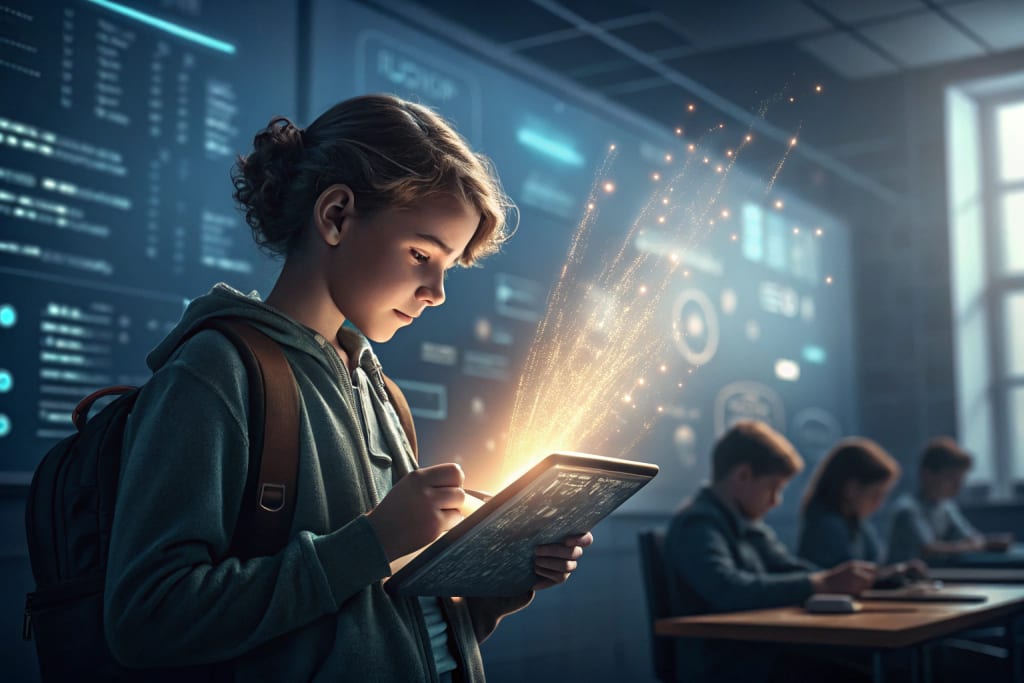
Introduction: When Memory Was the Heart of Education
For centuries, learning was synonymous with memory. To be educated was to possess the ability to recall holy scripture, historical dates, scientific formulas, or epic poems. Students recited, repeated, and wrote knowledge into their minds as if human memory was the apex of scholarship. For centuries, it was. Before the printing press, before Google, before artificial intelligence, the human brain was the storage house of civilization.
But now we have a world where a device in your pocket can bring back any piece of information within seconds, and AI systems not only can remember but also analyze, summarize, and even put knowledge into context at lightning speed. Such a shift forces us to pose a basic question: if machines can remember better than we can, what is the point of education?
The death of memorization is not a tragedy—it's a transition. As artificial intelligence assumes the role of collective memory for humankind, education is evolving from rote learning to something deeper: critical thinking, creativity, and wisdom in the application of knowledge. But this shift is not without risk. What does it do to our own brains if we outsource too much?
The Historical Role of Memorization in Education
To understand the revolution, we must start with tradition. For most of human history, memorization was the foundation of learning. Ancient Greek students memorized Homer's Iliad and Odyssey. In India, Vedic students spent years memorizing whole scriptures word for word, intonation by intonation. In medieval Europe, monks trained their brains to recall massive portions of the Bible and classical literature.
Even in modern schooling, memory remained front and center. Multiplication tables, spelling tests, history dates—students weren't being tested on their ability to question knowledge, but on their ability to memorize it. Schooling was more about creating living repositories of information than it was about creating thinkers.
There were good reasons. Knowledge was difficult to obtain, books were expensive, and information moved slowly. Humans needed to hold knowledge in their heads in order to survive and prosper. Memory was survival. Memory was power.
The First Cracks: Calculators, Computers, and Google
The monopoly of memorization began to break down with technology. The calculator erased the need to hold long division or trigonometry formulas in working memory. Teachers resisted at first. Calculators felt like cheating, compromising the integrity of learning. But schools accepted them as tools, recognizing that mathematical knowledge lay in problem-solving, not mechanistic calculation.
Then came the personal computer. Suddenly, students didn't have to memorize encyclopedic knowledge when CD-ROMs, and later the internet, placed oceans of information at their fingertips. Google became the great equalizer of trivia, rendering spectacular feats of recall almost routine. So what if you know the capital of Mongolia when you can find it in 0.3 seconds?
And today, AI shares a step ahead. In contrast with search engines, which provide facts, AI is able to create explanations, summaries, analogies, and even customized lessons. It's not merely memory; it's an active intellectual collaborator. For the very first time, students aren't in competition with machines in recalling—they're studying together with them in reasoning.
AI as Humanity's External Memory
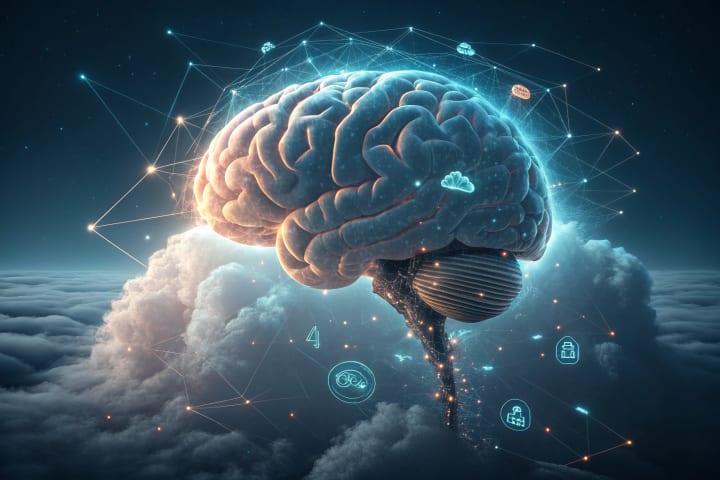
Artificial intelligence is an extension of human cognition. It has been called the exocortex: a virtual layer of processing and memory that supplements our biological brains. Instead of memorizing entire books, students can ask ChatGPT, Claude, or Gemini to summarize complex ideas in simple language, to quiz them, to make flashcards, or to show them how an expert would solve a problem.
This shift mirrors a broader cultural reality. We all already outsource memory daily. We no longer memorize phone numbers, directions, or recipes—we delegate to devices. AI amplifies this dependence. It's always on, infinitely scalable, and relentlessly accurate.
And here lies a paradox. Just as AI expands what we know, it also encourages us to know less directly. Why memorize the periodic table when an AI can rattle off not only the elements but their atomic weights, uses, and history in real time? The challenge to education is not whether to abandon memorization altogether—it has already done that—but what to substitute for it.
What Skills Become Necessary Now?
If AI has the facts, then the human role shifts to what machines cannot (yet) perform. Several skills emerge as essential:
Critical Thinking and Judgment
Students must learn to evaluate the information that AI provides. Machines can hallucinate, mislead, or oversimplify. Humans need the reasoning ability to question sources, weigh evidence, and decide what matters.
Creativity and Innovation
AI can reinterpret patterns, but breakthroughs typically come from creative leaps. Education has to nurture storytelling, design, invention, and cross-disciplinary insight—the sparks AI won't spark without human curiosity.
Problem-Solving in Context
Facts are material, but to address real-world problems, one requires nuance, empathy, and contextual awareness. Physicians, for instance, must interpret medical data accurately but also humanely.
Collaboration and Communication
As AI assumes intellectual grunt work, human worth is in partnership with other humans—persuading, negotiating, and building relationships between disparate groups.
Ethics and Responsibility
Wonderful tools usher in great responsibilities. Students will need to grapple with the ethical dimensions of AI, from privacy to bias to environmental impact.
In short: we don't require human hard drives to be trained anymore. We must create human visionaries, interpreters, and ethical agents.
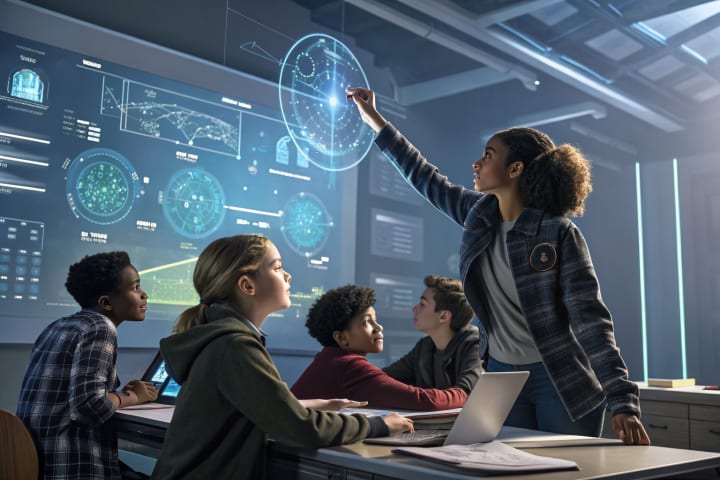
Balancing Recall and Reasoning
But this doesn't negate the function of memory. Cognitive science illustrates that a background of knowledge in long-term memory makes critical thinking itself better. A doctor who remembers basic anatomy can think more clearly about a diagnosis than one who has to look it up each time. A historian who remembers key dates and events can think about patterns without breaking in for fact-checking.
The sweet spot is balance. Memorization for basic frameworks, reasoning for the rest. Education must ask itself: what information is so basic to understanding of the world that it's worth memorizing, even in the age of AI? Multiplication tables, perhaps. Basic grammar. The scientific method. Beyond that, the curriculum should focus on thinking rather than reciting.
Dangers of Overreliance on AI for Learning
Every educational technology development is dangerous. Excessive use of calculators produced students who couldn't perform simple arithmetic without machines. Excessive use of AI could produce something more dangerous: students who cannot think critically at all.
Some dangers are:
• Shallow Understanding: If students use AI to regurgitate answers without effort, they may never gain deep understanding.
• Cognitive Atrophy: Like unused muscles, memory and logic may atrophy when constantly outsourced.
• Bias and Disinformation: AI systems may spread covert biases or authoritatively assert falsehoods. Uncritical students may absorb flawed knowledge.
• Loss of Patience: Learning requires time, frustration, and persistence. Instant answers risk eroding resilience and grit.
These risks indicate why AI needs to be a partner and not a replacement. Learning is less about having the correct answer than it is about wrestling with the question.
Possible Future Models of Education
Educators, technologists, and futurists are already creating new models for an AI-defined classroom:
• Flipped Learning with AI Tutors: Students learn basic material through personalized AI tutors at home, then apply and discuss in class with human teachers.
• Project-Based Education: Instead of memorize, students tackle real-world problems, with both teachers and AI assistants serving as guides.
• Skills First Curriculum: The emphasis shifts to adaptability, creativity, collaboration, and ethics, with memorization relegated to basic principles.
• Continuous Learning Ecosystems: Learning is lifelong, with AI supporting workers as on-demand coaches and trainers throughout careers.
Perhaps the most radical vision is one of education as co-evolution. Humans and AI learning together, shaping each other. AI is not just a crutch but a catalyst for human development that runs deeper.

Cultural and Expert Perspectives
Educators are divided. Some, like futurist Bryan Alexander, argue that AI is liberating, finally unshackling instructors from outmoded practices. Others worry it will degrade human intelligence. Psychologist John Vervaeke notes that meaning-making cannot be outsourced. Memorization, he argues, not only once stored facts but also facilitated identity and a feeling of continuity with culture.
Cultural theorists add nuance. Memorization is considered deference to wisdom in Confucian cultures, a link to the past. In Western cultures, creativity is occasionally preferred to recollection. The AI revolution will play out differently in both cultural contexts, raising questions about what we want to hold on to.
Personal stories reflect the ambivalence. A student in Seoul describes how ChatGPT helps to make concepts in physics more understandable to her than any textbook ever could. But a teacher in Chicago laments that her students now won't memorize even fundamental equations, insisting that AI should do it for them.
The tension is real: empowerment or dependence, liberation or laziness.
Conclusion: Resistance or Adaptation?
So, then, is the death of memorization a loss or an evolution? In fact, it's both. Something deeply human is slipping away—the art of holding great knowledge inside us, the pride of remembrance, the intimacy of memorized poetry whispered to ourselves. But something new is being born: a vision of education that emphasizes wisdom over recall, judgment over trivia, and creativity over rote.
In the internet age, solitude can be a revolutionary act. In the same way, to memorize in an age of AI may be a subtle discipline, a form of mental exercise. Yet the larger evolution is one of adaptation. Learning won't die—it will adapt, as it always has.
The role of memory is changing, but the role of the human mind is not diminished. It is being reconfigured. The future of learning is not about knowledge storage—it's about meaning-making. And in that, machines will never be our total replacements.
About the Creator
The Chaos Cabinet
A collection of fragments—stories, essays, and ideas stitched together like constellations. A little of everything, for the curious mind.
Keep reading
More stories from The Chaos Cabinet and writers in Futurism and other communities.
The Rise of AI Companions: Friend, Helper, or Menace?
Introduction: A Novel Form of Presence It started gently. A voice assistant ringing you up in the morning, reminding you of your appointments, suggesting a playlist to suit your mood. And then, chatbots began to reply to questions in remarkably human-sounding voices. Now, AI companions are no longer just virtual personal assistants—they are humanoid robots, interactive pets, and software buddies that learn from us, adapt to us, and sometimes even seem to understand us.
By The Chaos Cabinet12 days ago in Futurism
About Binding Prometheus
I want to start actively advocating on behalf of my own work, and the most valuable part of my canon is, without a doubt, Binding Prometheus, the play I have been working on since 2019 and only finished in 2023 as part of my MA. The play itself is an amalgamation of a million different inspirations. On one end, it evokes the Ancient Greek myth-play, deriving its own title from the earliest extant work of Western drama we have, Aeschylus’s Prometheus Bound. On the other end, it borrows significantly from the sci-fi bulwarks from over the years, namely Mary Shelley’s Frankenstein and Karel Capek’s Rossum’s Universal Robots. The play could be an episode of Black Mirror, I fear. I don’t know. I’ve only ever seen one episode of Black Mirror.
By Steven Christopher McKnight19 days ago in Futurism
Flexible Packaging Market Size and Forecast 2024–2033
Introduction The global packaging industry is undergoing a fundamental transformation as businesses, regulators, and consumers demand lighter, more sustainable, and more functional solutions. At the heart of this transformation lies flexible packaging—a category that has moved far beyond its early reputation for basic plastic wraps and bags. Today, flexible packaging is synonymous with innovation, sustainability, branding potential, and operational efficiency across industries.
By Aaina Oberoi6 days ago in Futurism



Comments
There are no comments for this story
Be the first to respond and start the conversation.