
The Day the Internet Went Silent
“When the world unplugged, humanity rediscovered itself.”

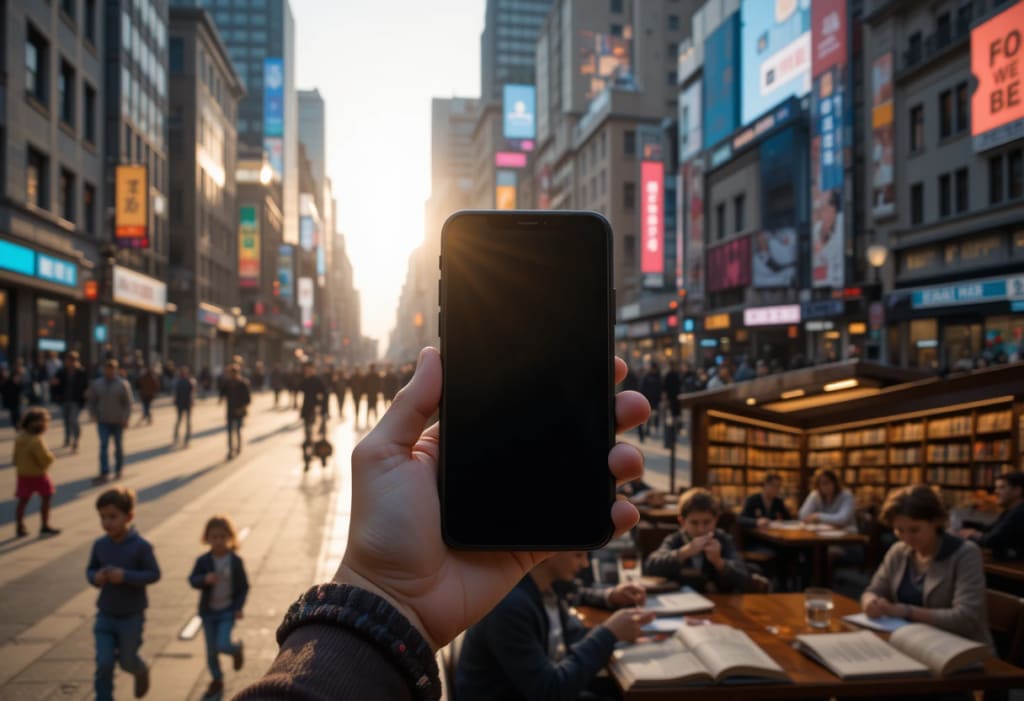
The Day the Internet Went Silent
“When the world unplugged, humanity rediscovered itself.”
It started with a single notification, or rather, the absence of one.
Alex woke to the quiet hum of his apartment, expecting the usual chorus of pings, vibrations, and alerts. There was none. He frowned, swiping his phone, tapping on apps, refreshing pages—nothing loaded. Not Gmail. Not Twitter. Not the news feed he compulsively scrolled through each morning. His smart coffee machine remained off, the display blank.
He rubbed his eyes and checked the router. The blinking lights—the comforting green and blue—were gone. Silent. Dead.
At first, Alex thought it was his building, his city, maybe even his ISP. But as he left his apartment and stepped into the street, the truth hit him: everyone else’s devices were dead too. A cyclist tried to call someone, shaking their phone in disbelief. People congregated in small groups on sidewalks, staring at blank screens like the world had become unrecognizable.
No one knew what had happened. No one had hacked the system. There was no announcement, no warning, no error code. Just silence.
The First Panic
By noon, chaos simmered in the air. ATMs were offline, and people realized they couldn’t pay for anything electronically. Restaurants relied on apps for ordering, and suddenly, menus were gone, tips could not be processed, and receipts were a distant memory. Social media, which had been the backbone of gossip, politics, and entertainment, was nothing more than a forgotten word.
Alex wandered through the city, watching neighbors argue over minor disputes that escalated quickly without the distraction of screens. Friends called out for information they could not access. News networks went silent. Even the radio, strangely, had gone dead. Communication as humanity knew it had vanished.
Yet, amid the confusion, something unexpected began to happen. People looked at each other. They spoke. They asked questions. They remembered how to use voices, gestures, and faces instead of emojis, memes, and GIFs.
Rediscovering Life Offline
By the third day, routines had shifted. Cafés handed out paper menus, libraries opened their doors, and old board games resurfaced in living rooms. Streets that had once been filled with heads bent over phones now teemed with conversation. Children played in parks without digital supervision. Families cooked meals together, sharing stories that had gone untold for years.
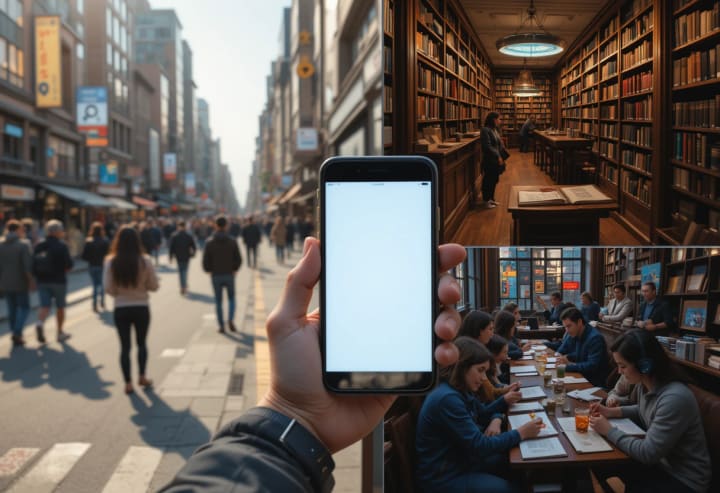
Alex found himself walking to the local library, a place he hadn’t visited in over a decade. The smell of books, the rustle of pages, and the faint whisper of other readers felt alive. He picked up a novel at random, flipping through pages that seemed heavier, richer, and more real than any digital text.
Even businesses adapted. Market stalls replaced online stores, and handwritten signs replaced app notifications. Skills that had been lost to automation resurfaced. People fixed things, crafted things, and traded things. The world, it seemed, was learning to breathe again.
Moments of Reflection
As days turned into a week, the initial panic faded. Humanity found a rhythm outside the cloud, the servers, and the endless notifications. People began noticing the subtler beauties of life. Sunsets were no longer posted online—they were witnessed, felt. Birdsong became an alarm clock. Laughter was no longer typed; it resonated in the air.
Alex, who had spent hours endlessly scrolling through feeds, realized he had not felt this present in years. His neighbor, an elderly man he barely spoke to, waved from across the street, and Alex waved back, recognizing a human connection he had ignored for too long.
In some ways, the silence was merciless. Information that had been instant was now delayed. Stock markets froze. Hospitals struggled without digital records. But the world adapted. People created handwritten logs, memorized schedules, and learned to trust their intuition. The fragility of dependence became clear—but so did the resilience of the human spirit.
The New Normal
By the end of the first month, the internet remained silent. And yet, life had adapted, even thrived in unexpected ways. Alex walked through his city and noticed conversations blooming in places that had once been silent. Street musicians played, not for likes, but for joy. Children learned to tell stories aloud rather than type them. Communities, long fractured by digital bubbles, came together.
Alex began journaling every day, writing thoughts, observations, and feelings by hand—a ritual that had been unimaginable before. He discovered a patience he didn’t know he possessed, and a presence that no Wi-Fi signal could replicate.
Humans, he realized, had been living in the shadows of algorithms, feeds, and notifications. When the internet fell silent, the shadows disappeared, revealing the essence of life: connection, presence, and shared experience.
It was a new kind of freedom, and it tasted profoundly sweet.
And though Alex, and the rest of the world, did not know if the internet would ever return, it no longer mattered. Life had learned to exist without it, richer, slower, and more deeply human than before.
Sometimes, silence, he thought, is not empty. Sometimes, silence teaches you how to hear.
About the Creator
Keep reading
More stories from waseem khan and writers in Futurism and other communities.
I Made My First $100 Online While Crying in My Parents' Basement
"I Made My First $100 Online While Crying in My Parents' Basement" Genre: Memoir / Emotional Survival I was 27 years old, broke, and living in my parents' basement—the same one I used to play hide and seek in as a kid. But this time, there was no game, no giggles, and nowhere left to hide.
By waseem khan8 months ago in Futurism
Biggest LLM Mistakes Companies Make
The rush to adopt generative AI has pushed many companies to deploy chatbots and language models without a clear strategy. While the intention is to improve productivity and reduce costs, the absence of proper LLM development solutions often leads to inaccurate outputs, security risks, and failed implementations. What looks like quick innovation on the surface can quietly become a long-term operational problem.
By Ritu Singh5 days ago in Futurism
Australia Duty-Free Travel Retail Market: Passenger Traffic Recovery, Retail Innovation & Consumer Preferences
According to IMARC Group, the Australia duty-free and travel retail market reached USD 1.3 Billion in 2025 and is projected to expand to USD 2.3 Billion by 2034, exhibiting a compound annual growth rate (CAGR) of 6.13% during 2026–2034. The steady recovery of international and domestic air travel across Australia is revitalizing airport retail ecosystems. Rising tourism flows, increasing demand for luxury goods and the growing influence of digital retail technologies are reshaping the competitive landscape. As airports evolve into experiential commercial hubs rather than mere transit points, duty-free travel retail is entering a new phase of innovation and strategic expansion.
By Shrestha Roy6 days ago in Futurism




Comments
There are no comments for this story
Be the first to respond and start the conversation.