
The Connection of Tomorrow
Uniting Minds, Bridging Hearts

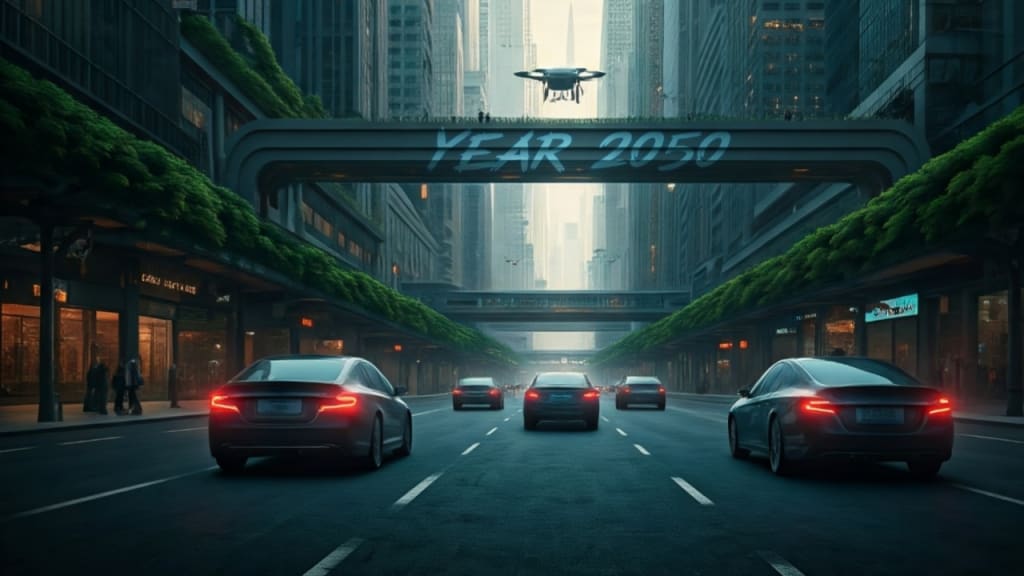
Year: 2050. The world had long surpassed the limits of what once seemed possible. Earth, which had struggled with climate crises and endless wars, had entered a new era of harmony through technological advances, social changes, and a revolution in the way people saw each other.
In the heart of a lush metropolis, now famous for its ability to generate clean energy and its architecture blending seamlessly with nature, there was a young scientist named Lara. She wasn’t just one of the brightest minds of her generation, but also a dreamer. Lara believed that the key to the future lay in a simple yet powerful concept: digital empathy.
Lara had grown up in a world where emotional disconnection seemed to be on the rise. Despite astonishing technological advancements, humanity had paid a price — a growing sense of isolation. Social media, while bringing millions together in a virtual space, had become a glass screen where humans were reflected but never truly touched. Conversations became shorter, emotions filtered, and genuine connection rare. Lara knew that to overcome this disconnection, she needed to create something more than a tool or device; she needed to spark a shift in how humans related to one another.
Her breakthrough came after years of research and countless failures. The result was the Crystal, a device capable of not only connecting minds but also transferring emotions from one person to another with unprecedented accuracy. The Crystal wasn’t merely an augmented reality interface — it was a bridge between hearts. By placing a holographic crystal above their heads, individuals could experience the feelings of others: anguish, joy, hope, fear, and love, all with such clarity that words became unnecessary.
The idea behind the Crystal was profound yet simple: to create a world where no one ever felt alone, where pain was shared and therefore eased, and where triumphs were celebrated collectively. Lara believed that if people could truly feel one another’s emotions, even the most bitter conflicts could be resolved through understanding.
However, Lara understood the challenges ahead. The concept of sharing one’s emotional core was revolutionary, but it also frightened many. People were used to guarding their innermost feelings, and the idea of emotional transparency felt invasive. Would the Crystal be misused? Could it be weaponized, or manipulated for personal gain?
Despite the doubts, Lara pressed on, driven by a vision of a united humanity. She worked tirelessly, collaborating with ethicists, technologists, and psychologists to ensure the Crystal’s design prioritized consent and safety. Each user would have full control over what they chose to share, and safeguards were embedded into the system to prevent exploitation.
When the Crystal was finally unveiled to the public, the response was polarizing. Some embraced it wholeheartedly, seeing it as the next step in human evolution. Others resisted, wary of its implications. Yet, as time passed, curiosity outweighed fear. People began experimenting with the device, starting with small, controlled interactions.
For the first time, individuals could not only hear someone say they were grieving but could feel the depth of their loss. They could experience the exhilaration of a stranger achieving a lifelong dream or the serenity of a child’s innocent laughter. The Crystal transformed human relationships, making empathy a tangible experience rather than an abstract concept.
One of the first major societal shifts occurred in education. Teachers, equipped with the Crystal, could better understand the struggles of their students. A child who had been labeled as “disruptive” was revealed to be battling deep anxiety. This new understanding led to tailored approaches that helped students thrive.
In medicine, the Crystal revolutionized patient care. Doctors no longer relied solely on verbal descriptions of symptoms; they could feel their patients' pain and better grasp the emotional toll of their conditions. Diagnoses became more precise, and treatments more compassionate.
Beyond these practical applications, the Crystal reshaped cultural exchanges. Imagine a student in Japan using the Crystal to feel the passion of a Brazilian dancer during Carnival or an artist in Africa experiencing the quiet contemplation of a Scandinavian painter. The device broke down barriers of language and geography, creating a global tapestry of shared experiences.
As the Crystal gained widespread acceptance, its impact on politics was profound. World leaders, often criticized for being detached from the realities of their citizens, began using the device to connect with the people they served. A president could feel the desperation of a struggling farmer or the hope of a young activist. Decision-making became rooted in empathy rather than cold logic.
Of course, the road to universal adoption was not without obstacles. There were incidents of misuse, as skeptics had feared. Some attempted to manipulate the Crystal to exploit vulnerabilities or gain power. However, these cases were rare and swiftly addressed by strict regulations and technological advancements. The overwhelming majority of users embraced the device for its intended purpose: fostering understanding and connection.
Lara watched all of this unfold with a mix of pride and awe. She had always believed in the potential of her invention, but even she couldn’t have predicted the profound changes it would bring. The world was not just becoming more advanced — it was becoming more humane.
One of the most poignant moments of Lara’s journey came when she connected with her own mother through the Crystal. Growing up, their relationship had been strained, filled with misunderstandings and unspoken grievances. But through the device, they were able to truly feel each other’s emotions for the first time. Lara felt the sacrifices her mother had made, the love she had struggled to express, and the pain of their distance. Her mother, in turn, experienced Lara’s insecurities, her determination, and her deep yearning for connection. In that moment, decades of tension dissolved into mutual understanding and forgiveness.
The Crystal’s influence continued to grow, sparking a cultural renaissance. Art, music, and storytelling were transformed as creators shared not just their work, but the emotions that inspired it. Imagine listening to a symphony and feeling the composer’s exhilaration or reading a novel while experiencing the author’s despair and hope.
As humanity moved forward, a profound question emerged: What did it mean to be human in a world where emotions could be shared so freely? For some, the Crystal represented liberation, a chance to break down walls of isolation and truly connect. For others, it was a reminder of the vulnerability that came with being human.
Lara, now regarded as one of history’s greatest visionaries, often reflected on the path that had brought her here. She had started with a dream of bridging emotional divides, and now she was witnessing a world transformed.
In the year 2050, as more people embraced the Crystal, one truth became clear: the future was not just about technological advancement. It was about rediscovering the essence of humanity — the capacity to love, to understand, and to grow together.
And so, as humanity stood on the precipice of this new era, one question echoed in every heart: What if the future wasn’t just about what we do, but about how we feel together?
With the Crystal as a beacon of hope, the answer seemed closer than ever.
About the Creator
( Mikael Jonatas )
I'm Mikael, a storyteller and expert in impressive stories. I write about curiosities and a little bit of everything...
Reader insights
Outstanding
Excellent work. Looking forward to reading more!
Top insights
Compelling and original writing
Creative use of language & vocab
Easy to read and follow
Well-structured & engaging content
Excellent storytelling
Original narrative & well developed characters
Expert insights and opinions
Arguments were carefully researched and presented
Eye opening
Niche topic & fresh perspectives
Heartfelt and relatable
The story invoked strong personal emotions
Masterful proofreading
Zero grammar & spelling mistakes
On-point and relevant
Writing reflected the title & theme
Keep reading
More stories from writers in Futurism and other communities.
Apple’s 2026 Reshuffle: 4 Surprising Shifts Redefining the Post-Ive Era
1. The "New" Apple Takes Shape The ghost of Jony Ive has finally left the building. Apple just concluded a "Big Week" that saw the release of seven distinct products—ranging from the breakthrough MacBook Neo to the M4 iPad Air and AirTag 2—but the real story isn't the hardware. It is the names on the leadership page.
By Tech Horizons2 days ago in Futurism
AI in Visual Effects Market Demand to Hit USD 9.6 Billion By 2033
The Global AI in Visual Effects Market is projected to reach approximately USD 9.6 Billion by 2033, rising from USD 1.6 Billion in 2023, reflecting a CAGR of 19.6% during the forecast period from 2024 to 2033. The market expansion is supported by the increasing use of artificial intelligence technologies in film production, gaming, advertising, and digital media.
By Roberto Cruma day ago in Futurism


Comments (1)
I found the idea very interesting, this story generated strong emotions and reading it reminded me of the stories I read before...