
The Clockmaker’s Apprentice
Time teaches lessons, but only those who listen can truly understand.

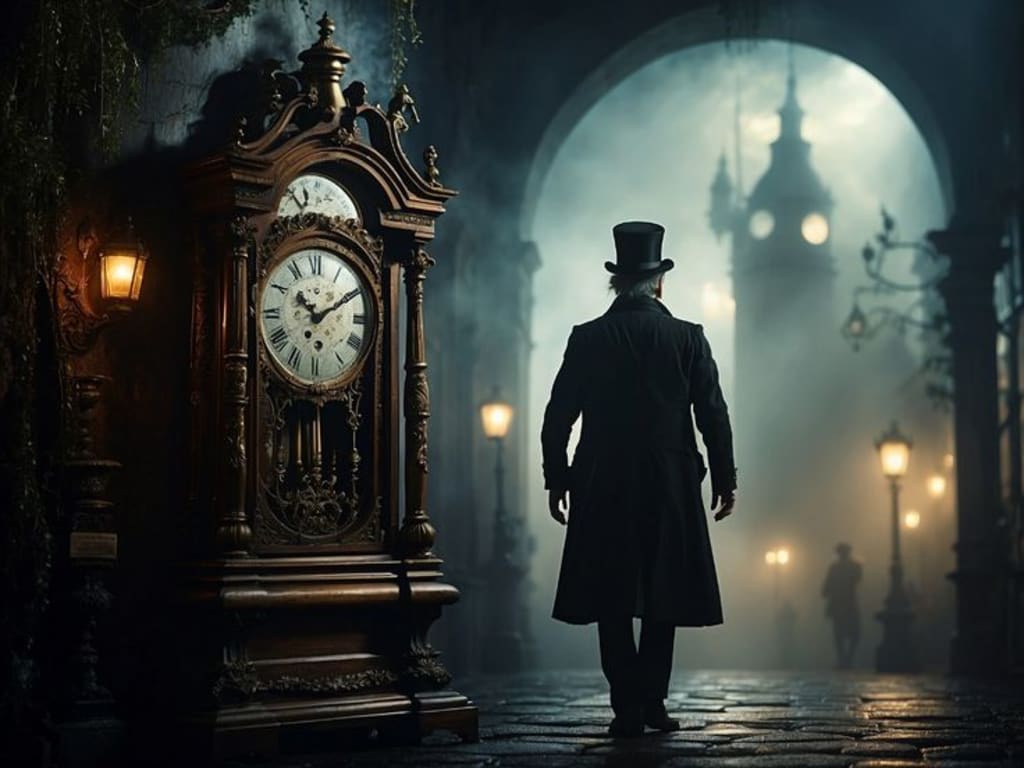
In the heart of the old city, between narrow streets and bustling marketplaces, there was a small shop where time seemed to move differently. The sign read Marcellus & Sons: Clockmakers, but to most passersby, it appeared to be little more than a curiosity. Intricate gears spun behind glass, pendulums swung with mesmerizing rhythm, and the faint ticking of countless clocks created a symphony of precision and patience.
Elior had dreamed of working there ever since he could remember. The apprenticeship was rigorous, reserved for only those who displayed patience, curiosity, and reverence for time itself. When Master Marcellus finally agreed to take him on, Elior felt both exhilaration and fear. He understood that he was not merely learning a trade—he was entering a world governed by meticulous order, history, and the invisible pulse of every second.
The early days were grueling. Elior polished brass gears until his fingers were raw, studied the mechanisms of clocks until his eyes blurred, and memorized the patterns of ancient timepieces that had ticked for centuries. Master Marcellus was demanding but fair, insisting that every cog, spring, and wheel be understood, not just assembled.
“You must listen to the clock, not just watch it,” the master told him one evening. “Every clock has its own rhythm. Some speak of the past, some of the future, and some…of moments yet to come. If you rush, if you ignore the subtle signals, you will fail to hear what time is truly saying.”
Elior struggled with the concept at first. Time, to him, had always been measured—seconds, minutes, hours. But as he worked alongside Marcellus, repairing a centuries-old grandfather clock or calibrating a delicate wristwatch, he began to sense the subtle differences in each mechanism. Some clocks ticked with a melancholy cadence, others with urgent energy, and a rare few…seemed almost alive.
One night, while polishing an intricate pocket watch, Elior noticed a small engraving he had never seen before: To the one who truly listens, time will reveal its secrets. Curious, he held the watch close, listening carefully. As he did, the ticking seemed to shift, aligning with his heartbeat. A vision flashed in his mind—a memory of the shop decades ago, Marcellus as a young man, learning the same lessons from his own master.
It dawned on Elior that the apprenticeship was more than mechanical skill. It was about understanding the flow of life, the interconnectedness of moments, and the unseen forces that govern the passage of time. Each repair, each calibration, was a dialogue with the past, a preparation for the future, and a meditation on the present.
Months turned into years. Elior mastered the art of listening, feeling the rhythm of every clock he touched. He could predict when a mechanism would fail, sense the wear of hidden gears, and even identify the history of a timepiece through its unique cadence. And in doing so, he discovered a deeper lesson: that life itself was like a clock, intricate and delicate, requiring patience, observation, and care.
When Master Marcellus finally stepped back, leaving Elior to manage the shop, he smiled knowingly. “Time has chosen well,” he said. “Remember, the moments you repair or create are not just for clocks—they are for the lives they mark.”
Elior looked at the rows of ticking clocks, the steady pulse filling the room, and understood the truth of his master’s words. In every second, there was potential, wisdom, and beauty. And those who listened closely could hear the song of time itself.
In every second, there was potential, wisdom, and beauty. And those who listened closely could hear the song of time itself.
About the Creator
Sudais Zakwan
Sudais Zakwan – Storyteller of Emotions
Sudais Zakwan is a passionate story writer known for crafting emotionally rich and thought-provoking stories that resonate with readers of all ages. With a unique voice and creative flair.
Keep reading
More stories from Sudais Zakwan and writers in Futurism and other communities.
The Last Sunrise on Mars
The red dust stretched endlessly under the thin Martian sky, glowing softly as the first rays of the sun crept over the horizon. Commander Tariq Alvi stood on the observation deck of the settlement, his gloved hands pressed against the cold, reinforced glass. This was the moment he had been waiting for—the last sunrise he would witness on Mars before returning to Earth.
By Sudais Zakwanabout 5 hours ago in Futurism
Egypt Fruits and Vegetables Market: Industry Overview, Key Players & Future Outlook
According to IMARC Group's latest research publication, Egypt fruits and vegetables market size reached USD 875.2 Million in 2025. The market is projected to reach USD 1,725.2 Million by 2034, exhibiting a growth rate of 7.44% during 2026-2034.
By Abhay Rajputabout 9 hours ago in Futurism
Egypt Plywood Market: Sustainable Wood Usage, Product Innovation & Industry Growth
According to IMARC Group's latest research publication, Egypt plywood market size reached USD 175.58 Million in 2024. The market is projected to reach USD 262.74 Million by 2033, exhibiting a growth rate of 4.48% during 2025-2033.
By Abhay Rajputa day ago in Futurism
Why Black History Matters in America?
The United States of America is celebrating their 250th anniversary in 2026. I'm proud to be an American and as someone who was born here, I wouldn't imagine myself living anywhere else. This is a country where opportunities are possible. Where anyone can be successful in anything they desire to do. Equality, community, and togetherness are the backbones of what America is and should be about. However, we have an administration who wants to erase and disregard those who have made positive, meaningful impacts in our country, specifically Black figures, such as Martin Luther King, Jr., Rosa Parks, and Maya Angelou. President Trump and his administration have been constantly complaining and fighting against what they call the "Woke agenda". They use this excuse as a distraction from other issues they refuse to address, such as the high cost of living, climate change, and inflation. That equality is dividing America, when in reality, it's bringing us together. Being woke is not tied to a specific political party. No matter where you stand on the political spectrum, you can still care about other people and their plights. Compassion and empathy for others isn't tied to a political party, either. We were taught as children to treat others the way we want to be treated and not judge others because they're different from us. Caring about others isn't a personal attack on your beliefs. It doesn't make you any less of a person. People who are easily offended over African American figures, past or present, or anything related to it, are grasping at straws. Current and future generations need to know who people like Harriet Tubman and Shirley Chisholm were, especially in the classroom. Black History is part of American History. It should be recognized, not hidden or forgotten. Besides, you can't shield children from everything, just because your feelings are easily hurt.
By Mark Wesley Pritchard 3 days ago in The Swamp


Comments
There are no comments for this story
Be the first to respond and start the conversation.