
The Cities of Tomorrow: How Floating Homes Could Solve Overpopulation
From Houseboats to Floating Metropolises

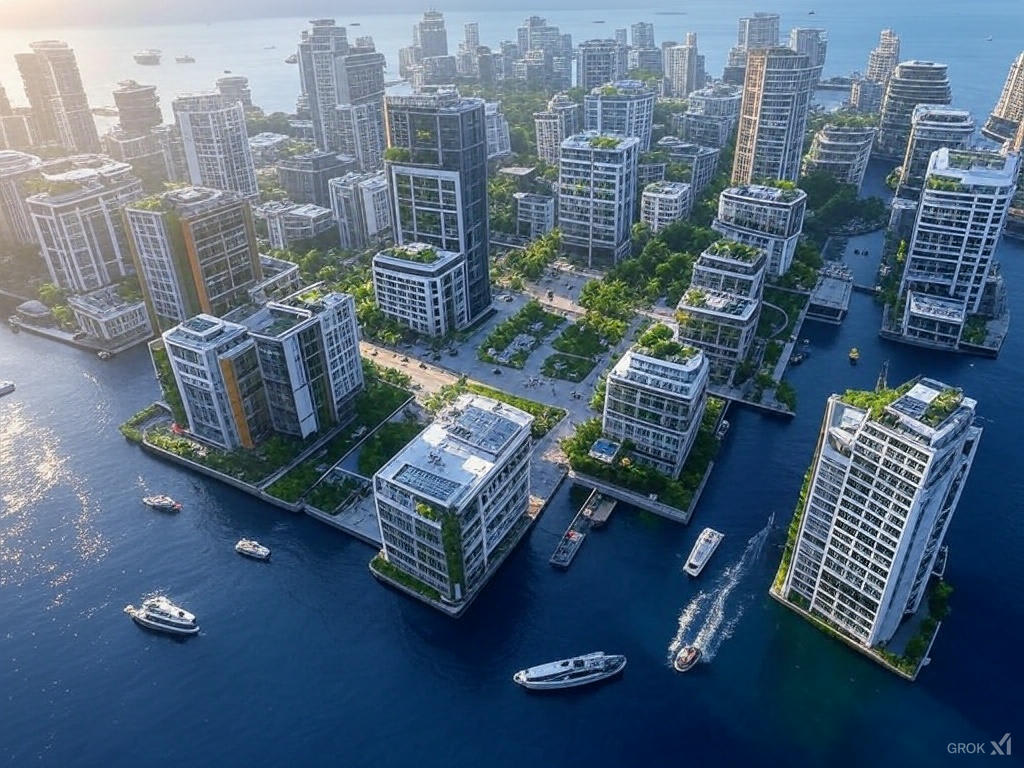
The world is running out of room. With the global population hurtling toward 10 billion by 2050, cities are straining at the seams. Urban sprawl devours forests and farmland, housing crises push rents into the stratosphere, and coastal regions grapple with the twin perils of overcrowding and rising seas. Traditional solutions—building skyscrapers or sprawling suburbs—can only go so far. But what if the answer lies not on land, but on water? Floating homes, once a quirky novelty, are emerging as a radical blueprint for the cities of tomorrow, promising to ease overpopulation while reimagining how we live.
From Houseboats to Floating Metropolises
Humans have long turned to water in times of need. The houseboats lining Amsterdam’s canals, the stilted fishing villages of Cambodia’s Tonle Sap, and the floating markets of Thailand all hint at our aquatic adaptability. Yet, today’s vision goes far beyond these modest roots. Architects, engineers, and urban planners are sketching out entire floating cities—modular, self-sufficient communities designed to thrive on oceans, rivers, and lakes. These aren’t mere shelters; they’re vibrant ecosystems, equipped with solar panels, desalination systems, and hydroponic farms, capable of housing thousands without taxing the land.
Picture a gleaming flotilla off the coast of Miami, its platforms dotted with homes, schools, and green spaces, all swaying gently with the tides. Or envision a sprawling waterborne district near Tokyo, its towers rising from buoyant bases, powered by wave energy. Companies like Oceanix are already turning these dreams into blueprints, proposing flood-proof settlements that could accommodate millions in regions where land is scarce or sinking. For low-lying nations like the Maldives, where 80% of the territory sits less than a meter above sea level, floating cities aren’t a luxury—they’re a necessity.
A Lifeline for Overpopulation
Overpopulation isn’t just a matter of too many people; it’s about too little space, too few resources, and too much vulnerability. Floating homes could address all three crises at once. By moving populations offshore, they free up precious land for agriculture, reforestation, or simply breathing room. A single hectare of floating platform could house hundreds, while the reclaimed land onshore grows food or restores ecosystems. Energy, too, could shift to the water—wave turbines, floating solar farms, and even hydrogen generators could power these communities, reducing strain on overburdened urban grids.
Consider Singapore, a city-state where 5.7 million people squeeze into just 728 square kilometers. Land reclamation has long been its go-to fix, but the seabed isn’t infinite. Floating neighborhoods could absorb future growth, preserving green spaces and reducing density pressures. In megacities like Lagos, Nigeria, where informal settlements sprawl across flood-prone zones, modular floating homes could replace slums with affordable, resilient housing. The numbers are striking: if 10% of the world’s urban population—roughly 500 million people—shifted to floating communities by mid-century, it could relieve pressure on an area the size of France, some 550,000 square kilometers.
Beyond space, floating cities offer climate resilience. As sea levels climb—projected to rise by up to a meter by 2100—coastal cities face existential threats. Traditional defenses like seawalls are costly and temporary, but floating structures rise with the water, adapting where concrete fails. For displaced communities, from Bangladesh to Miami, this could mean a stable home when the land disappears.
Navigating the Stormy Waters Ahead
Of course, the road to floating cities is choppy. Cost is a towering barrier—Oceanix estimates a 75-hectare settlement could run into the billions, a price tag that daunts even wealthy nations. Engineering challenges abound, too. How do you anchor a city against a Category 5 hurricane? How do you prevent saltwater corrosion from eating away at foundations? The Netherlands, a leader in water-based innovation, offers hope—its floating farms and homes have weathered storms—but scaling up remains untested.
Governance poses another riddle. A floating city in international waters could dodge taxes and regulations, but who enforces laws or resolves disputes? Privacy, piracy, and political jurisdiction could turn these havens into headaches. And then there’s the human element. Will people embrace a life adrift, or will the isolation, motion sickness, and lack of solid ground breed discontent? Early adopters might relish the novelty, but mass acceptance is a tougher sell
Environmental risks can’t be ignored either. A poorly designed floating city could poison marine life with waste or disrupt currents and habitats. Yet, advocates insist that with cutting-edge tech—closed-loop sewage systems, biodegradable materials, and artificial reefs beneath platforms—these cities could outshine land-based sprawl in sustainability. The Dutch, for instance, have paired floating homes with wetland restoration, proving water and nature can coexist.
A Future Worth Building
Floating homes won’t erase overpopulation single-handedly. They’re a bold complement to a broader toolkit—smarter urban design, renewable energy, and population policies. But their potential is undeniable. By 2050, as skylines yield to seascapes, these cities could house millions, preserve ecosystems, and defy climate collapse. The Maldives has already commissioned floating prototypes, while cities like Busan, South Korea, explore similar ventures. Small steps today could buoy us toward a revolutionary tomorrow.
For now, floating cities hover between fantasy and feasibility. The tech exists, the need is urgent, and the vision is intoxicating. As land vanishes and populations soar, necessity may force us to take the plunge. Could you imagine trading terra firma for a home on the waves? The cities of tomorrow aren’t just coming—they’re floating into view.
About the Creator
Pure Crown
I am a storyteller blending creativity with analytical thinking to craft compelling narratives. I write about personal development, motivation, science, and technology to inspire, educate, and entertain.
Keep reading
More stories from Pure Crown and writers in Futurism and other communities.
The Next Big Threat: How Cyberwars Could Shape the Future
Picture this: it’s a sunny day, you’re sipping lemonade, and suddenly—bam!—your toaster’s holding your Wi-Fi hostage, demanding Bitcoin. Welcome to the wild world of cyberwars, where the bad guys don’t need tanks or capes—just a laptop and a grudge. Today, February 20, 2025, we’re already dodging digital bullets, but the future? Oh, it’s gonna be a blockbuster. Let’s unpack this high-tech thriller, laugh at the chaos, and figure out how to come out on top—because you’ve got this!
By Pure Crownabout a year ago in Futurism
Your Face is Getting a Major Upgrade: 5 Game-Changing Features Coming to Meta Ray-Ban Display
When the $800 Meta Ray-Ban Display glasses hit the market in October, they felt like a prop pulled straight from a high-budget sci-fi thriller. For the early adopters who secured a pair, the experience of a heads-up display (HUD) glowing within their field of vision was nothing short of exhilarating. However, as with many first-generation devices, the initial thrill was tempered by a lingering sense that we were wearing a high-tech prototype—one that excelled at snapping photos and answering voice queries but remained largely tethered to a static, limited framework.
By Tech Horizonsabout 3 hours ago in Futurism
Australia Pro AV Market: Hybrid Work Demand, Digital Signage & Smart AV Technologies
According to IMARC Group, the Australia pro AV market reached a value of USD 93.9 Million in 2025 and is projected to reach USD 133.6 Million by 2034, growing at a compound annual growth rate (CAGR) of 3.88% during 2026–2034. The market is expanding as organizations increasingly adopt advanced audiovisual solutions to support communication, collaboration and digital engagement. Hybrid work environments are encouraging businesses to invest in video conferencing systems, smart displays and integrated collaboration platforms that connect remote and in-office teams. At the same time, industries such as retail, hospitality and tourism are investing in digital signage to improve customer engagement and brand communication. As companies focus on creating interactive and technology-driven environments, professional AV solutions are becoming essential tools for modern workplaces, entertainment venues and commercial spaces across Australia.
By Kevin Cooper6 days ago in Futurism
Why Didn't Anyone Tell Us
Men, move along. This is not for you. This is for the women. I was forty-five when I began menopause. It is pretty young for that to be going on in a woman’s life, but I had undiagnosed PCOS, my entire life. Thank you to all the gynecologists I had seen my entire life. That in itself should encourage women to keep seeking second opinions, especially when you are not getting correct answers or any at all.
By Alexandra Grant4 days ago in Humans



Comments (1)
I like this very much 🍀🍀🍀🍀🍀