
The Brain’s Hidden Superpower What AI Still Can’t Grasp
What AI Still Can’t Grasp
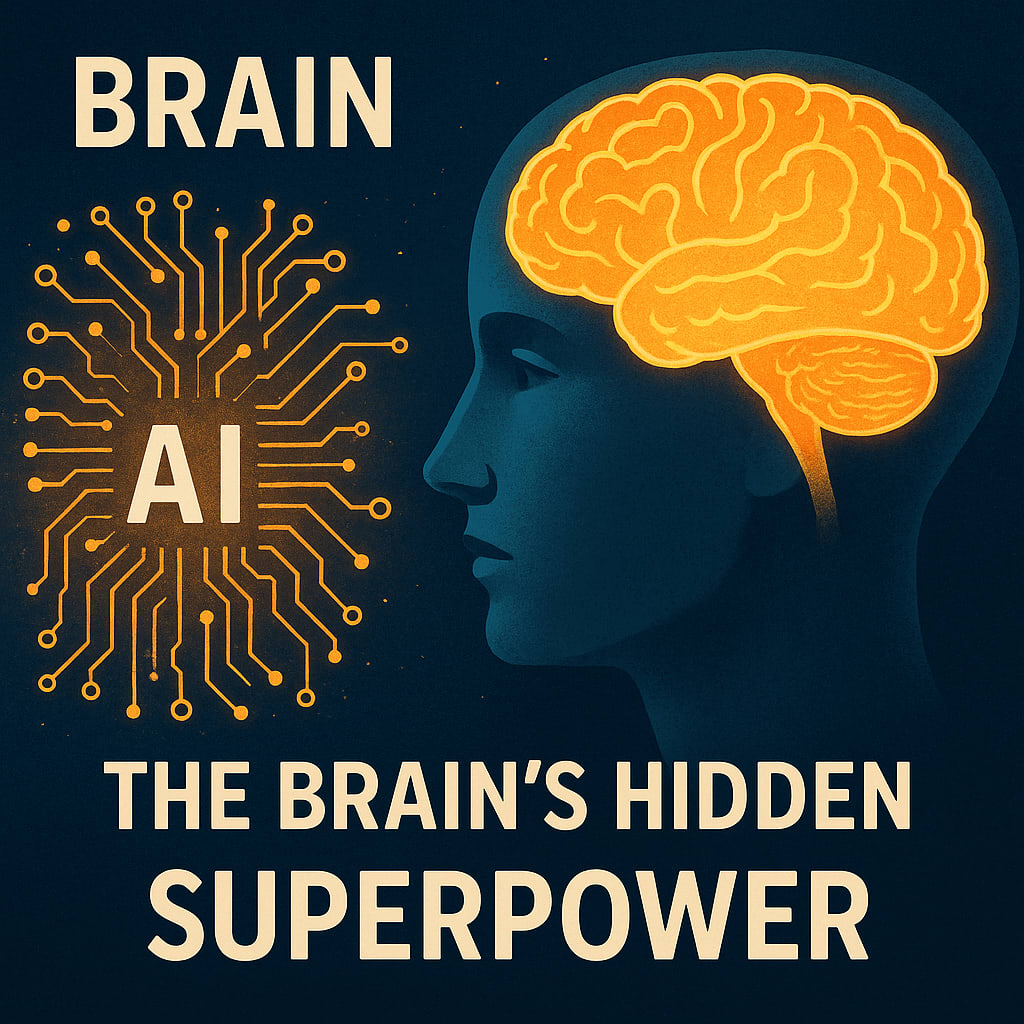
We walk through the world each day with the effortless grace of knowing what to do. We don’t stop to calculate whether stairs are for climbing, or if a lake is for swimming. Our brain just knows. This innate understanding—the ability to instantly recognize what actions a space allows—is something that artificial intelligence still fails to master.
And that, it turns out, may be the brain’s most underrated superpower.
Intuition at the Speed of Thought
A new study from the University of Amsterdam has confirmed what psychologists have long suspected but never conclusively proven: the human brain is hardwired to perceive affordances—the potential actions available in any given environment. And it does this without conscious thought.
Using functional magnetic resonance imaging (fMRI), researchers observed how participants responded to images of streets, stairs, fields, and lakes. They were asked what they believed could be done in each environment—walk, climb, swim, drive, etc.—while their brain activity was tracked.
The results were stunning.
Not only did participants quickly identify possible actions, but the visual cortex—specifically the area responsible for object and color recognition—was also engaged in predicting interactions. These signals appeared even when the brain wasn’t explicitly instructed to analyze or decide anything. The conclusion: our brain doesn’t just see—it understands how to act.
The Efficiency of Being Human
One of the brain’s greatest gifts is its energy efficiency. It processes vast amounts of data using just about 20 watts of energy—equivalent to a dim light bulb. And yet, this small biological machine allows us to make life-preserving decisions, map environments, and move through the world with agility and speed.
Unlike artificial intelligence, which relies on pre-trained models, massive computation, and data sets, the human brain operates on real-time bodily experience, forming a fluid, adaptive intelligence that responds to the environment in context.
This difference is especially stark when we compare it to even the most sophisticated AI systems, such as ChatGPT or computer vision algorithms. These models, while exceptional at recognizing patterns and labeling images, struggle to determine how those images should be interacted with.
For example, AI can label a picture of a staircase. But can it feel the incline? Can it predict the strain on a body climbing it, or determine how slippery the step might be after rain? The answer, for now, is no.
Why Machines Still Lag Behind
The project's lead researcher, Iris Groen, emphasizes that these insights are more than theoretical. In an age where AI is deployed in medicine, robotics, self-driving cars, and disaster response, it is no longer enough for machines to recognize “what” they see. They must also understand what to do with it.
In essence, machines must begin to interpret the world like humans do.
A rescue robot navigating earthquake rubble or a self-driving vehicle approaching a flooded road must assess affordances—Is it safe to proceed? Should I turn back? Is that space walkable, climbable, or impassable?
And here’s the paradox: while machines can outperform us in speed and memory, they still cannot compete with embodied, intuitive intelligence—the kind that emerges not from calculation, but from experience.
The RISE Formula in Action
This research resonates deeply with my lifelong philosophy: RISE—Resilience, Intelligence, Synergy, Empathy. The human brain, through its quiet, instinctual genius, embodies this formula in ways that modern AI can only aspire to:
Resilience – our ability to adapt instantly in unfamiliar environments.
Intelligence – not merely informational, but practical, emotional, and spatial.
Synergy – the interplay between memory, perception, and bodily response.
Empathy – our capacity to sense not only what’s possible, but what’s meaningful.
We often mistake intelligence for data accumulation. But true intelligence lies in interpretation, in the seamless dance between perception and action. The stairs don’t need to be explained to a child. Nor does a fence require a philosophical debate—it is either climbed, walked around, or left behind. This kind of judgment is not taught. It is felt.
Toward Sustainable AI
There’s hope, of course. Scientists believe that studying the brain's architecture more closely can lead to smarter and more sustainable AI. Instead of building ever-larger models that consume incredible amounts of energy, the future lies in mimicking how the human brain functions: using minimal energy for maximum insight.
This could lead us to a new generation of machines—ones that are not only faster and smarter, but also more human-like in their thinking. Not in the sense of emotions or consciousness, but in terms of contextual awareness and embodied reasoning.
AI doesn’t have to become human. But it does have to understand humans, and the way we move through the world—not with brute force, but with grace, intuition, and presence.
Final Thoughts: The Last Frontier
We are often told that AI will soon surpass us. But what this study suggests is that there are still realms of the human experience that remain unmatched.
To see the world not only as pixels, but as possibilities.
To perceive not just objects, but actions.
To know, without knowing how we know.
That is the quiet magic of the human mind. A magic that cannot yet be programmed—but can certainly inspire.
Let us remember: in the race to build machines that think, we must never forget the miracle of our own minds—still the most elegant and efficient intelligence system the universe has ever known.
About the Creator
Raissa Muhutdinova
Program leader, writer & translator with a global soul. Passionate about peacebuilding, culture, and human resilience, etc. Sharing real stories, deep insights, and bold ideas to the world.
Keep reading
More stories from Raissa Muhutdinova and writers in Futurism and other communities.
Stay Human, Learn Fast
In the 20th century, we competed with machines for muscle. In the 21st, we’re competing with them for mind. The rise of artificial intelligence isn’t just a technological shift — it’s a civilizational turning point. Like the printing press or electricity, AI will alter how we think, work, create, and connect. But there’s one thing it can’t replace: the human heart. The challenge? We must learn fast — or risk being left behind.
By Raissa Muhutdinova8 months ago in Futurism
Fire Hydrants Industry Landscape: Technology Advancements & Growth Potential
Urbanization, stricter building safety codes, and rising investments in commercial and industrial infrastructure are fueling fire hydrant adoption worldwide, supported by IoT-enabled smart monitoring technologies, robust regulatory frameworks, and expanding infrastructure development across emerging markets. According to IMARC Group's latest data, the global fire hydrants market size was valued at USD 1.38 Billion in 2024. Looking forward, IMARC Group estimates the market to reach USD 2.01 Billion by 2033, exhibiting a CAGR of 4.04% from 2025-2033. North America currently dominates the market.
By sujeet. imarcgroup5 days ago in Futurism
GCC Camel Dairy Market Analysis: Industry Overview, Key Players & Future Outlook
According to IMARC Group's latest research publication, GCC camel dairy market size reached USD 765.1 Million in 2024. The market is projected to reach USD 1,083.0 Million by 2033, exhibiting a growth rate (CAGR) of 3.94% during 2025-2033.
By Abhay Rajput5 days ago in Futurism
Blessed 33
So I woke up on the morning of February 5, 2026 and guess what and you know what I realized? It’s my 33rd birthday. Do you know what that means? Yes, technically I’m getting old, but what I couldn’t have guessed was this would be one of the best days of my life.
By Joe Patterson2 days ago in Confessions


Comments
There are no comments for this story
Be the first to respond and start the conversation.