
The Black Sunspot: A Mysterious Phenomenon in Our Solar System
The Black Sunspot: A Mysterious Phenomenon in Our Solar System

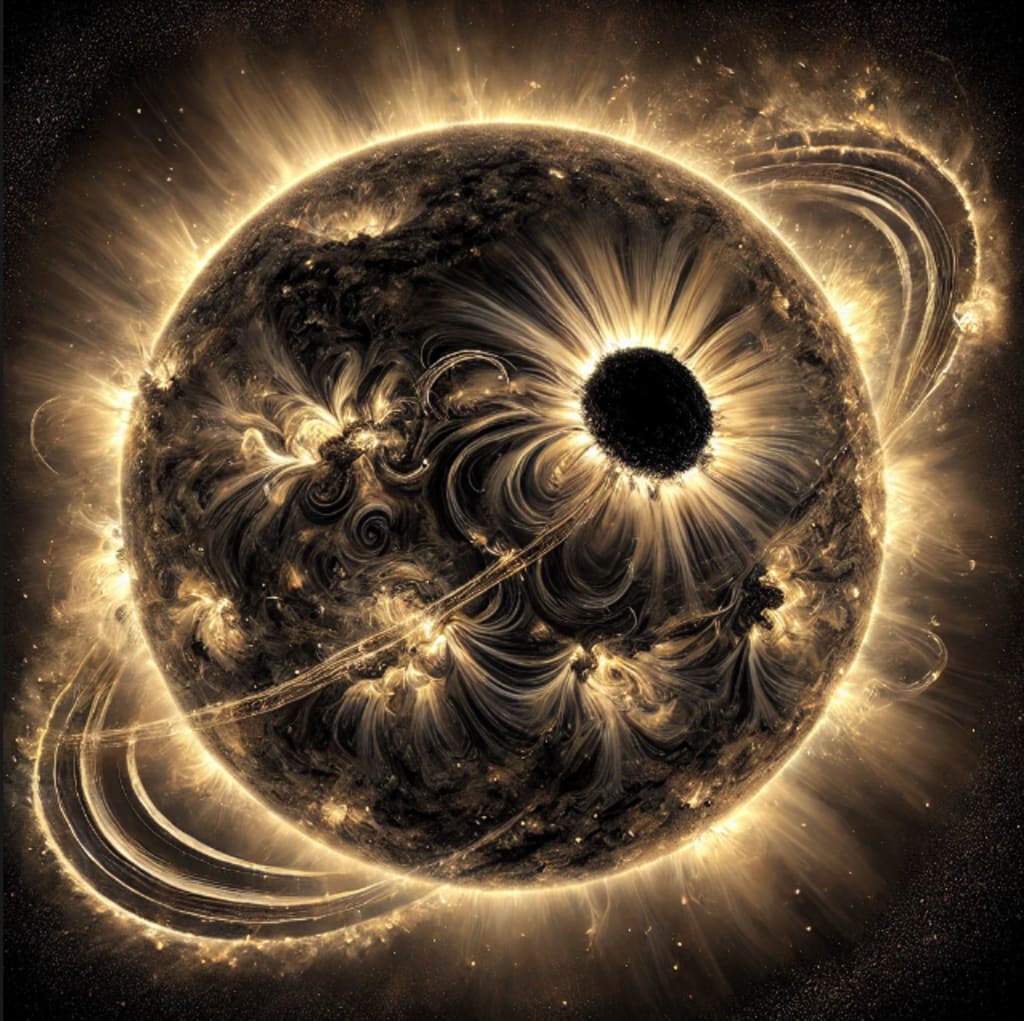
The sun, our closest star and the life-sustaining beacon for all existence on Earth, is an object of endless fascination and scientific inquiry. Among its many compelling aspects are sunspots—dark, cooler regions on the sun's surface that have intrigued astronomers for centuries. One of the most captivating among them is the "black sunspot," a term that evokes both curiosity and scientific wonder. In this article, we’ll delve into what sunspots are, the significance of black sunspots, and why they are essential to our understanding of solar activity.
What are Sunspots?
Sunspots are temporary phenomena on the sun's photosphere that appear darker than the surrounding areas. These spots are cooler regions, with temperatures ranging between 3,000°C and 4,500°C, compared to the sun’s average surface temperature of about 5,500°C. Sunspots are formed due to the sun's magnetic field becoming twisted and intensified, which impedes the flow of hot plasma from its interior. This leads to the creation of localized, cooler areas that appear as dark spots when observed from Earth.
The Formation of Black Sunspots
The term "black sunspot" generally refers to particularly large or intense sunspots that appear darker than usual. While all sunspots are technically dark, those deemed "black" are more pronounced, indicating stronger magnetic fields and more significant solar activity. These phenomena often occur in clusters and can cover vast areas, sometimes as large as or larger than the Earth itself.
The process of sunspot formation begins deep within the sun's convection zone, where magnetic field lines become twisted due to the differential rotation of the sun's equator and poles. When these lines break through the solar surface, they create magnetic loops that inhibit convection, cooling the affected region and creating a sunspot.
The Significance of Black Sunspots
Black sunspots are not just visual curiosities; they are a critical indicator of solar activity and have significant implications for space weather. Their presence is closely associated with solar flares and coronal mass ejections (CMEs), both of which can have profound effects on Earth. Here’s why these formidable spots matter:
- Space Weather and Communication Disruptions: The intense magnetic activity associated with black sunspots can trigger solar flares—sudden bursts of radiation that can disrupt radio communications and affect satellite operations. This can be particularly concerning for industries that rely on satellite-based technologies, such as aviation and telecommunications.
- Impact on Earth's Magnetosphere: When solar flares or CMEs from these sunspots reach Earth, they can cause geomagnetic storms. These storms can disrupt power grids, impact GPS systems, and create beautiful auroras visible much farther from the poles than usual.
- Clues to Solar Cycles: Black sunspots serve as valuable indicators of the solar cycle, an 11-year period during which the sun’s activity waxes and wanes. Tracking these dark spots allows scientists to predict periods of intense solar activity, which is essential for preparing technological infrastructure against potential disruptions.
Black Sunspot Observations and Studies
Scientific observation of sunspots dates back to ancient China, but it wasn't until Galileo's time in the early 17th century that telescopic observations brought sunspots into clearer focus. Modern technology has revolutionized how we monitor these dark regions. High-powered telescopes and solar observatories, such as NASA's Solar Dynamics Observatory (SDO), have provided unprecedented insights into their behavior and properties.
Recent studies have focused on particularly large and active black sunspots that have been associated with strong X-class solar flares—the most intense type of solar flare. These studies help scientists better understand the mechanics behind solar magnetic fields and predict when and where these sunspots might lead to significant space weather events.
What Do Black Sunspots Mean for Future Research?
The study of black sunspots is at the forefront of heliophysics. Researchers are increasingly using advanced computer models and simulations to replicate the magnetic conditions that lead to the formation of sunspots. This helps predict solar storms and understand their potential effects on modern technology.
Black sunspots also play a role in answering broader questions about solar activity and climate. Although a direct link between sunspot activity and Earth's climate remains a topic of debate, scientists acknowledge that periods of high sunspot activity, known as solar maxima, have historically correlated with slight temperature fluctuations on Earth.
How to Safely Observe Sunspots
Observing the sun, including sunspots, requires extreme caution to avoid eye damage. Amateur astronomers should use specialized solar filters or solar telescopes designed to protect vision. For a clearer, more detailed look, many turn to live streams and images from observatories like the SDO or European Space Agency's Solar and Heliospheric Observatory (SOHO).
Conclusion
Black sunspots, with their powerful magnetic forces and potential to influence space weather, remain one of the most fascinating and significant aspects of solar science. Their study provides critical insights not only into the sun’s behavior but also into how our planet is affected by solar phenomena. As technology advances, the capacity to observe and understand these sunspots continues to grow, offering hope for more accurate space weather forecasting and a deeper comprehension of the mechanisms driving solar activity.
About the Creator
Keep reading
More stories from mariam elghazaly and writers in Futurism and other communities.
The Concept of Parallel Worlds: Reality or Fiction?
The belief of parallel worlds, often known as alternate realities or multiverses, has long captured human creativeness. From historical myths to modern-day technological know-how, this idea raises profound questions: Are there different worlds beyond ours? If so, are they mere figments of creative storytelling, or should they've a systematic foundation? Exploring these questions delves into philosophy, physics, and metaphysics, supplying a charming lens to don't forget the endless opportunities of life.
By mariam elghazalyabout a year ago in Futurism
About Binding Prometheus
I want to start actively advocating on behalf of my own work, and the most valuable part of my canon is, without a doubt, Binding Prometheus, the play I have been working on since 2019 and only finished in 2023 as part of my MA. The play itself is an amalgamation of a million different inspirations. On one end, it evokes the Ancient Greek myth-play, deriving its own title from the earliest extant work of Western drama we have, Aeschylus’s Prometheus Bound. On the other end, it borrows significantly from the sci-fi bulwarks from over the years, namely Mary Shelley’s Frankenstein and Karel Capek’s Rossum’s Universal Robots. The play could be an episode of Black Mirror, I fear. I don’t know. I’ve only ever seen one episode of Black Mirror.
By Steven Christopher McKnight18 days ago in Futurism
Global Li-Fi Market Size & Forecast 2026–2034
Introduction: Lighting the Next Chapter of Connectivity Wireless communication has become the backbone of the modern digital world. From smartphones and laptops to industrial automation and smart cities, connectivity defines productivity, convenience, and innovation. Yet, traditional radio-frequency (RF) technologies such as Wi-Fi and cellular networks are increasingly constrained by spectrum congestion, interference, security vulnerabilities, and performance bottlenecks.
By Aaina Oberoi4 days ago in Futurism




Comments
There are no comments for this story
Be the first to respond and start the conversation.