
The Ancient Astronaut Theory: Unearthing Celestial Visitors in Mythology and Gnostic Texts
Unearthing Celestial Visitors in Mythology and Gnostic Texts
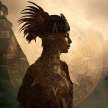

For millennia, humanity has gazed at the stars, pondering our place in the cosmos and the origins of our existence. Across diverse cultures and civilizations, ancient myths speak of powerful beings descending from the heavens, imparting knowledge, shaping human destiny, and even interbreeding with mortals. These narratives, often dismissed as mere folklore, have gained renewed scrutiny in the modern era, forming the bedrock of the Ancient Astronaut Theory.
This theory, popularized by authors like Erich von Däniken and Zecharia Sitchin, posits that extraterrestrial beings visited Earth in antiquity, influencing early human development, technology, and religion. While largely rejected by mainstream archaeology and history, the compelling parallels between ancient mythological accounts and modern Ufology continue to fascinate and challenge our conventional understanding of the past.
Decoding the Anunnaki: Gods from the Heavens
Perhaps no ancient civilization's mythology is more central to the Ancient Astronaut Theory than that of Sumer`s. The Sumerians, who flourished in Mesopotamia over 5,000 years ago, left behind a vast corpus of cuneiform tablets detailing their pantheon of gods, the Anunnaki. These "ones who from heaven to earth came" are described as powerful, technologically advanced beings who descended to Earth, establishing cities, creating humanity (often depicted as a servile race), and even engaging in terrestrial conflicts.
Zecharia Sitchin, in his "Earth Chronicles" series, famously translated and interpreted Sumerian texts, arguing that the Anunnaki were extraterrestrial beings from a hypothesized planet called Nibiru. He posited that they genetically engineered early humans to serve as a labor force, particularly for gold mining. While Sitchin's linguistic and astronomical interpretations are widely contested by scholars, his work undeniably ignited a popular interest in connecting Sumerian mythology with an extraterrestrial presence.
The vivid descriptions of the Anunnaki's arrival, their "sky-chariots," their advanced weaponry, and their ability to travel between worlds strikingly resonate with modern descriptions of UFOs and advanced technology. Could these ancient accounts be literal historical records, misunderstood by later generations, rather than purely metaphorical tales? The question itself challenges the conventional boundaries of history and science.
Gnostic Echoes: Alien Wisdom and the Archons
Moving beyond the overt mythological narratives, the ancient Gnostic texts offer another fascinating, albeit more esoteric, perspective that some proponents of the Ancient Astronaut Theory interpret through an extraterrestrial lens. Gnosticism, a diverse set of religious and philosophical systems that flourished in the early Christian era, often presents a cosmology radically different from mainstream Abrahamic traditions.
Gnostic texts, such as those found in the Nag Hammadi library, speak of a flawed creation, a "demiurge" (often identified with the Old Testament God) who created the material world in ignorance or malice. Crucially, these texts also mention "Archons," malevolent, parasitic entities that inhabit the celestial spheres between humanity and the true, transcendent God. The Archons are often depicted as cosmic bureaucrats, controlling and manipulating humanity, feeding off our negative emotions, and preventing us from achieving true spiritual knowledge (gnosis).
While traditionally interpreted as spiritual or metaphorical entities, some Ancient Astronaut theorists and Ufologists draw parallels between the Archons and certain negative or manipulative extraterrestrial races described in modern abduction accounts and esoteric UFO lore. The idea of non-human entities influencing human consciousness, subtly controlling societal structures, and even feeding off human energy resonates with the Gnostic concept of Archonic interference.
Could the Gnostic understanding of a flawed cosmos and manipulating entities be an ancient, symbolic attempt to describe encounters with extraterrestrial intelligences, perhaps those with less than benevolent intentions? The pursuit of gnosis – direct experiential knowledge of the divine could be seen as an attempt to break free from this perceived extraterrestrial or "Archonic" control, a quest for spiritual sovereignty in a manipulated world.
The "Chariots of the Gods" and Beyond: Global Parallels
The Sumerian Anunnaki and Gnostic Archons are not isolated phenomena. Across the globe, similar narratives persist:
1. Egyptian Mythology: The "Neteru" (gods) are depicted arriving in "boats of the sky," possessing advanced knowledge of astronomy, engineering, and medicine that seemingly outstripped the capabilities of the time. The precise construction of the pyramids, alignments with celestial bodies, and sophisticated understanding of the cosmos often lead theorists to suggest external assistance.
2. Hindu Vedas and Epics: Ancient Indian texts like the Vedas and the Mahabharata contain detailed descriptions of "Vimanas" – flying machines capable of intercontinental travel and warfare. These texts describe aerial battles, advanced weaponry, and divine beings descending from the heavens in luminous crafts, engaging with human rulers and influencing earthly affairs.
3. Biblical Accounts: The book of Ezekiel's vision of a "wheel within a wheel" and luminous beings, often interpreted by theologians as a vision of God's chariot, is seen by Ancient Astronaut theorists as a description of a UFO encounter. Similarly, the "Nephilim" (giants) mentioned in Genesis 6, born from the "sons of God" and "daughters of men," are sometimes interpreted as the hybrid offspring of extraterrestrial beings and human women, reminiscent of the Sumerian accounts.
These widespread, cross-cultural accounts, often remarkably similar in their core elements, pose a profound question: are they merely products of shared human imagination, or do they reflect a common, forgotten history of interactions with non-human intelligences?

The Enduring Appeal and the Search for Truth
The Ancient Astronaut Theory, despite its academic ostracism, continues to resonate deeply with many. Its appeal lies in its ability to offer alternative explanations for historical enigmas: the construction of megalithic structures, the sudden leaps in ancient technology, the origins of agriculture, and the very genesis of human civilization. It provides a framework that bridges the gap between science fiction and ancient history, suggesting a more complex, interwoven past than commonly accepted.
The synthesis of these ancient narratives with modern UFO phenomena offers a compelling, albeit speculative, lens through which to view humanity's history. It invites us to consider that perhaps our ancestors, rather than inventing fanciful tales, were attempting to describe events and encounters that were beyond their comprehension, using the language and metaphors available to them.
As we continue to explore space and uncover more about our universe, the line between myth and potential reality becomes increasingly blurred. Whether the Anunnaki were literal space travelers, the Archons symbolic representations of cosmic manipulation, or the Vimanas ancient spacecraft, these narratives compel us to keep an open mind. The search for truth about our origins and our connection to the cosmos is an ongoing journey, one that might just lead us back to the stars our ancestors so eagerly watched.
About the Creator
The Secret History Of The World
I have spent the last twenty years studying and learning about ancient history, religion, and mythology. I have a huge interest in this field and the paranormal. I do run a YouTube channel
Keep reading
More stories from The Secret History Of The World and writers in Futurism and other communities.
Volume 7: After the Sky Opens: Life in the First Days of Disclosure
Life in the First Days of Disclosure The moment humanity has waited for will not arrive with fanfare or fireworks. It will come with silence broken by a collective gasp, a shockwave of realization that spreads not from governments or generals, but from the people who look to the sky and understand that everything has changed. Disclosure will not be the end of a mystery; it will be the beginning of a reckoning. And what follows in the days, weeks, and months after will test the very soul of humanity.
By The Secret History Of The WorldExclusive • 6 months ago
Wealth Management Platform Market Insights: Client Experience, Automation & Industry Forecast to 2034
The rapid shift toward digital-first financial services, the rise of the tech-savvy millennial investor base, and a growing preference for automated, data-driven investment advice are steering the demand for wealth management platforms. These solutions are further supported by the integration of AI-driven analytics, a focus on regulatory compliance, and the expansion of hybrid advisory models. According to IMARC Group’s latest data, The global wealth management platform market size was valued at USD 6.10 Billion in 2025. Looking forward, IMARC Group estimates the market to reach USD 14.91 Billion by 2034, exhibiting a CAGR of 10.44% from 2026-2034.
By Andrew Sullivan3 days ago in Futurism



Comments
There are no comments for this story
Be the first to respond and start the conversation.