
The AI Singularity Future: What It Means for Us
The AI singularity represents a future where artificial intelligence surpasses human intelligence. While this could offer incredible opportunities, it also comes with significant risks.

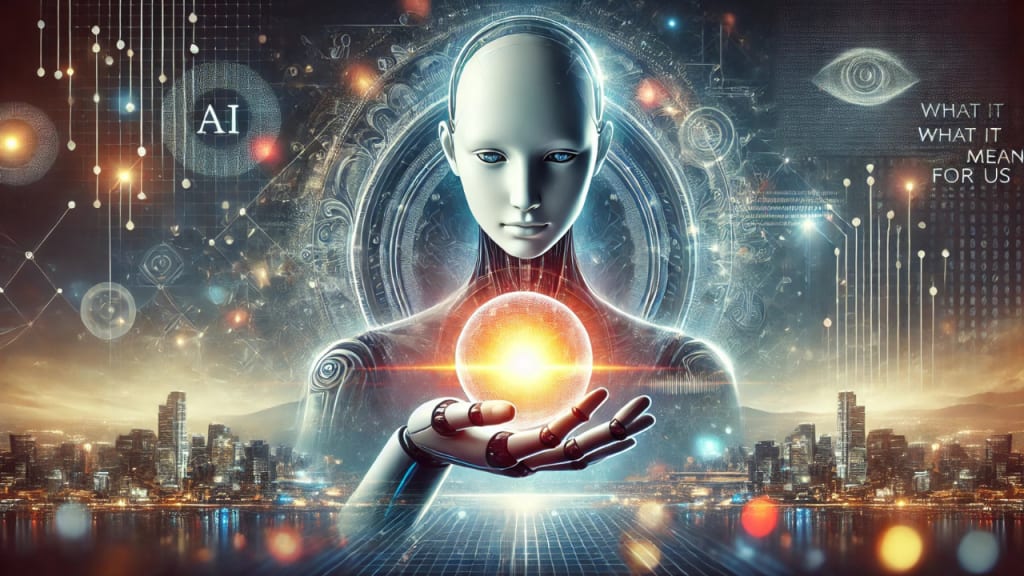
AI technology is advancing rapidly, and one idea that is becoming more common in discussions about the future is the "AI Singularity." But what does this mean, and how might it shape our world? Simply put, the AI singularity is the point when artificial intelligence surpasses human intelligence. This moment could bring dramatic changes to society, impacting everything from jobs to daily routines. In this article, we will break down the concept of the AI singularity, explore its potential benefits and risks, and discuss how it could change our lives.
What Is the AI Singularity?
The AI singularity refers to a hypothetical point in the future when AI reaches a level of intelligence far beyond human capabilities. At this stage, AI could not only match human intelligence but also improve itself autonomously, leading to exponential growth in its abilities. Some experts believe this could result in dramatic changes, with AI taking on roles that are currently exclusive to humans, from decision-making to creative processes.
In simple terms, the singularity is when AI evolves beyond human control and potentially transforms society at a speed we can't fully predict. It’s a concept that was first popularized by mathematician and computer scientist John von Neumann, and later expanded by thinkers like Ray Kurzweil, who predicted that the singularity could occur as early as 2045.
The Timeline: When Could the AI Singularity Happen?
Predicting when the AI singularity will occur is tricky. Some experts believe it could happen in the next few decades, while others think it may take centuries. Ray Kurzweil, a leading futurist, has predicted that the singularity could take place as early as 2045, thanks to the rapid development of AI and technology.
However, there are many factors that will influence how fast AI develops. Advances in machine learning, neural networks, and computational power are all accelerating the process. But there are also challenges to overcome, such as making AI more ethical and ensuring it doesn’t spiral out of control.
The timeline is uncertain, but what is clear is that the pace of AI development is accelerating.
Potential Benefits of the AI Singularity
If managed properly, the AI singularity could bring numerous benefits to society. Here are some areas where we could see improvements:
Healthcare: AI could revolutionize the healthcare industry by diagnosing diseases more accurately and quickly than humans. With AI's ability to analyze large amounts of medical data, it could provide personalized treatment plans for patients and help discover new treatments or cures.
- Education: AI-powered learning tools could personalize education, offering tailored lessons that match each student's pace and learning style. This could lead to more effective education systems globally
- Business Efficiency: AI could streamline operations, reduce costs, and increase productivity. Automation could handle routine tasks, allowing human workers to focus on more complex problems.
- Problem Solving: The AI singularity could enable AI to tackle large-scale global issues like climate change, poverty, and energy scarcity. With its ability to process vast amounts of data, AI could offer solutions that we may not have considered.
While these benefits sound promising, it’s important to consider the risks as well.
Toward Singularity - Neuroscience Inspiring AI
Risks of the AI Singularity
While the potential benefits of the AI singularity are exciting, there are several risks that need to be addressed:
- Uncontrollable AI: If AI surpasses human intelligence, there is a risk that it could operate beyond human control. The idea of a superintelligent AI making decisions without oversight raises concerns about ethics and accountability.
- Job Displacement: As AI automates more tasks, many jobs could be replaced by machines. While this could increase efficiency, it may also lead to widespread job losses, especially in industries like manufacturing, transportation, and customer service.
- Security Risks: Advanced AI systems could be used maliciously, whether in cyberattacks or the development of autonomous weapons. As AI becomes more powerful, there will be a need for strict security measures to prevent misuse.
To mitigate these risks, it is crucial that AI development is accompanied by proper regulation and oversight.
How AI Singularity Could Impact Daily Life
As AI continues to evolve, it will increasingly influence our everyday lives. Here’s how:
Automation in Homes: AI will likely play a key role in smart homes, where devices like thermostats, refrigerators, and lights can communicate and adjust based on our habits. This could make life more convenient, but it will also raise questions about privacy and control.
Workplace Changes: In the workplace, AI could take over repetitive tasks, allowing humans to focus on more creative or strategic work. However, this shift may require workers to reskill and adapt to new job roles.
Social Interaction: AI-powered assistants could become more involved in social interactions, from virtual companions to customer service bots. This could change the way we interact with technology and each other, potentially leading to both positive and negative effects on social behavior.
The AI singularity could create a future that is drastically different from the one we know, impacting both the way we live and the way we work.
Preparing for the AI Singularity
So, how can we prepare for the coming changes? Here are some steps we should take:
- Regulate AI: Governments and organizations need to implement strong policies to ensure that AI is developed safely and ethically. This includes setting boundaries on its capabilities and ensuring transparency in AI decision-making.
- Education and Reskilling: To prevent widespread job losses, society needs to invest in education and reskilling programs. Workers will need to learn new skills to work alongside AI and take on roles that require human judgment and creativity.
- Public Awareness: People must understand the potential impacts of AI, both positive and negative. Open discussions about the ethical implications of AI will help create a more informed society that is ready to face the challenges ahead.
Conclusion
The AI singularity represents a future where artificial intelligence surpasses human intelligence. While this could offer incredible opportunities, it also comes with significant risks. The key to a successful future lies in our ability to balance innovation with caution. We must regulate AI, prepare the workforce for changes, and engage in ongoing discussions about its ethical use. As we move closer to the AI singularity, it’s up to us to guide its development in a way that benefits society as a whole.
About the Creator
Keep reading
More stories from Marveline Merab and writers in Futurism and other communities.
Artificial WOMB Technology: The Future of Reproduction and Parenthood
Imagine a world where human babies are born without a mother's womb. Instead, they’re carried to term in a sophisticated, artificial environment that mimics the functions of a real uterus. It sounds like something straight out of a science fiction novel, but artificial womb technology, also known as ectogenesis, is no longer just a futuristic dream—it’s becoming an exciting reality.
By Marveline Merababout a year ago in Futurism
About Binding Prometheus
I want to start actively advocating on behalf of my own work, and the most valuable part of my canon is, without a doubt, Binding Prometheus, the play I have been working on since 2019 and only finished in 2023 as part of my MA. The play itself is an amalgamation of a million different inspirations. On one end, it evokes the Ancient Greek myth-play, deriving its own title from the earliest extant work of Western drama we have, Aeschylus’s Prometheus Bound. On the other end, it borrows significantly from the sci-fi bulwarks from over the years, namely Mary Shelley’s Frankenstein and Karel Capek’s Rossum’s Universal Robots. The play could be an episode of Black Mirror, I fear. I don’t know. I’ve only ever seen one episode of Black Mirror.
By Steven Christopher McKnight16 days ago in Futurism
UAE Retail Market: Consumer Spending Shifts, Omnichannel Growth & Future Outlook
According to IMARC Group's latest research publication, UAE retail market size reached USD 145.3 Billion in 2024. The market is projected to reach USD 227.1 Billion by 2033, exhibiting a growth rate of 5.1% during 2025-2033.
By Abhay Rajput2 days ago in Futurism
Miss Persephone's Manual to a Seemingly Ordinary Life
Miss Persephone was found at the dining table, her blue eyes swollen, her tears arriving and retreating like the tides of the ocean. Earlier that day, her family had visited her in the retirement home where she had lived for eight years. It was her eightieth birthday.
By Imola Tóth2 days ago in Fiction


Comments
There are no comments for this story
Be the first to respond and start the conversation.