
Artificial WOMB Technology: The Future of Reproduction and Parenthood
As we look to the future, artificial wombs could usher in a new era of reproductive possibilities—one where parenthood is no longer defined solely by biology but by a blend of technology, science, and choice.

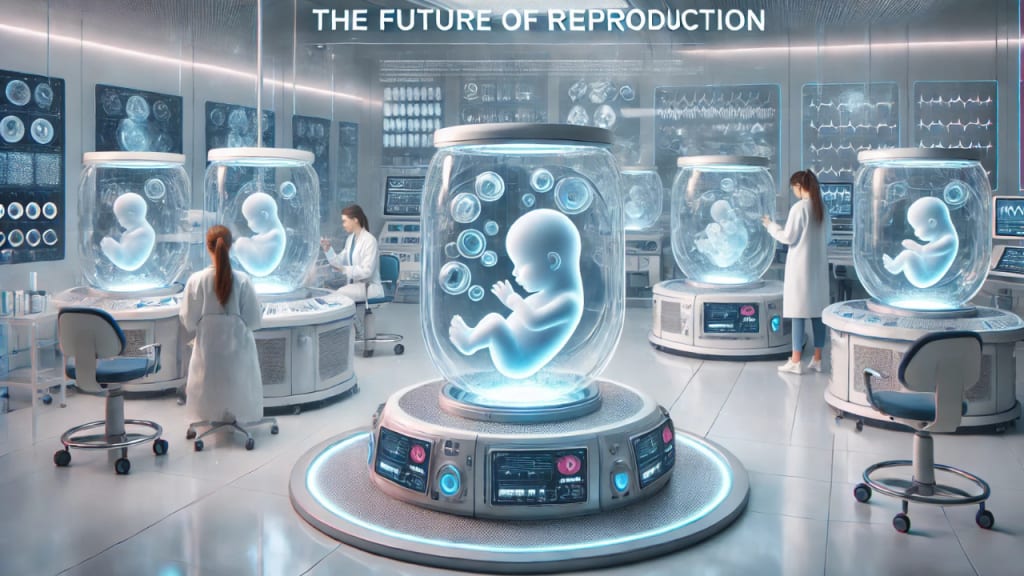
Imagine a world where human babies are born without a mother's womb. Instead, they’re carried to term in a sophisticated, artificial environment that mimics the functions of a real uterus. It sounds like something straight out of a science fiction novel, but artificial womb technology, also known as ectogenesis, is no longer just a futuristic dream—it’s becoming an exciting reality.
In recent years, scientists have made incredible strides in developing artificial wombs, with promising advancements that could revolutionize not only how we think about childbirth but also our entire approach to reproductive health. From providing life-saving solutions for premature infants to challenging the very definition of parenthood, this groundbreaking technology has profound implications.
What is Artificial Womb Technology?
Artificial womb technology aims to replicate the conditions of a natural womb, supporting the growth and development of a fetus outside the body. This involves creating a life-support system that provides essential nutrients, oxygen, and waste removal for the growing fetus, much like the placenta does in a biological pregnancy.
At the core of artificial wombs is the ability to create an environment in which a fetus can grow in a controlled, sterile, and nurturing atmosphere. Researchers have designed “biobags,” which contain synthetic amniotic fluid that mimics the natural fluid found in the womb. These bags also feature pumps and sensors to ensure the fetus’s environment remains stable.
In 2017, scientists made a significant breakthrough when they successfully used an artificial womb to keep premature lambs alive for several weeks. This experiment brought the concept of artificial wombs closer to reality for humans, with the hope that it could one day save lives in neonatal intensive care units (NICUs) by providing a more natural environment for premature babies.
The Science Behind Artificial Wombs: A Closer Look
How Do Artificial Wombs Work?
The mechanics of artificial wombs are both fascinating and complex. At their core, these devices replicate the most crucial functions of the human womb: nutrient delivery, oxygen exchange, and waste removal. They achieve this by providing a simulated environment that supports fetal development while bypassing the mother’s body entirely.
In current research models, artificial wombs are designed with the following components:
- Biocompatible Fluid: The fetus is suspended in a synthetic amniotic fluid that mirrors the real thing. This fluid is essential for cushioning the fetus, providing nutrients, and aiding waste removal.
- Oxygen and Nutrient Delivery System: Specialized pumps deliver a continuous flow of oxygen and nutrients into the biobag. This is usually done through a system of tubes connected to the umbilical cord, similar to how nutrients are passed in a natural pregnancy.
- Waste Management: Just as the placenta removes waste products from the fetus, artificial wombs use specialized equipment to collect and remove waste, ensuring the fetus remains in a clean environment.
- Temperature and Environmental Control: The temperature and pressure within the artificial womb must be carefully regulated to ensure the fetus’s well-being. Sensors constantly monitor these factors, ensuring the fetus remains in an optimal environment for growth.
The Potential Benefits of Artificial Wombs
Artificial wombs promise a host of benefits, from medical advancements to societal shifts. Here are some of the most significant potential impacts of this groundbreaking technology:
1. Saving Preterm Babies
Premature birth is a leading cause of infant mortality worldwide, with babies born before 32 weeks of gestation facing especially high risks. Artificial wombs could provide a safe, stable environment for these premature babies, allowing them to continue developing outside the womb until they are strong enough to survive on their own.
Studies suggest that premature infants born between 22 and 28 weeks of gestation might benefit most from this technology. With the use of artificial wombs, researchers could drastically increase the chances of survival for these high-risk infants by offering them an environment more similar to the womb than what is currently available in NICUs.
2. The End of Infertility for Many Couples
For couples struggling with infertility, artificial womb technology could be a game-changer. It offers a potential solution to those who cannot carry a pregnancy to term due to medical conditions, including those who are unable to conceive naturally or face complications during pregnancy.
Artificial wombs could offer individuals or couples the chance to have biological children without the traditional pregnancy process, raising the possibility of a world where infertility is no longer an insurmountable obstacle to parenthood.
3. Reducing Risks for High-Risk Pregnancies
Pregnancy can be a challenging and dangerous experience for some women, with conditions such as preeclampsia, gestational diabetes, and fetal complications posing significant risks. For high-risk pregnancies, artificial wombs could offer an alternative, allowing doctors to remove the fetus from the mother’s body and continue its development in a safe, controlled environment.
This technology could help reduce maternal and fetal mortality rates, providing a safer route for those facing challenging pregnancies.
4. Revolutionizing Surrogacy and Reproductive Health
Artificial wombs could also change the way we think about surrogacy. Instead of relying on a woman to carry a pregnancy to term, artificial wombs could offer a solution for individuals who need a surrogate but don't want to depend on a human carrier. This could pave the way for a future where surrogacy involves less physical and emotional strain on the surrogate and potential parents.
Are artificial wombs the future?
Moreover, for women who choose not to have children themselves or for men wishing to have biological children, artificial wombs could redefine the possibilities of parenthood in new and unexpected ways.
Ethical and Social Considerations
While the technology promises enormous potential, it also raises several ethical and social questions. These concerns reflect the fundamental shifts artificial wombs could make in both reproductive medicine and society as a whole.
1. The Changing Definition of Parenthood
As artificial wombs become more viable, they raise important questions about the nature of parenthood. Who is the true parent—the one who provides the genetic material or the one who nurtures and raises the child? Will the ability to carry a pregnancy in an artificial womb diminish the importance of the biological connection between a parent and child? These questions challenge the very foundation of family dynamics.
2. The Cost of Progress: Who Gets Access?
As with many new technologies, artificial wombs could exacerbate existing inequalities in healthcare. The high costs associated with creating and maintaining artificial wombs may limit access to only the wealthiest individuals or those in developed countries, leaving those in less privileged circumstances without this potentially life-saving technology.
Further, artificial wombs could lead to the commercialization of reproduction, with companies offering reproductive services that might not always be aligned with ethical considerations. This could create a marketplace for “designer babies” or lead to the exploitation of vulnerable individuals for reproductive purposes.
3. Ethical Dilemmas in Reproductive Control
If artificial wombs become widely available, they could offer an unprecedented level of control over human reproduction. Could this technology lead to societal pressures around reproduction? Will it give governments or corporations more influence over who can become a parent and under what conditions? These ethical dilemmas pose significant questions about autonomy, freedom, and the potential regulation of reproduction in the future.
Looking to the Future: What Lies Ahead?
Despite the scientific progress made, artificial womb technology is still in the early stages of development, particularly when it comes to human use. The next few decades will be crucial for advancing the technology, refining its processes, and resolving the ethical and societal challenges it presents.
Nonetheless, artificial wombs have the potential to change the way we think about childbirth, parenting, and reproduction. From saving the lives of premature infants to providing a new path to parenthood for those struggling with infertility, artificial wombs could transform reproductive medicine as we know it.
With each new scientific breakthrough, the dream of artificial womb technology becomes more plausible. Whether it’s used to save a preterm infant or to help a family fulfill its dreams of parenthood, artificial wombs could one day make the impossible possible—bringing us closer to a world where the boundaries of human reproduction are pushed beyond what we ever thought imaginable.
Conclusion: A Brave New World of Reproduction
Artificial wombs are no longer just a sci-fi fantasy. With ongoing research and technological advancements, they are poised to reshape the future of reproduction. While the technology promises to offer life-saving solutions for preterm infants, eliminate barriers for those facing infertility, and revolutionize the surrogacy industry, it also introduces complex ethical and societal challenges that must be carefully navigated.
As we look to the future, artificial wombs could usher in a new era of reproductive possibilities—one where parenthood is no longer defined solely by biology but by a blend of technology, science, and choice.
About the Creator
Keep reading
More stories from Marveline Merab and writers in Futurism and other communities.
The Celebrities Who Secretly Fund Revolutionary Scientific Research (Ranked)
Imagine a world where Hollywood’s biggest stars are not just gracing red carpets but also secretly bankrolling cutting-edge scientific research. While some celebrities invest in makeup lines and tequila brands, others are pouring their fortunes into futuristic projects that could change the world—think space travel, AI, anti-aging tech, and even colonizing Mars.
By Marveline Merab10 months ago in Futurism
About Binding Prometheus
I want to start actively advocating on behalf of my own work, and the most valuable part of my canon is, without a doubt, Binding Prometheus, the play I have been working on since 2019 and only finished in 2023 as part of my MA. The play itself is an amalgamation of a million different inspirations. On one end, it evokes the Ancient Greek myth-play, deriving its own title from the earliest extant work of Western drama we have, Aeschylus’s Prometheus Bound. On the other end, it borrows significantly from the sci-fi bulwarks from over the years, namely Mary Shelley’s Frankenstein and Karel Capek’s Rossum’s Universal Robots. The play could be an episode of Black Mirror, I fear. I don’t know. I’ve only ever seen one episode of Black Mirror.
By Steven Christopher McKnight16 days ago in Futurism



Comments
There are no comments for this story
Be the first to respond and start the conversation.