
The AI Bubble Is About To Burst, But The Next Bubble Is Already Growing
Tech hype cycles always repeat — and the next one may be worse than AI.


Let’s be honest — if you’ve been paying attention to the tech world, it feels like déjà vu. Every few years, we get sold the same dream under a different name: “This is the future. This is where the money is. This will change everything.”
We saw it with dot-com startups in the late 1990s. We saw it with the housing market in 2008. We saw it again with crypto and NFTs. And now, the star of the show is AI.
Billions are flowing into AI companies. Every pitch deck has “AI-powered” slapped onto it like a golden ticket. Investors are piling in, stock prices are climbing, and ordinary people are left wondering if they’re missing out on the next big thing.
But here’s the truth: bubbles always burst. And this AI bubble isn’t an exception — it’s a ticking clock.
Why the AI Hype Is Starting to Crack
Right now, nearly half of all private investment is going into AI. That’s insane when you realize how new the technology still is. Sure, AI tools like ChatGPT, MidJourney, and Claude are powerful. They’ve transformed how we think about creativity and productivity. But the market doesn’t care about useful tools — it cares about profit, and profits aren’t keeping up with the hype.
Training and running large AI models costs billions. Most AI startups are burning cash faster than they can raise it. And even the giants — Microsoft, Google, Meta — are finding that monetizing AI at scale isn’t as simple as everyone hoped.
History tells us what happens next: when profits don’t match expectations, the money dries up, the hype fades, and the bubble pops.
The Dangerous Pattern of Tech Bubbles
Think about it:
Dot-com promised the internet would make everyone rich. Most startups failed, leaving a few giants like Amazon to pick up the pieces.
Crypto promised a financial revolution. Instead, scams and collapses wiped out billions.
NFTs promised digital art would be the new gold. Within a year, the market collapsed.
Each time, the same thing happened: hype inflated faster than reality could deliver. Investors wanted quick wins, not long-term innovation. And when the hype broke, people lost fortunes.
AI is following the same script.
The Next Bubble Is Already Growing
Here’s the scary part: the “tech bros” and investors already know AI is fragile. They’re not waiting to see it collapse. They’re busy inflating the next bubble.
What is it? That depends on who you ask. Some are betting on spatial computing and the metaverse (yes, still). Others are hyping biotech as the next trillion-dollar frontier. A growing crowd is chasing energy tech, like fusion and green startups. And there’s always quantum computing quietly waiting in the background.
The pattern isn’t about which industry wins — it’s about keeping the hype machine running. Money doesn’t sleep. As soon as one bubble pops, another one starts growing.
Why You Should Care
You might be thinking: “So what? Investors lose money all the time. Why does this matter to me?”
- Because every bubble affects ordinary people.
- When housing collapsed in 2008, families lost homes.
- When crypto crashed, millions lost life savings.
When NFTs died, creators were left holding worthless digital files.
And now with AI, it’s not just investors at risk — it’s jobs, businesses, and the way entire industries are restructuring themselves around a technology that may not deliver as promised.
The next bubble — whatever shape it takes — could be even more disruptive. If we blindly follow the hype, we risk repeating the same mistakes, just on a bigger scale.
What We Can Do Differently
The truth is, technology itself isn’t the enemy. The internet really did change the world. Crypto has legitimate potential in some areas. AI is already useful in ways we couldn’t have imagined ten years ago.
The problem isn’t the tech — it’s the speculation. The rush to treat every new breakthrough as a lottery ticket distorts reality. It creates unsustainable expectations. And it leaves ordinary people vulnerable.
So how do we break the cycle?
Stay skeptical of hype. If something is being called “the future of everything,” that’s a red flag.
Look for real value, not just inflated valuations. Does the technology solve real problems? Does it have paying customers?
Diversify. Don’t put all your hopes, savings, or energy into the latest shiny thing.
Final Thoughts
The AI bubble is inflating fast, and it will burst — maybe sooner than people think. But the bigger story is that the next bubble is already forming, and it might be even more dangerous.
We can’t stop speculation cycles entirely, but we can be smarter about how we engage with them. Instead of getting swept away by hype, let’s ask harder questions, demand real value, and remind ourselves that not every gold rush ends in treasure.
Because history is clear: the bubbles always repeat. The only question is — will we learn from them this time?
About the Creator
Keep reading
More stories from Awais Qarni and writers in Futurism and other communities.
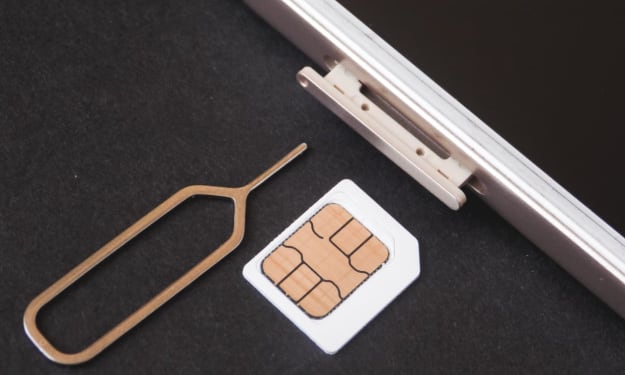
Will the Latest iPhone Kill Off the SIM Card?
The SIM Card’s Days Might Be Numbered For decades, phone users have known the ritual: poke a pin into a tray, slot in a fingernail-sized chip, and watch your device spring to life. That little card — the SIM — has been the quiet heartbeat of mobile communication.
By Awais Qarni 6 months ago in Futurism
Healthy Snacks Industry Outlook: Plant-Based Snacks & Market Expansion
According to IMARC Group's latest research publication, global healthy snacks market size reached USD 95.8 Billion in 2025. Looking forward, IMARC Group expects the market to reach USD 148.4 Billion by 2034, exhibiting a growth rate (CAGR) of 4.98% during 2026-2034.
By sujeet. imarcgroup7 days ago in Futurism
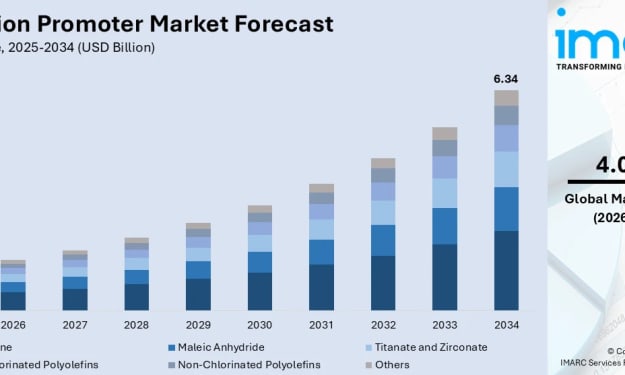
Adhesion Promoter Market Trends: Sustainable Coatings, High-Performance Materials & Industry Forecast to 2034
Optimizing bond strength and surface durability is becoming a central focus for industrial manufacturers as they transition toward advanced composites and high-performance coatings. According to IMARC Group’s latest data, the global adhesion promoter market size was valued at USD 4.44 Billion in 2025. Looking forward, IMARC Group estimates the market to reach USD 6.34 Billion by 2034, exhibiting a CAGR of 4.03% from 2026-2034. Asia Pacific currently dominates the market, holding a significant market share of over 45.3% in 2025.
By Andrew Sullivan6 days ago in Futurism


Comments
There are no comments for this story
Be the first to respond and start the conversation.