
The Age of Censorship
The First Amendment: An Editorial

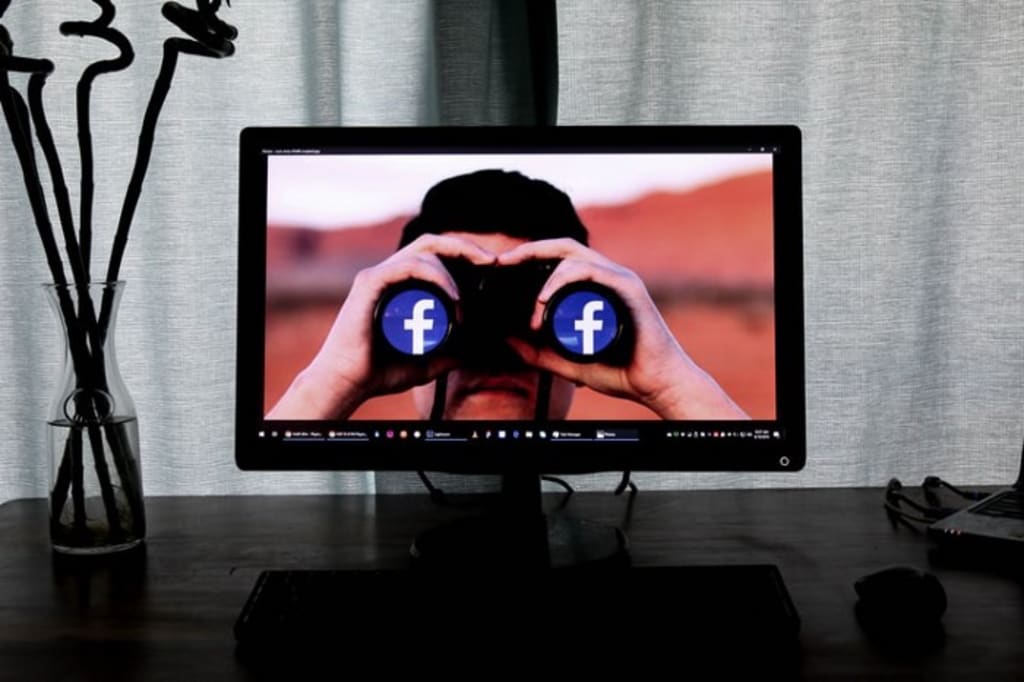
Is this the land of the free? I am just not sure anymore. But how could I find out if I wanted to anyway? The slanted news engages in emotional tactics that replace logic.
It is highly known that once someone becomes emotional in an argument, they are have already been defeated. This whole nation lost its edge, and they are still fighting each day about uncorroborated facts under the clause of freedom of speech: a clause we lost the minute the members of Congress.
And we…we became pawns in a game we unknowingly play to obtain material objects with an agreement that happiness is our life’s purpose instead of a fleeting state that arises in between a life worth living.
The need to address mainstream homogeneity is to educate the masses about real-life oppression and it is a relief to see all people recognized on television and social media. All history is revisionist. That cannot be argued. But the way it is being promoted is guided by groupthink which silences people to speak freely.
During the last five years, reputable news outlets immediately took a side in the battle between Republicans and Democrats, between races, religions, and genders. The first rule of journalism is to remain neutral. But that notion ceased to be a concern with due process and the advent of cancel culture scurrying their way into the backdrop.
The First Amendment declares:
Amendment I
Congress shall make no law respecting an establishment of religion, or prohibiting the free exercise thereof, or abridging the freedom of speech, or of the press, or the right of the people peaceably to assemble, and to petition the government for a redress of grievances (Legal Information Institute).
I value the First Amendment and predict the amendment’s plight will descend into a mere idea that future history online courses may mention in 20 years or so.
Over the last few years, hostility replaced loyalty between friends and family destroyed common civility. Threats, beatings, murders, friendships lost, and significant stereotyping stretched over any real source of news. No one wins if the news bears an intention. Literally, people fought over news stories that could not be fully verified as each news outlet wrote their own version of events.
COVID-19
When COVID struck, something worse presented itself than the wicked flu; one could witness their own words being censored before their eyes. Conspiracy theories ran amok but disappeared in minutes after they were posted. Facebook and Twitter quickly jumped on the Democratic bandwagon forcing their users to obtain egregious talk of any Republican advancement. What was once used to share with family friends’ personal information became a gateway to bellows of hate-mongering between both parties. (Bokat-Lindell, 2020).
Republicans cannon-balled into violence as mask reinforcement became mandatory. No one agreed on anything. Plus, the information changes every day.
Was this really happening in the USA? The answer to that question can be likened to shutting down a new social media outlet, Parler. And only a few seem to care. As the object of the news is primarily choreographed to keep the people distracted.
The government will say the use of propaganda is to lessen panic as a means to justify a meaningful action. But it frighteningly mirrors a once-popular social media outlet of the Russians.
Live Journal
A few years before Facebook spread its wings in the USA and other parts of the world, another social media outlet flooded the internet in Russia. Invented in 1999, the people found relief in LiveJournal and utilized access to speak about politics rather than connect with others about their personal lives(Hoffman, 2017).
Based in California, the company allowed the Russian people to express frustrations with Russia’s current administration without penalty. Then a Ukrainian Russian media company finally bought LiveJournal, and the people became fearful of their personal records reaching the Kremlin: a justified fear.
The advent of LiveJournal inspired activists to create their own blogs, “Alexei Navalny and Oleg Kashin to set up their own blogs and became an uncensored scene of dissenting editorials, free-wheeling opinions, and guerrilla journalism” (Hoffman, 2017).
Momentarily, the Russian people felt a flicker of freedom of expression. At the same time, most Russian users felt pressure to silence themselves in hopes of saving themselves from the oppressive nature of Putin’s government.
And they were right! The number of users fell, and a Ukrainian company became the new owners. One Ukrainian user believed in freedom of speech, found himself in a fight for his life.
LiveJournal blogger Aleksei Kungurov was sentenced to two years in prison for dissenting opinions on Russia’s actions in Syria he wrote in his blog. Others began to notice that some blogs, such as those from pro-Ukranian writers, were suddenly disappearing (Hoffman, 2017).
The undoing of the principles of our constitution begins now. Censorship abounds, unconsenting social media outlets are being forced to shut down, and the hypocrisy of what is viewed as unlawful differs from group to group.
The Patriot Act
Like the Patriot Act of 2001, the lawmakers passed this act that allowed the USA to spy on its citizens. Nothing really had changed. Before the Patriot Act, the USA would buy information relating to its own citizens from other countries. The US would sell the information they obtained about the other countries and sold it to them. It reeked of criminality, but it was legal
However, the Patriot Act initially became enacted after the horrific acts of Sept 11, 2001. Presented, by Bush and Congress, as a way to protect US citizens from terrorist threats but soon morphed into a way to breach someone’s privacy in a matter of split seconds.
Google and other large tech companies have data sheets about every person who lives here: where they shop, what they research, how long they use the computer, and most importantly, what is said. That is a big jump from protecting us from terrorists. But such a pattern unravels in many government policies, unbeknownst to us, as the media is designed through propaganda to keep us distracted (Desjardens, 2018).
The Plot Thickens
And now the plot thickens as a Russian tech company and an affiliated tech company based in the US agreed to open Parler to users globally. The switch is on as this unstable company tries to regift Parler to the US. But if the past teaches us about the future, dissent from its users will be monitored, prosecuted, and eventually end as the new wave of technology prevents privacy and people carefully speak as not to blunder and hurt their reputation(Parler Website Partially Returns with Support from Russian-owned Technology Firm).
References
(n.d.). Retrieved January 19, 2021, from https://www.justice.gov/archive/ll/archive.htm
(n.d.). Retrieved January 19, 2021, from https://www.justice.gov/archive/ll/highlights.htm
Bokat-lindell, S. (2020, October 20). Facebook and Twitter Are Still Tinkering With Democracy. Retrieved January 19, 2021, from https://www.nytimes.com/2020/10/20/opinion/biden-facebook-twitter.html
First Amendment. (n.d.). Retrieved January 19, 2021, from https://www.law.cornell.edu/constitution/first_amendment
Parler website partially returns with support from Russian-owned technology firm. (2021, January 19). Retrieved January 19, 2021, from https://www.theguardian.com/media/2021/jan/19/parler-website-partially-returns-with-support-from-russian-owned-technology-firm
Whatever Happened to LiveJournal? (2020, July 29). Retrieved January 19, 2021, from https://thehistoryoftheweb.com/postscript/whatever-happened-livejournal/
About the Creator
About Binding Prometheus
I want to start actively advocating on behalf of my own work, and the most valuable part of my canon is, without a doubt, Binding Prometheus, the play I have been working on since 2019 and only finished in 2023 as part of my MA. The play itself is an amalgamation of a million different inspirations. On one end, it evokes the Ancient Greek myth-play, deriving its own title from the earliest extant work of Western drama we have, Aeschylus’s Prometheus Bound. On the other end, it borrows significantly from the sci-fi bulwarks from over the years, namely Mary Shelley’s Frankenstein and Karel Capek’s Rossum’s Universal Robots. The play could be an episode of Black Mirror, I fear. I don’t know. I’ve only ever seen one episode of Black Mirror.
By Steven Christopher McKnight15 days ago in Futurism
CBRN Defense Market: National Security, Risk Preparedness & Industry Expansion
According to IMARC Group's latest research publication, The global CBRN defense market size was valued at USD 21.55 Billion in 2024. Looking forward, IMARC Group estimates the market to reach USD 33.11 Billion by 2033, exhibiting a CAGR of 4.64% during 2025-2033.
By James Whitmana day ago in Futurism


Comments
There are no comments for this story
Be the first to respond and start the conversation.