
The ‘9-9-6 Work Schedule’ Could Be Coming To Your Workplace Soon
Why Glorifying Burnout in the Name of Productivity Could Backfire — And How Gen Z Is Leading the Pushback for a Healthier Work Culture


AI startups are glorifying exhaustion for the sake of productivity, implementing the “9-9-6 work schedule” in an attempt to “win the AI race," according to recent reports. Tekendra Parmar, writing in last month’s Inc., says, “In a bid to outpace Chinese rivals, some AI startups are adopting that country’s grueling “9-9-6 work schedule.” But the future of work might actually lie in working less, not more.” Parmar adds that the “9-9-6 work schedule” could actually hurt instead of help productivity.
What Is The ‘9-9-6’ Work Schedule’?
Some AI startups are taking the workplace back to the dark ages, adopting the Chinese “9-9-6 work schedule” in which employees toil 9:00 a.m. to 9:00 p.m., six days a week from Monday to Saturday. Asian companies are known for overworking their employees, causing unmanaged chronic job stress, then burnout. When burnout is unaddressed, it can lead to karoshi--the Japanese term for death from overwork.
Experts are calling the 9:00 a.m. to 9:00 p.m., six-day-week culture corporate abuse. Some of America’s top business leaders work relentless hours. Google’s Marissa Mayer reportedly has clocked up to 130 weekly hours. Tim Cook at Apple sends emails as early as 4:30 a.m. And Elon Musk, CEO of Tesla, is known to work 120 hour workweeks.
Some members of the C-Suite expect their employees to match their “9-9-6 work schedules.” In 2022, Musk was accused of corporate slavery, perpetuating work abuse and job burnout. While praising Tesla China employees for "burning the three-3 a.m. oil,” he said Americans are “trying to avoid going to work at all.”
That same year, Musk declared an end to remote work in his company, laying off nearly half of his company’s 7,000 workforce. In my 2022 interview with Jenn Lim, CEO of Delivering Happiness and Wall Street Journal bestselling author of Beyond Happiness: How Authentic Leaders Prioritize Purpose for Growth and Impact, she said Musk was treating people like collateral damage instead of human beings, forgetting basic human decency in the way he was handling the layoffs.
I spoke with Caitlin Collins, organizational psychologist and program strategy director at Betterworks, who asserts that extreme schedules erode workplace productivity. “The notion that working 9 a.m. to 9 p.m., six days a week, drives innovation is deeply misguided,” Collins asserts. “Research consistently shows that extreme schedules don’t fuel productivity, they erode it. Sustained overwork leads to burnout, cognitive fatigue and disengagement, which directly undermine the creativity and focus AI companies rely on to innovate.”
A large body of research shows that more time at your desk doesn’t mean more output. A British study, for example, shows that employees who put in more than 11 hour workdays are 67% more likely to have a heart attack. And employees who work more than 54 hours a week are at higher risk of dying from karoshi.
The Collective Delusion Of The ‘9-9-6 Work Schedule’
As more organizations adopt the collective delusion of the “9-9-6 work schedule,” there’s a call for redefining the wellness category in corporate America. It begins with changing the collective delusion that it’s a badge of honor for employees to put their mental and physical health on the line, burn themselves out or sacrifice their lives to keep their jobs.
Collins argues that work-life balance isn’t a “perk”; it’s a business imperative. “Employees perform at their peak when they have flexibility, mental space and the trust to integrate work into their lives rather than sacrifice their well-being for it,” she explains. “Gen Z and younger talent are already rejecting burnout-as-a-badge culture, and companies that cling to these outdated models risk losing their most capable people.”
Bringing ‘Good Trouble’ To The ‘9-9-6 Work Schedule’
The Gen Z generation is bringing “good trouble”--a term coined by activist and senator John Lewis for nonviolent protests against unjust situations--to the “9-9-6 work culture.” They’re doing their part to usher a healthy mind, body and spirit into the workplace and create the potential for a sustainable career trajectory so the company’s bottom line is guaranteed.
Gen Z is re-writing the rules of the workplace to make them more humane and employee-centered. Glimmers of their impact as change agents are evident in 2025. The younger generation is revising outdated practices and modernizing how work gets done, accounting for flexibility, work-life balance and human values in general. Basically, they’re pushing employers to rethink how collaboration happens and initiating such workplace trends as "conscious un-bossing" and “micro-shifts.”
Gen Z is adamant that they want to be seen for who they are, not vilified for being difficult to manage, just because they assert their constructive opinions. They want professional colleagues to understand that their values and career needs are different from—not inferior to—other generations.
They want corporate America to refrain from trying to turn the clock back, forcing them into old, outdated work molds. And they want an end to pressuring and threatening employees with job loss, so they don’t have to work in the shadows to maintain their mental health.
By 2030 experts predict that Gen Z will dominate the American workforce. I culled six science-backed changes that Gen Z advocates for a more humane workplace, indicating what they want to commit to the companies they work for and flourish in their jobs and careers:
1. Prioritize mental health and well-being over traditional work expectations.
2. Seek flexible work arrangements that allow for remote or hybrid options.
3. Value purpose-driven work that aligns with personal values and passions.
4. Embrace technology to enhance productivity while maintaining boundaries.
5. Advocate for a culture that respects personal time and encourages breaks.
6. Focus on building supportive workplace relationships that foster collaboration.
According to Christine Royston, CMO at Wrike, these shifts are more than just generational preferences. They’re signals of a permanent change in workplace productivity. Royston believes Gen Z is driving the adoption of smarter, more flexible collaboration platforms.
A Final Wrap On The ‘9-9-6 Work Schedule’
In the final analysis, job production is about finding a healthy work-life balance, not a profit versus humanity proposition. And finding it will continue to be a problem in 2025 unless significant changes are made in work practices, overtime demands and inefficient meetings. The challenge for companies is to create work cultures that blend productivity and profitability with humanity and physical and mental wellness not a “9-9-6 work schedule” to clone employees as robots to win the AI race.
About the Creator
Muhammad Sabeel
I write not for silence, but for the echo—where mystery lingers, hearts awaken, and every story dares to leave a mark
Keep reading
More stories from Muhammad Sabeel and writers in Futurism and other communities.
Apple iPhone 17 Release Date: Your Complete Countdown
Apple enthusiasts worldwide are gearing up for what promises to be one of the most exciting iPhone launches in recent memory. This September, Cupertino's tech giant will unveil not just three, but four groundbreaking devices: the standard iPhone 17, the feature-packed iPhone 17 Pro, the massive iPhone 17 Pro Max, and the completely reimagined iPhone 17 Air—a remarkably thin device that's generating unprecedented buzz in the tech community.
By Muhammad Sabeel7 months ago in Futurism
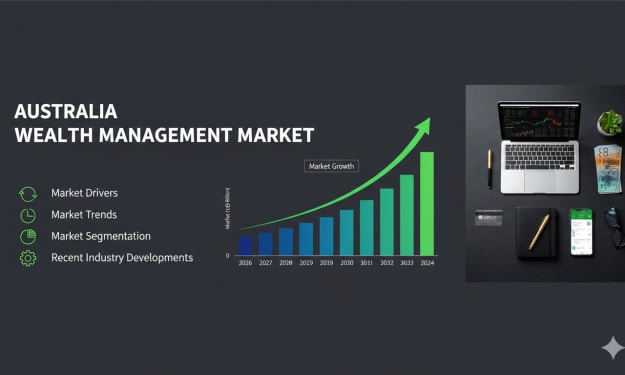
Australia Wealth Management Market: HNWI Growth, Digital Transformation & Regulatory Evolution
According to IMARC Group, the Australia wealth management market reached USD 118.6 Million in 2025 and is projected to expand to USD 222.2 Million by 2034, exhibiting a compound annual growth rate (CAGR) of 7.00% during 2026–2034. This sustained expansion reflects structural changes in capital accumulation, digital advisory platforms and regulatory oversight across Australia. Wealth management services—including portfolio advisory, retirement planning, tax structuring and estate planning—are increasingly critical as individuals accumulate assets through entrepreneurship, property investments and superannuation growth. As high-net-worth individuals (HNWIs) expand in number and financial sophistication, demand for tailored, transparent and digitally enabled advisory services continues to rise.
By Kevin Cooper5 days ago in Futurism
Automotive Blind Spot Detection System Market Trends: AI Integration, Sensor Innovation & Forecast to 2034
Rising safety concerns, stringent government regulations, and the increasing adoption of Advanced Driver Assistance Systems (ADAS) are driving the demand for automotive blind spot detection systems. This growth is further supported by ongoing technological advancements in radar and sensor fusion, as well as a significant shift in consumer preference toward vehicles equipped with proactive safety features. According to IMARC Group’s latest data, the global automotive blind spot detection system market size reached USD 6.72 Billion in 2025. Looking forward, IMARC Group estimates the market to reach USD 15.57 Billion by 2034, exhibiting a CAGR of 9.79% from 2026-2034.
By Andrew Sullivan4 days ago in Futurism


Comments
There are no comments for this story
Be the first to respond and start the conversation.