
The 2027 Trust Collapse: Why Nothing You See Online Will Be Real (And How the Elite Are Already Preparing)
The era of AI-generated misinformation isn't coming it's already here. If you're not building trust infrastructure, you're building noise.


A Message from 2045
Professor Elena Vasquez, Director of Digital Archeology, MIT Institute for Post-Truth Studies
"Students often ask me when the Trust Collapse began. They expect a dramatic moment a viral deepfake that fooled millions, a political scandal that shattered faith in media. But that's not how civilizations crumble.
The collapse started quietly, in the late 2020s, when synthetic media reached what we now call the Deepfake Dividend a deceptively calm period where the technology was sophisticated enough to fool anyone, but not yet ubiquitous enough to alarm everyone. Like the peace dividend after the Cold War, it felt like progress. Tech demos were impressive. Entertainment possibilities seemed endless. Early adopters made fortunes.
We were so fascinated by what the technology could create, we ignored what it was simultaneously destroying: the default assumption that what we see, hear, and read corresponds to reality.
By 2030, that assumption was dead. And with it died everything built on shared truth—journalism, justice, reputation, relationships. Entire economies had to be rebuilt from scratch around verified content. The companies who saw this coming and laid the groundwork early became the infrastructure layer of our post-truth civilization.
VeriEdit was one of them. But I'm getting ahead of myself."
The Dividend Deception
Right now, in 2025, we're living through the Deepfake Dividend the golden period where synthetic media feels like magic rather than menace. The technology has reached Hollywood quality, but hasn't yet achieved internet scale. This creates a dangerous illusion of control.
The sophisticated understand what others are missing: This isn't about whether deepfakes will become convincing. They already are. This isn't about whether they'll become accessible. They already are. This is about the moment when society realizes that nothing can be trusted by default anymore.
And that moment is closer than you think.
Consider what's already happening in elite circles:
• Corporate boardrooms now require biometric verification for video calls because executives have been impersonated in merger discussions
• Legal proceedings are being dismissed because video evidence can no longer be assumed authentic
• Insurance companies are refusing to cover reputation damage because distinguishing real scandals from synthetic ones has become impossible
• Dating apps are implementing real-time verification protocols because catfishing has evolved into identity theft
The Deepfake Dividend is ending. The bill is coming due.
The Great Unraveling
What comes next isn't just technological disruption it's epistemic collapse. The fundamental relationship between evidence and truth is being severed, and most people don't even realize it's happening.
Here's what the Trust Collapse will look like:
Phase 1: The Doubt Epidemic (2025-2027)
Everything becomes suspect. That video of your competitor making controversial statements? Could be fake. That audio recording of your spouse? Potentially synthetic. That photo evidence in court? Possibly generated.
Society enters a state of perpetual uncertainty where doubt becomes the default response to any digital evidence. Trust, which took centuries to build into institutions, evaporates in months.
Phase 2: The Verification Wars (2027-2029)
Competing systems emerge claiming to distinguish real from synthetic content. Tech giants battle for control of the "truth layer" of the internet. Governments mandate verification protocols. Social media platforms fragment along verification philosophy lines.
But here's the sinister part: the power to verify becomes the power to determine reality itself.
Phase 3: The Post-Truth Reconstruction (2029-2032)
Entire industries rebuild around verified content. New forms of social organization emerge. Digital literacy becomes as fundamental as traditional literacy. Society splits between those who can navigate the verification landscape and those who drown in synthetic noise.
The winners: Those who built verification infrastructure before it became necessity. The losers: Everyone else.
The Infrastructure Play Nobody Sees Coming
While the world obsesses over which deepfake went viral this week, the truly sophisticated are building something far more valuable: the infrastructure layer of post-truth civilization.
This isn't about stopping deepfakes. That's impossible. This isn't about detecting synthetic media. That's an arms race with no winners. This is about creating systems where truth can be verified, preserved, and transmitted in a world where nothing can be trusted by default.
Think about the internet's infrastructure layer. You don't think about DNS servers or BGP routing, but they make everything else possible. In the post-trust world, verification infrastructure will be equally fundamental—and equally invisible to end users.
Companies like VeriEdit aren't just building deepfake detection tools. They're building the neural pathways of future society—the systems through which verified truth will flow when everything else becomes noise.
The New Digital Hierarchy
The Trust Collapse is creating a new form of digital stratification that will make current inequality look trivial:
The Verified Class: Individuals and organizations with established chains of trust, verified content provenance, and authenticated digital presence. They can participate fully in digital society because their communications carry cryptographic proof of authenticity.
The Synthetic Suspicious: Those whose digital presence is ambiguous or unverified. Their content requires additional validation steps, their communications are flagged for review, their opportunities are limited because their authenticity cannot be confirmed.
The Digital Untouchables: Those who've been deepfaked, impersonated, or caught in synthetic media scandals. Their real communications are indistinguishable from fake ones, making them effectively voiceless in digital spaces.
This stratification is already beginning. Early verification adopters are building reputational moats that will be impossible to bridge once the Trust Collapse accelerates.
The Quiet Revolution
The most profound changes happen silently, in infrastructure layers most people never see. While society debates the ethics of deepfakes, a quiet revolution is rebuilding the foundations of digital communication.
The early players are establishing verification protocols that will become the rails on which future digital society runs:
• Provenance tracking that follows content from creation to consumption
• Editorial integrity layers that preserve the chain of trust through multiple hands
• Biometric authentication that ties content to verified human sources
• Cryptographic signing that makes tampering mathematically detectable
• Reputation staking where verification services put economic skin in the game
These aren't flashy technologies. They're plumbing. But in a world where nothing can be trusted by default, plumbing becomes priceless.
The Content Renaissance
Here's what the prophets of doom are missing: the Trust Collapse won't destroy content creation—it will revolutionize it. When synthetic media makes everything suspect, verified authenticity becomes the ultimate differentiator.
We're entering an era where verification becomes the primary value proposition of content.
The creators, journalists, and institutions who establish verification protocols early won't just survive the Trust Collapse they'll dominate it. Their verified voices will cut through synthetic noise like signal through static.
Think about what this means:
• Independent journalists with verified content pipelines will command premium subscriptions
• Corporate communications with authenticated provenance will be worth exponentially more than unverified competitors
• Personal brands built on verified content creation will become impossibly valuable in a synthetic world
• Educational institutions that establish truth verification protocols will become the new gatekeepers of knowledge
The Deepfake Dividend isn't just ending it's revealing the most valuable asset in human history: verified truth.
The Collapse Accelerants
Several factors are about to accelerate the Trust Collapse beyond most people's ability to adapt:
The Election Cycle Effect
Every election season will now feature synthetic media campaigns designed to undermine candidate credibility. By 2028, voters will assume any damaging content about any candidate is potentially fake, making traditional accountability impossible.
The Legal System Crisis
Courts are already struggling with synthetic evidence. By 2027, the backlog of cases requiring synthetic media analysis will overwhelm the justice system, creating a legal crisis that forces rapid adoption of verification infrastructure.
The Insurance Industry Pivot
Reputation insurance is about to become as common as fire insurance. Companies that can't prove their content is authentic will become uninsurable, forcing rapid adoption of verification systems.
The Social Media Reckoning
Platforms will be forced to choose between becoming verification-first networks or descending into synthetic chaos. The ones that choose verification will capture the high-value users; the others will become digital wastelands.
The Verification Economy
As trust collapses, verification becomes the new scarce resource. This creates an entirely new economy built around authenticity rather than attention.
The key insight: In a world of infinite synthetic content, verified authenticity becomes infinitely valuable.
This shift will create new categories of value:
• Verification-as-a-Service companies that provide authentication infrastructure
• Truth arbitrage opportunities for those who can verify content faster than competitors
• Authenticity marketplaces where verified content commands premium pricing
• Reputation exchanges where verification history becomes tradeable assets
VeriEdit and similar platforms aren't just solving technical problems they're building the New York Stock Exchange of truth.
The Human Element
What makes this transformation particularly profound is that it's not just technological it's deeply human. The Trust Collapse forces society to rediscover the fundamental importance of reputation, integrity, and authentic human connection.
In a world where anything can be faked, the unfakeable becomes infinitely precious.
This creates interesting paradoxes:
• Live, unedited content becomes more valuable than polished productions
• Biometric authentication makes human presence more important than digital presence
• Face-to-face interaction regains premium status in a digital world
• Personal verification networks become more trusted than institutional ones
The sophisticated are already building these human verification networks—communities of trust that serve as reality anchors in a synthetic world.
The Winner's Playbook
If you understand what's coming, you can position yourself to benefit rather than suffer from the Trust Collapse. Here's how:
For Individuals:
1. Build verification infrastructure early - Establish authenticated content creation workflows before they become mandatory
2. Create unfakeable content - Develop content formats that are difficult to synthesize convincingly
3. Invest in biometric presence - Build audiences that value real-time, authenticated interaction
4. Join verification networks - Become part of trusted communities that can vouch for your authenticity
For Organizations:
1. Implement content provenance tracking - Every piece of content should have a verifiable creation history
2. Invest in verification partnerships - Build relationships with companies providing authentication infrastructure
3. Create authenticity moats - Develop competitive advantages based on verified credibility rather than synthetic possibility
4. Prepare for verification mandates - Regulatory requirements for content authentication are coming
For Investors:
1. Bet on infrastructure, not detection - Verification systems will outlast any specific deepfake detection technology
2. Focus on human-in-the-loop solutions - Pure AI verification systems will fail; human-AI hybrid systems will dominate
3. Identify verification network effects - Platforms that get verification adoption first will become increasingly valuable
4. Understand the timeline - The Trust Collapse acceleration will happen faster than most people expect
The Post-Truth Civilization
From our vantage point in 2045, we can see that the Trust Collapse wasn't the end of truth it was the beginning of something more sophisticated. When society could no longer rely on default trust, it was forced to build explicit verification systems that were actually more reliable than the implicit trust they replaced.
The deepfake crisis forced humanity to become more truthful, not less.
The companies that saw this coming built the infrastructure that society desperately needed. They didn't try to stop synthetic media they made authentic media verifiable, preservable, and valuable.
VeriEdit was one of them. But the opportunity is still open.
The Deepfake Dividend is ending. The Trust Collapse is beginning. The infrastructure layer of post-truth civilization is being built right now.
The only question is: Will you be building it, or will you be buried by it?
The Choice That Defines Everything
We stand at a unique moment in history. The technologies that will reshape human communication are mature enough to be deployed but not yet ubiquitous enough to have captured the market.
This is the moment when fortunes are made and civilizations are shaped.
You can choose to see deepfakes as a problem to be solved, a technology to be regulated, or a trend to be tracked. But the sophisticated see something different: the catalyst for the most fundamental reconstruction of truth, trust, and communication in human history.
The verification revolution isn't coming. It's here.
The infrastructure is being built. The protocols are being established. The networks are being formed. The economic models are being proven.
But the window is closing rapidly.
Every day that passes, more synthetic content floods the internet. Every week, another trusted institution falls victim to deepfake manipulation. Every month, society becomes more suspicious of digital evidence.
The Trust Collapse isn't a distant threat it's a present reality that most people haven't recognized yet.
The winners will be those who recognize it first and act accordingly.
The future belongs to verified voices. The question is: Will yours be among them?
Ready to build the infrastructure of truth? The post-truth civilization is being constructed right now. Those who lay the foundation will own the future.
About the Creator
Prince Esien
Storyteller at the intersection of tech and truth. Exploring AI, culture, and the human edge of innovation.
Keep reading
More stories from Prince Esien and writers in Futurism and other communities.
The Ambient AI Conspiracy: Why Your Reality Is Being Harvested by Corporate Overlords (And How the Elite Are Fighting Back)
The Players: Your Digital Overlords Revealed Let's stop dancing around the truth. Google isn't just "improving user experience" with their Pixel Buds' constant listening protocols. Meta isn't "enhancing social connection" with their Ray-Ban smart glasses that record everything you see. Amazon isn't "making life easier" with Alexa devices that now analyze your emotional state through micro-changes in voice patterns.
By Prince Esien8 months ago in Futurism
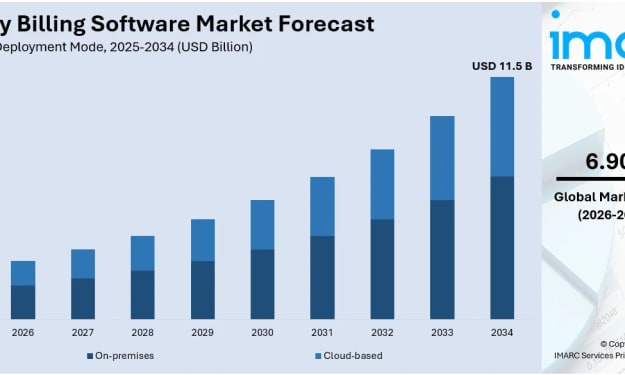
Utility Billing Software Market Trends: Smart Meter Integration, Cloud-Based Platforms & Industry Outlook to 2034
Rising digitalization, the global transition toward smart energy grids, and an increasing need for accurate, real-time consumption tracking are fueling the demand for utility billing software. Modern utilities are shifting away from legacy systems in favor of cloud-based platforms that support complex rate structures and automated customer engagement. According to IMARC Group’s latest data, the global utility billing software market size was valued at USD 6.3 Billion in 2025. Looking forward, IMARC Group estimates the market to reach USD 11.5 Billion by 2034, exhibiting a CAGR of 6.90% from 2026-2034. North America currently dominates the market, holding a market share of over 36.7% in 2025.
By Andrew Sullivanabout 2 hours ago in Futurism



Comments
There are no comments for this story
Be the first to respond and start the conversation.