
Technological advancements in 2023
Exploring the Cutting-Edge Technologies That Will Drive Progress in 2023


As we move into 2023, the pace of technological advancement continues to accelerate, with new breakthroughs and innovations on the horizon. From artificial intelligence to space technology, here are some of the most exciting technological advancements to watch for in the coming year.
Artificial Intelligence
Artificial Intelligence (AI) is a field of computer science and engineering that focuses on creating intelligent machines that can perform tasks that typically require human intelligence, such as understanding natural language, recognizing images, and making decisions. AI is powered by algorithms that enable machines to learn from data, and it is used in a wide range of applications, from speech recognition and natural language processing to autonomous vehicles and medical diagnosis.
AI continues to be a hotbed of innovation, with breakthroughs in machine learning, natural language processing, and computer vision. In 2023, we can expect to see AI-powered solutions become even more sophisticated and powerful, transforming industries such as healthcare, finance, and retail.
Quantum Computing
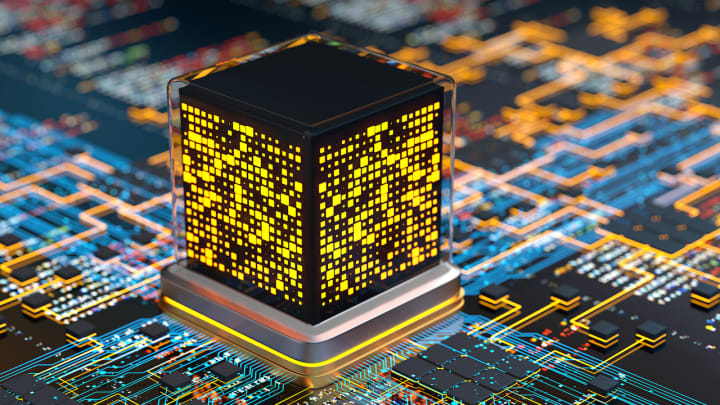
Quantum computing is an emerging field of computing that uses quantum-mechanical phenomena to perform calculations that are impossible for classical computers. In classical computing, information is stored in bits that can be either 0 or 1, whereas in quantum computing, information is stored in quantum bits or qubits, which can be both 0 and 1 at the same time. This allows quantum computers to perform certain calculations exponentially faster than classical computers, making them ideal for tasks such as optimization problems, cryptography, and simulation.
Quantum computing is set to revolutionize computing in ways that were once thought impossible. In 2023, we can expect to see more advancements in this field, as companies such as IBM, Google, and Microsoft continue to invest heavily in research and development. However, quantum computing is still in its early stages of development, and many challenges must be overcome before it can become a mainstream technology.
Augmented Reality
Augmented reality (AR) is a technology that overlays digital information on top of the real world, using a combination of sensors, cameras, and computer graphics. AR can enhance our perception of reality by adding digital elements such as text, images, and animations to the environment around us, creating a more immersive and interactive experience.
Augmented reality continues to gain momentum as a major player in the world of technology, with applications in industries such as gaming, healthcare, and education. In recent years, advances in AR technology have made it more accessible and affordable, and we can expect to see even more innovative uses of AR in the coming years. As AR continues to evolve, it has the potential to revolutionize the way we interact with the world around us and transform industries in ways we have yet to imagine.
Space Technology
Space technology encompasses a wide range of technologies and techniques used to explore, study, and utilize space. This includes spacecraft and launch vehicles, as well as satellites, telescopes, and other instruments used to gather data about the universe. Space technology has enabled us to explore the solar system, study the cosmos, and develop new technologies and applications for Earth.
In recent years, private companies such as SpaceX and Blue Origin have entered the space industry, bringing new innovations and approaches to space exploration and commercialization. As we continue to push the boundaries of what is possible in space, space technology will play an increasingly important role in our lives, from enabling communication and navigation to monitoring the Earth's environment and resources. In 2023, we can expect to see more advancements in space technology, with new spacecraft, launch vehicles, and missions to the Moon, Mars, and beyond.

5G Networks
5G networks are the fifth generation of mobile networks, offering faster speeds, lower latency, and greater capacity than previous generations. 5G networks use a combination of new technologies, including higher frequency radio waves, advanced antennas, and network slicing, to deliver faster and more reliable connections. 5G networks are expected to enable a wide range of new applications and services, from autonomous vehicles and smart cities to virtual and augmented reality.
However, the rollout of 5G networks has been slower than anticipated, with challenges such as spectrum availability and infrastructure deployment still needing to be addressed. Nevertheless, in 2023 we can expect to see more widespread adoption of this technology.
Blockchain
Blockchain is a digital ledger technology that allows secure and transparent transactions to take place without the need for intermediaries such as banks or governments. Blockchain works by creating a decentralized network of nodes that validate and verify transactions, creating a tamper-proof record of all transactions on the network. In recent years, blockchain has gained popularity due to the rise of cryptocurrencies such as Bitcoin and Ethereum, which use blockchain technology to enable secure and decentralized transactions.
However, there are still challenges to be overcome in the widespread adoption of blockchain technology, including scalability, interoperability, and regulatory frameworks. Nevertheless, blockchain is a powerful tool that has the potential to transform many industries and enable new forms of collaboration and innovation.

In conclusion, 2023 promises to be an exciting year for technological advancements, with breakthroughs in AI, quantum computing, space technology, 5G networks, augmented reality, and blockchain all poised to transform the way we live and work. As these technologies become more ubiquitous and integrated into our daily lives, businesses and individuals will need to adapt and innovate in order to stay ahead of the curve. The future is bright, and the possibilities are endless
About the Creator
Keep reading
More stories from writers in Futurism and other communities.
About Binding Prometheus
I want to start actively advocating on behalf of my own work, and the most valuable part of my canon is, without a doubt, Binding Prometheus, the play I have been working on since 2019 and only finished in 2023 as part of my MA. The play itself is an amalgamation of a million different inspirations. On one end, it evokes the Ancient Greek myth-play, deriving its own title from the earliest extant work of Western drama we have, Aeschylus’s Prometheus Bound. On the other end, it borrows significantly from the sci-fi bulwarks from over the years, namely Mary Shelley’s Frankenstein and Karel Capek’s Rossum’s Universal Robots. The play could be an episode of Black Mirror, I fear. I don’t know. I’ve only ever seen one episode of Black Mirror.
By Steven Christopher McKnight22 days ago in Futurism
Protein Hydrolysate Ingredient Market: Enzymatic Processing, High Bioavailability & Product Innovation
According to IMARC Group's latest research publication, the global protein hydrolysate ingredient market reached USD 3.7 Billion in 2024. Looking forward, IMARC Group expects the market to reach USD 5.3 Billion by 2033, exhibiting a growth rate of 4.13% during 2025-2033.
By sujeet. imarcgroup4 days ago in Futurism


Comments
There are no comments for this story
Be the first to respond and start the conversation.