science
Topics and developments in science and medicine, presented by Futurism.
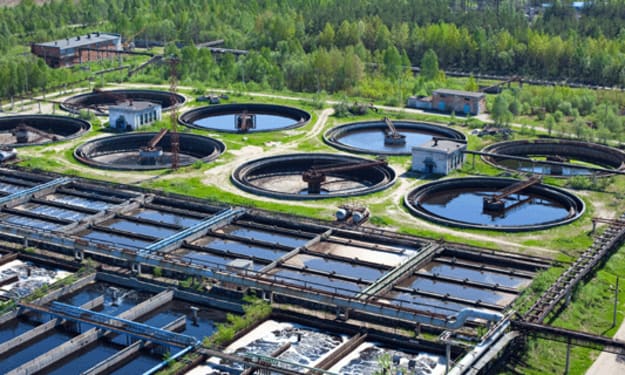
Faeces, Waste or Fuel?
Ever since the dawn of motorised transportation and electricity in our homes, man has wondered if there could be a more renewable manner of running these fossil fuel dependent machines. As time moved on, the necessity for alternate power sources increased and with it came many possibilities thought up by many geniuses globally. The issue with these alternates is that they’re incredibly expensive to run, take a toll on the earth to build and governments simply refuse to invest in this when a cheaper alternative exists. The planet is in dire need of a more sustainable, cheaper, and less destructive power source. Without one global solution in the next twenty years, the human race may have to look to other planets in order to survive.
By Thomas Ralph8 years ago in Futurism
The Science of Zombies
When we think of zombies, we typically think of the dead crawling out of their graves and eating brains. This is not the case when it comes to "reality." With mutations and the world of disease and infection evolving, a "zombie outbreak" is very possible. New sciences and technology are constantly changing the world.
By Sydney Andrews8 years ago in Futurism
Stellar Cruise Part 5
When things finally come to a head, will the passengers and crew be ready... The Zala’s senior staff met every ship’s morning in the main conference room behind the bridge. The room was dominated by an oblong table that kind of resembled a fat plantain. The senior most of the staff sat around it while their aids and junior lieutenants stood behind them. Screens displayed ships status and viewports on either side showed the void of space in its ebony glory.
By daniel morris8 years ago in Futurism
On Your Marks, Get Rex, Go: Science Finally Answers If You Could Outrun A T-Rex
We all know that Jurassic Park could never happen (more's the pity), and unless you are Dr. Ross Geller from Friends, the fact that the dinosaurs don't look enough like birds and the Velociraptors are too large probably won't keep you up at night. Most people enjoy the films for the sci-fi horrors they are and forget the science behind the scenes. However, over the past four films, there is one question that has always puzzled us: Can you really outrun a T-Rex?
By Tom Chapman8 years ago in Futurism
The Emergence of the 'Superbugs'
The name 'superbug' is a bit of a contradiction in itself. 'Super' is often used with a positive tone, implying that something is great or serves an important purpose. Superman is known for his heroics and the fact that he is, well... super. A 'bug' though conjures images of insects or germs. A 'superbug', by definition, can be one of two things. It can be a bacteria which is enhanced to better serve a purpose or function. Colloquially though, the term is used to describe a bacteria which has evolved to be resistant to the conventional treatment of antibiotics. A 'superbug' is known as a bacterium which cause uncontrollable infections, a microbe which can't be eradicated, a germ which can kill when normally it shouldn't.
By Anna Black8 years ago in Futurism
Giant Space Cigar: New Observations Show Weird Interstellar Asteroid is 'like Nothing Seen Before'
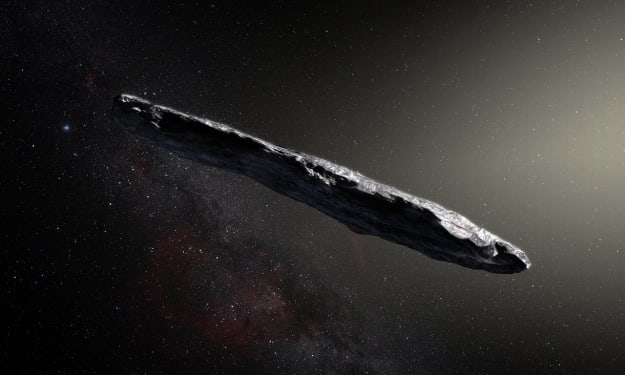
A few weeks ago, something surprising happened when astronomers noticed an odd object moving quickly through the Solar System. Being on a large looping trajectory, it was first thought to be a previously unknown comet, but then calculations showed that it couldn't have originated from within the Solar System, it must have come from somewhere else. Follow-up observations also showed that it was more like an asteroid, rather than a comet. Now, astronomers have published their most detailed findings yet, and this object, named 'Oumuamua (Hawaiian, meaning scout or messenger coming from the past), is "like nothing seen before."
By Paul Scott Anderson8 years ago in Futurism
Common Ground
When in the course of human events, it becomes necessary for nations to come together for the common good of humanity. When over sixteen thousand scientists recently agreed on one aspect of the future of our planet, mankind has to take heed and recognize the severity of our predicament in relationship to our world around. No longer can we sit idly by and let greed take precedent over common sense. Our world is fast becoming inhospitable due to our continued lack of concern for the future.
By Dr. Williams8 years ago in Futurism
The Ocean Is Important. How Important?
Without the ocean, we simply wouldn't survive! We ALL rely on it, even those who live miles away from the shore. The ocean covers nearly three-quarters of the earth's surface and holds 97% of the planet's water. Believe it or not, the ocean also generates more than half of the oxygen in the earth's atmosphere. Don't believe me? Let me explain. Phytoplankton are plants that live near the water’s surface and drift with the currents. These plants produce oxygen as a byproduct of photosynthesis, a process which converts carbon dioxide and sunlight into sugars the organism can use for energy. Put simply, they produce oxygen the same way that trees do. But on a much larger scale. Scientists believe that phytoplankton contribute to between 50 to 85 percent of the oxygen in Earth’s atmosphere. That's a lot.
By Kader Folles8 years ago in Futurism
Climate Change
You’ve probably heard climate change at some point or another, whether it’s someone claiming it’s a hoax, or a scientist rambling about the importance of us changing the way we live. To understand climate change and its importance first we must know what it is. Climate change is defined as, “a change in global or regional climate patterns, in particular a change apparent from the mid to late 20th century onwards and attributed largely to the increased levels of atmospheric carbon dioxide produced by the use of fossil fuels.”
By Clare Woodford8 years ago in Futurism
Crowdfunding Science
Scientific discovery has always required extensive resources and large purse strings. But with decreasing sources of funding, getting a project off the ground can be daunting. Grants often require some sort of pilot data and preliminary analysis, both of which can be costly. And for those living in countries where funding is scarce, finding any source is incredibly important. Many researchers have begun to look at alternatives, one of these being crowdfunding.
By Liza Saguto8 years ago in Futurism