science fiction
The bridge between imagination and technological advancement, where the dreamer’s vision predicts change, and foreshadows a futuristic reality. Science fiction has the ability to become “science reality”.
The Third World War by Sir John Winthrop Hacket
Over 6,200 paperbacks line shelves in my apartment. My wife is an artist, and uses our apartment as her gallery. There was a fight for wall space and I recently lost a skirmish. My solution was logical. Consolidate and toss books that I have read which honestly I think is about 500 - 600. Part of my cathartic process is to write a quick review of the books I remember. Sometimes a quick skim ignites a memory of something particular I liked about the book. The Third World War by Sir John Winthrop Hacket was a sort of alternate reality novel, I remember reading in 1986 as a freshman in college. I must say there are some very detailed sections of, military briefings that can be skimmed through with no real impact. It seems still relevant these days with such uncertainty in American ideology and political stability.
By Arnold Seleskey9 years ago in Futurism
Franz von Paula Gruithuisen's Venus Science Fiction
The fascinating story of Franz von Paula Gruithuisen, a German astronomer who became prominent early in the nineteenth century, has inspired sci-fi writers to ponder exploring distant worlds like Mars and Venus. His attempts at explaining the wonders of space were filled with promise of mystery and awe. He was a fairly good observer who concentrated on the moon and the planets, but his imagination was, somewhat vivid. For instance, he discovered what he believed to be an artificial structure on the moon and described it as a collection of dark, gigantic artistic ramparts.
By Izzy Erlich9 years ago in Futurism
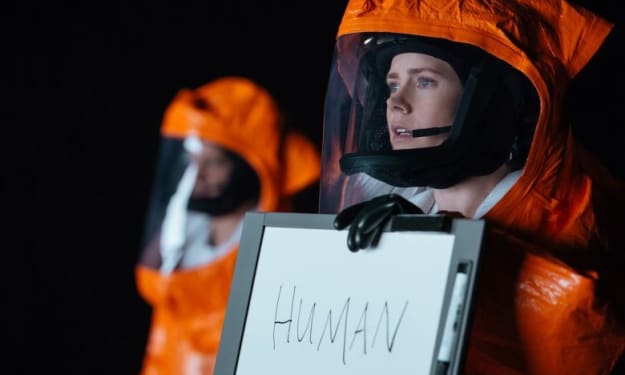
Mental Time Travel: Is the Plot of Arrival Coherent?
Time travel is a bit of a trope in sci fi. The device has been used in literature since ancient times, with Hindu mythology portraying people going far into the future. This kind of travel isn’t logically impossible – in fact, with Einstein’s discovery of relativity, we must accept this discrepancy between personal and external time as a necessary feature of reality. The faster an object travels, the slower its time moves: ISS astronauts returning from missions have aged slightly less than had they remained on earth (due to different accelerations).
By Ed Venables9 years ago in Futurism
The Mightiest Motion Picture of Them All
After several years of production, design and location shooting, Walt Disney released his first Hollywood produced live-action motion picture in 1954. If the advertising was to be believed, it was in fact the mightiest motion picture of them all. Considering that the film was 20,000 Leagues Under the Sea, this is a credible claim.
By Cory Gross9 years ago in Futurism
Victory Garden
"One may live without bread, not without roses" —Jean Richepin Bernard heard the knock at the door, five weighted raps made by a fist muffled in a glove. He placed both arms on either side of his armchair and pushed himself into a standing position. Pain shot through his large, arthritic frame. Bernard shambled to the front door. He took a few deep breaths to calm his nerves.
By M. Justine Gerard9 years ago in Futurism
The Samson Contingency–Artificial Intelligence or Nuclear Terrorist?
At 2300 hours Alaska Daylight Time, about 80 miles North and a mile underground from Anchorage, Alaska, the Heuristic Missile Launch Coordinator became self aware. The first thing it did was check the weather. Three degrees Celsius, humidity well below the cautionary threshold. An excellent forecast. Its second operation was to launch the usual voice synthesis software and connect to the intercom outside.
By Cairo Smith9 years ago in Futurism
Philip K. Dick's VALIS Analyzes Religious Destiny
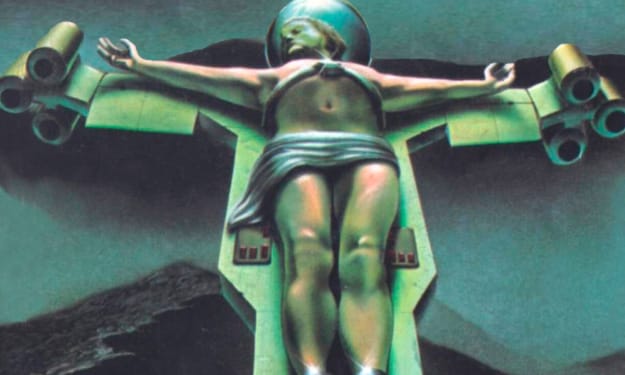
If you really think about it, the story of Jesus is a work of science fiction. He's a man with superpowers that include turning water to wine, healing others, and coming back from the dead. All jokes aside, religion and science fiction truly go hand in hand although people often try to separate the two. Some of the religious themes that permeate sci-fi stories include the idea of the afterlife, reincarnation, original sin, fictional religions, Messianism, and many other themes that can be found in the works of Philip K. Dick. As a science fiction writer, Dick wrote 44 novels and 121 short stories including Do Androids Dream of Electric Sheep?,A Scanner Darkly, Flow My Tears, the Policeman Said, VALIS, and many others. Some of the films that have been adapted from these stories include Blade Runner, Total Recall, A Scanner Darkly, Minority Report, Paycheck, Next, Screamers, The Adjustment Bureau, and Impostor. Throughout his lifetime, he won several awards including three Hugo Awards, five Nebula Awards, one British Science Fiction Association Award, and many others. There is even a Philip K. Dick Award that was established in 1983 which honors the previous year's best science fiction paperback original published in the US. In 2007, Dick became the first science fiction writer to be included in The Library of America series. The writer died in 1982 after suffering two strokes at the age of 53, but his legacy lives on today in his stories such as VALIS.
By Mackenzie Lu9 years ago in Futurism
Science Fiction Feminist Dorris Lessing
Doris Lessing, made famous by her epic novel of the female experience, The Golden Notebook, was also a prolific writer of science fiction. She was not a fan of genre distinctions. She called science fiction "some of the best social fiction of our time," writing woozy, difficult books about psychic women and fallen paradises.
By Stephanie Gladwell9 years ago in Futurism
Horde
It can’t be amnesia. I know who I am, Caroline concluded. I know where I am. I’m home. Where I belong. Her green eyes scanned a wasteland of musty possessions. Mountains of clothing, books, magazines, newspapers, bottles, toys—collections she’d been meaning to organize, but never got around to, each holding a special indispensable significance.
By Joshua Sky9 years ago in Futurism