science fiction
The bridge between imagination and technological advancement, where the dreamer’s vision predicts change, and foreshadows a futuristic reality. Science fiction has the ability to become “science reality”.
Review of Travelers
The premise of Travelers -- people from the future coming back to save our world from devastation, by changing the past, and traveling via insertion of their minds into the 2016 bodies of people who are on the verge of dying -- is something we've seen before in time travel, notably in 12 Monkeys (save the world), Quantum Leap (mind from the future jumping into present bodies), and Air Raid/Millennium (bodies on the verge of death). Travelers even feels a little like Trancers (1984) -- which is to say, very welcome, since Trancers is one of my all-time favorite low-budget time-travel series of movies -- but the actual story and stories of the new Canadian series, streaming since late last year on Netflix, has twists and turns and an appeal all its own. And, in the end, it's altogether outstanding.
By Paul Levinson9 years ago in Futurism
Symbiote Chapter 4
Dawn spread serenely across the waters of Kittery. As the shift from nocturne roused the weary souls of Tesla’s crew, Vanessa sat by herself in the furthest corner of the mess decks as possible from everyone else. As she poked at her burnt bacon and eggs, reveille sounded. Slowly the chamber filled with personnel, all grumbling and complaining, but still in groups, after all a bitch’n sailor is a happy sailor. The few times she did look up, she had a snarl on her face: the others, milling, talking, laughing, Vanessa hated them all. It was so horrible to be the one with unrequited love.
By daniel morris9 years ago in Futurism
Six Degrees at Ten
When Six Degrees was published, climate refugees in America were languishing far from their homes on the Katrina-ravaged Gulf Coast. In the Arctic sea ice had shrunk to its lowest ebb in recorded history. The year was 2007 and climate change seemed fated to loom over the lives of all in the new century. The book, written by environmental campaigner Mark Lynas, collected the best guesses of scientists to project a degree-by-degree vision of our warming world, detailing the consequences for humans and nature as the mercury climbed. In 2007 the carbon in our atmosphere hovered around 385 parts per million, but today it is well over 400. Since then global temperatures have also crossed the fateful threshold of 1 degrees Celsius outlined in the book. Each chapter deals with a degree Celsius increment, climaxing as the title would suggest with a climate six degrees warmer than that which has prevailed for most of human existence. So, how closely does our world today follow the trajectory plotted a decade earlier? Reading the first chapter now, and counting the things which have since become ordinary, is startling.
By Jack Elliot Marley9 years ago in Futurism
Symbiote Chapter 3
The office of the Minister of War was spartan and utilitarian, as was befitting a high level Bruish bureaucrat. Though they felt no need for any kind of decoration, visiting dignitaries of other species were more comfortable when there was at least a wall pick. Since they could care less either way, there were some picks. All the wall displays were neutral nature scenes from their home world: a jungle moon orbiting a gas supergiant in a binary star system, with one spectral “M” red giant and one “F” type main sequence. Though the scenes were as varied as jungles could be, there were no depictions of animals. The few furnishings in the barren, sad, cold, space, were cold metal and near unbreakable glass.
By daniel morris9 years ago in Futurism
A Primer for Dark System
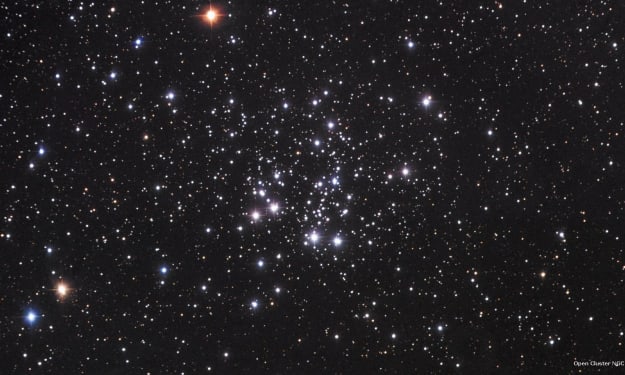
Astronomy tells us that planets orbit stars, stars hang out in clusters and these clusters orbit the supermassive black hole in the center of the galaxy, and the galaxy is zooming away from some center, some big bang. These same astronomers say that, at times, planets are kicked out of their family systems to travel the dark alone. What if some of these outcasts formed their own system? These dark systems would be near impossible to detect with our current tech, but we couldn’t travel there anyway…
By daniel morris9 years ago in Futurism
The Dead Zoo: Dilophosaurus
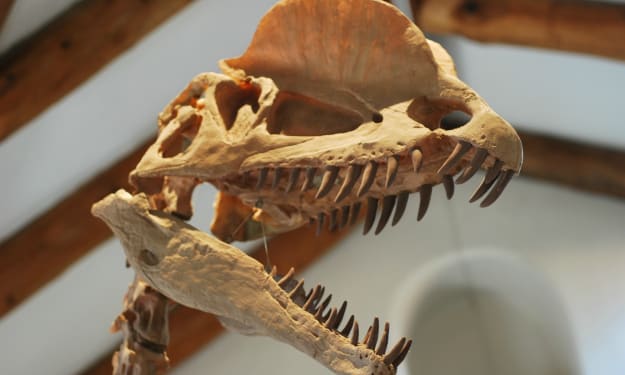
The way some hipsters talk about bands, hardcore paleo fans talk about fossils. “Oh, you only heard of mosasaurs because of Jurassic World? I was into those aquatic lizards back when they were eating sailors in The Land That Time Forgot.” It’s not necessarily charming behavior, but it happens. And I admit that when the cinematic version of Jurassic Park debuted in 1993, I felt a little swell of pride at already being a big fan of the movie's noxious double-crested dinosaur.
By Brian Switek9 years ago in Futurism