religion
Posts about religion, skepticism, and how it fits into the scientific world.
Catholic Saints Feast Days - August
In the Christian calendar, there is a Saint's Feast Day every day. In August, there are several Saints celebrated on each day. For example, there are four different Saints whose Feast day is celebrated on 6 August while 17 August is shared between 25 different Saints. Overall there are hundreds of Saints celebrated in the month of August alone.
By Sapphire Ravenclaw8 years ago in Futurism
Wicca; The Questions, Answered
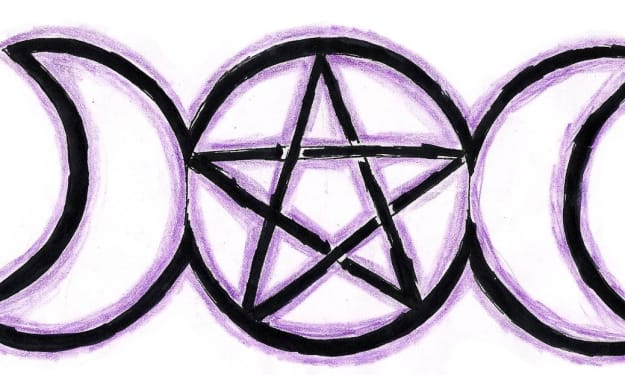
Wicca: These are the questions, answered. There are good aspects of it, and bad ones as well. What is Wicca you may ask? Wicca is a modern form of Paganism, and is also a nature-based religion. Wicca is a recognized religion, while witchcraft itself is not considered a religion. Thus, Wicca might be best described as a modern religion, based on ancient witchcraft traditions. Contrary to what those who choose to persecute or lie about Wiccans wish to believe, Wicca is a very peaceful, harmonious, and balanced way of life, with oneness with the God and Goddess in which they believe in, and all which exists. I will go further into their beliefs, practices, and good and bad aspects of Wicca.
By Serena Fix8 years ago in Futurism
The Pagan Wheel of the Year
Pagan can mean a lot of things. Pagans can be Wiccan, but not all pagans are Wiccan. We pagans have adopted a wheel of the year tradition that was somewhat practiced in ancient times only with four major holidays, not 8 as in the modern era. Each pagan tradition has its own version of the holidays. We are going to be discussing the Pagan holidays in general terms. The wheel starts with Yule in December, continues with Imbolc in February, followed by the vernal equinox, also called Ostara in March or April. In the summer time, we have Beltane in May, Litha for summer solstice. Then there are other harvest festivals such as Lammas/Lughnasadah, and the autumn equinox Mabon, Samhain is the last holiday of the year, or New Year’s Eve, when the veil between the worlds is thinnest. For Wiccans, Pagans, and witchcraft practitioners, the wheel of the year begins October 30th, and ends the next year on October 31st.
By Iria Vasquez-Paez8 years ago in Futurism
The Akashic Records
Many people, not just myself, can access the Akashic Records. The Akashic Records are defined as a huge record of everything ever spoken all over the universe, also encompassing different dimensions since we have to count those too, when you are contemplating the existence of other civilizations besides ours. You can’t read the Akashic Records for somebody else without permission but you can read for yourself. I’m sure every mean thing ever spoken to me is in the records, from anybody who was ever mean to me for a dumb reason.
By Iria Vasquez-Paez8 years ago in Futurism
Comparative Analysis of Divine Action Proposals
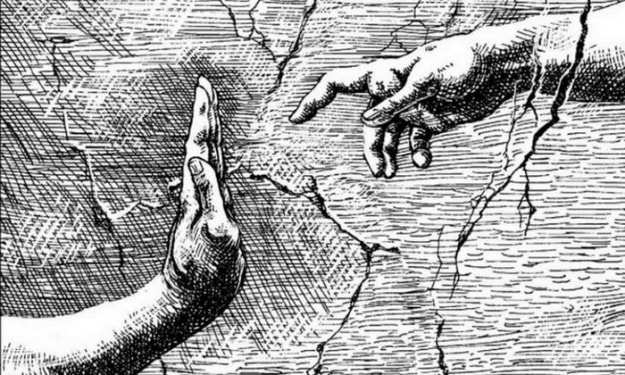
The proposals for conceiving divine action in the world from Van Till, Peacocke, and Haught create an interesting set of inconsistencies such that might be deemed as incompatible with contemporary science and Christian religious traditions; however, these three thinkers are able to defend their positions and beliefs on these issues and inconsistencies. Issues such as the formational economy of the universe in its beginnings, the nature of suffering, and the metaphysical role of God in the history of life on Earth play a significant role in these religious thinkers’ theological proposals.
By Josh Whitehead8 years ago in Futurism
Ignorance in the Theology of Oceania
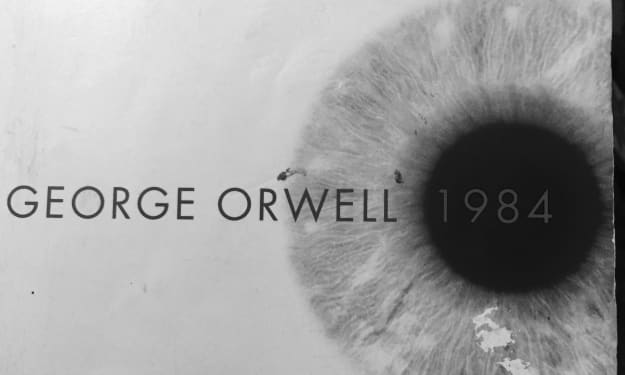
A person whose mind is restricted and trained to believe one idea and one idea only can never truly be free. The idea that a controlled population is a free population is flawed. The very essence of freedom is knowledge. When a government puts regulations on free knowledge or restricts individuality, the government regulates development; intellectual as well a secular. In George Orwell's 1984, Winston Smith is a man living in a dystopic reality with nothing but control all around. Winston quickly discovers that Big Brother will not tolerate free thought or free will. It is irrational to think that total control is for the good of everyone, and Orwell's 1984 warns of giving into that total control, whether to a government or other powerful group. 1984 uses the theme of orthodoxy that parallels to religious ideals of supreme beings, blind faith, and unwavering allegiance to warn of the dangers of the idea from the novel that "ignorance is strength."
By Corey Bourquin8 years ago in Futurism
Why I Practice Witchcraft
I got sick in the Catholic Church with my mental health symptoms, every time we went to Mass. I got anxious, manic, neurotic, wound up, stressed out, and feeling terrible since I grew up without medication helping me treat my schizophrenia. Church made me all kinds of OCD, in addition. I wanted to escape from the age of 12, but I wasn’t able to escape until I was 20, and got some meds to try out. Church made me stressed; the whole concept was stressful to deal with. I was an out-of-control empath growing up who had no idea how to filter out other people’s energy. This is why I was constantly sick in Mass.
By Iria Vasquez-Paez8 years ago in Futurism
Is Lent an Extra Terrestrial Event?
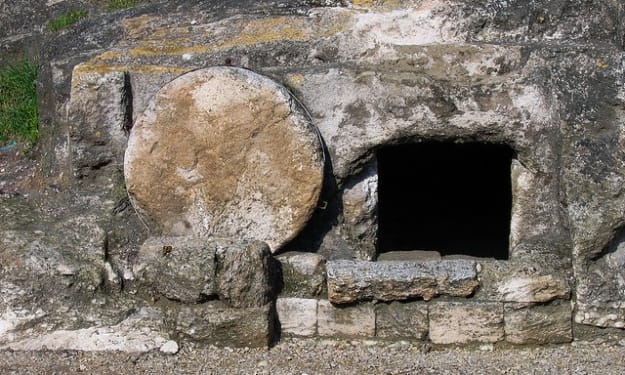
Is it possible that religious stories and events are actually Humanoid Extra Terrestrials Living Among Us (HETLAU)? Through these stories and events could they really be secretly preparing us for disclosure through subliminal dissemination?
By Richard Van Steenberg8 years ago in Futurism
Charlemagne and the Witches
Research into the history of witchcraft shows that it is varied in both practice and opinion. For centuries, witches lived peacefully and would be called upon as healers. During the early days of Catholicism, Pagans and Catholics continued to live happily side-by-side. Subsequent centuries saw the Roman Catholic Church attempt to draw people into the religion in various ways. Initially by having priests who performed rituals similar to those practised by witches, then by usurping holy days, bastardising Pagan symbols and images, and purporting that witchcraft was evil.
By Sapphire Ravenclaw8 years ago in Futurism