pop culture
Trending and current events, topics, and interest in science fiction and technology.
OMNI's Early Review of Star Wars Rogue One
Of all the things Turkey is known for, early theatrical releases of international blockbusters isn't one. And yet--Turkey debuted Rogue One on December 14th, 2016...two days ahead of the U.S. release date. Which means, if you live in Turkey (and I do) then you're ahead of the pack!
By Matt Cates9 years ago in Futurism
The Mightiest Motion Picture of Them All
After several years of production, design and location shooting, Walt Disney released his first Hollywood produced live-action motion picture in 1954. If the advertising was to be believed, it was in fact the mightiest motion picture of them all. Considering that the film was 20,000 Leagues Under the Sea, this is a credible claim.
By Cory Gross9 years ago in Futurism
Biological History of the Vampire Legend
Bram Stoker, through his novel Dracula, and the motion-picture industry with its many portrayals, have led us to consider Count Dracula, a fifteenth-century Romanian nobleman, as the vampire. The Count, who was known as Vlad the Impaler, was a seemingly unpleasant person who was known to feast in the presence of impaled enemies. Once, during such a feast, an ambassadorial guest complained that the sights and sounds interfered with his appetite. Count Dracula ordered one more stake (pun intended), on which he had his guest impaled. He then continued dining, alone.
By George Gott9 years ago in Futurism
Best Sci-Fi TV Shows of 2016
My priorities are simple. My family/friends first, then my business. Then science fiction. Quite frankly, as I look back on my life, I realize that before I had my own family or a business, sci-fi was all i had. From Buck Roger's and Space 1999, I have watched almost every sci-fi TV show ever. I have seen every episode of Star Trek for each of the series. I never stopped watching Sliders, and when the Syfy channel began it was a big day in my life. I am a sci-fi geek, and this year was an awesome year for sci-fi TV. Again, I watched every episode of every series. And yes, I still try to make time for family, friends, and business.
By Frank White9 years ago in Futurism
5 Science Fiction Heroes Who Hate Science
What's a hero supposed to do when they are written into a story they don't seem to want to even be in? When they're rudely stuffed into a space ship and launched to Alpha Centauri...but they really only want to chill at a backyard BBQ?
By Matt Cates9 years ago in Futurism
Must See Episodes of 'The Twilight Zone'
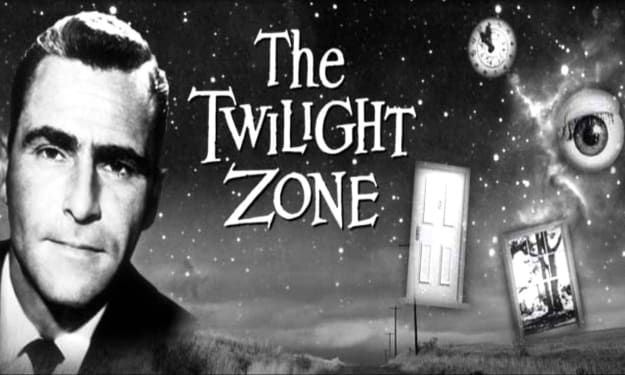
If you have never seen an episode of The Twilight Zone, then you cannot call yourself a true fan of television. The Twilight Zone is always among the top of any credible list of the best television shows in history. Created by Rod Serling, The Twilight Zone has 156 self contained stories that stick with an audience in a way no other show does. Some Twilight Zone episodes are great because of how creepy they are, while some episodes are great because of the powerful moral lessons they teach. While I recommend you watch the whole show, here are the best episodes of The Twilight Zone. Luckily they are all available on Amazon Prime and Hulu.
By Jason Schwartz9 years ago in Futurism
The Science Fiction of Music
My first novel, Big in Japan, is about a neurotic American prog-rocker coming of age in Japan. My second, Jellyfish Dreams, is about a biologist’s quest to reanimate his dead fiancée at the instigation of a black hole beneath his sofa. Readers who’ve read both books usually remark on how different they are, but I don’t see it that way. For one thing: crazy artist, mad scientist—same difference. For another, even if you agree with (a quote I’ve seen attributed to) sf comics genius Warren Ellis that “Prog rock was sick and wrong then and it is sick and wrong now,” one can’t deny that prog drinks as liberally from the sf well as it does from the epic and fantasy ones. And so, a primer on some of history’s more salient prog-sf conjunctions:
By M. Thomas Gammarino9 years ago in Futurism
Buried Screwball Facts About Nikola Tesla
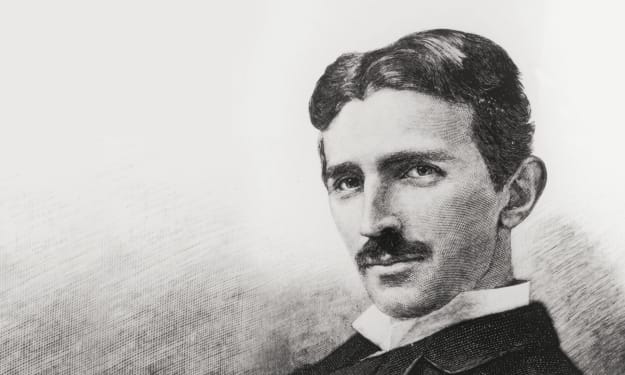
Travel anywhere outside the United States and the name of Nikola Tesla is known. Ask the average person on an American sidewalk? They’re apt to recall the 80’s rock band. Or they’ll nod and mumble about Elon Musk’s motor company.
By Matt Cates9 years ago in Futurism
Sci-Fi Sidekicks You Wish Were Your BFF
Imagine this. You’re shackled to the wall in an underground alien torture chamber on an unexplored planet, light years from home. Or maybe your spaceship is being pulled into a moon-sized space station filled with storm troopers. Or you’ve got a supercomputer that needs hacked, stat. Obviously this is no time for Sam Gamgee to come to your rescue (heartwarming, loyal, and hairy-footed though he may be). You need someone with skills, someone who will risk everything to scoop you out of harm’s way, make a solid plan, and do it all again the next time you get yourself in trouble. Maybe they’re a little snarky, or a little sarcastic, or covered entirely in fur or actually a malfunctioning robot built out of trash, but when you need a best friend you can rely on, these sci-fi sidekicks won’t let you down.
By Sarah Quinn9 years ago in Futurism
Space (Part II - Vonnegut's Cat's Cradle)
In my last article, I discussed William Gibson's cyberpunk classic Neuromancer as a key text in the convergence between science fiction and postmodernism. This time, I want to stay right on the cusp and consider the case of Kurt Vonnegut, who happens to be the writer who made me want to be one myself someday.
By M. Thomas Gammarino9 years ago in Futurism