pop culture
Trending and current events, topics, and interest in science fiction and technology.
Rewatching... Star Trek: Errand Of Mercy
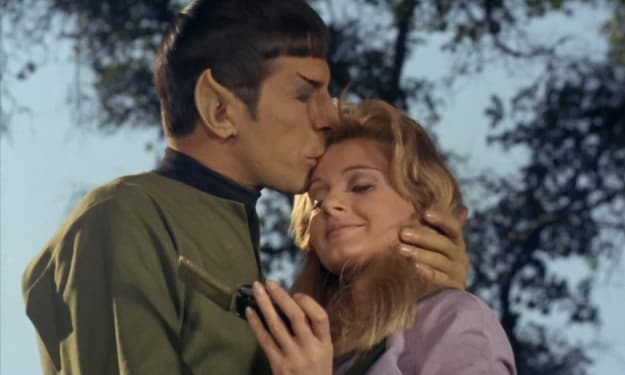
"...we Klingons play to win" Thursday 23 March 1967 There's this race of aliens called the Klingons, and Kirk doesn't like them. They're warlike and brutal; Starfleet has just advised that negotiations with them have broken down, and ordered the Enterprise to fly to a planet called Organia and protect the inhabitants.
By Nick Brown9 years ago in Futurism
Unforgettable Dinosaur Movies
Every child loves dinosaurs, and, after watching one, will always dive into the bargain bin DVDs in search of a dinosaur film to satisfy that itch. Sadly, there are tons of films that exploit that need for dinosaur goodness, and, often, fail to deliver something good.
By Anthony Gramuglia9 years ago in Futurism
Major Draw
The countdown is on until the release of Hollywood's big-budget action-thriller adaptation of Shirow Masamune's Ghost in the Shell. Both highly-anticipated and highly-reviled, the movie has become the epicenter of long threads on various social media sites. Much of the hype surrounds the intensity and beauty of the special effects and hope for an interesting storyline, while derision centers on the casting of Scarlett Johansson as Motoko Kusanagi (renamed "Mira"), the protagonist. Equally understand-able is the trepidation that some fans feel considering what a strong presence "the Major" – as she is referred to by fans and her underlings alike – has throughout the franchise.
By Made in DNA9 years ago in Futurism
The Elevator to Everywhere
[Hi, I'm back. If anyone has anything they would like to say you can contact me @Amccaul1976 on twitter or email me at [email protected]. Again if you have something nice to say feel free to let me know. If you didn't like something be constructive let me know what or why you didn't like something. Thanks for the feedback and for fans I'll keep writing if you keep reading.]
By Adam McCaulley9 years ago in Futurism
That Ain't No Little Green Man
Decades of entertainment and pop culture have invaded our eyes and ears with tales of little green men coming from destinations unknown and plaguing our skies and our homes. These little green critters often changed throughout the decades as stories spread and culture shifted. So when we hear the stories of close encounters with what we often consider aliens, it's no wonder that some of these more radical reports get brushed to the side. They just seem to be too damn strange. They don't fit the prototypical alien mythology we've been conditioned to believe (or not believe) is true. They bend the rules and they challenge the norm. So what are these outsiders amongst outsiders? Let's take a look at a few cases of possible monsters from above... or possibly below.
By Ryan Sprague9 years ago in Futurism
Anticipation Killed the Cat
If you are like me, you have a stream of information coming at you from all your social media accounts, mostly about things you have liked and are interested in. Like sucking down a mint chocolate chip milkshake too fast and getting that brain freeze, we continue to do it because it fills that instant void. When is too much of a good thing too much? I’ll use the example of the upcoming movie Ghost in the Shell as the example.
By Nickolas Rudolph9 years ago in Futurism
Classic Literature Takes A Tech Turn
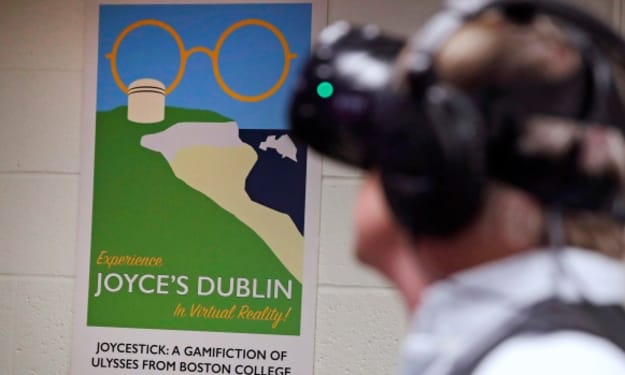
Do readers need a high tech exposure to classical literature in order to properly enjoy it? While the answer to that question may not be known, it's something that Boston College students are curious about. There is a group of students from the esteemed college who are designing a virtual reality (VR) experience called "Joycestick." The game takes players through the Dublin that readers fell in love with in James Joyce's Ulysses, some of which has been simply lost through the passage of time.
By Christina St-Jean9 years ago in Futurism
Rewatching... Doctor Who: The Moonbase – Part 4
“…we’ve got enough madmen here already.” Saturday 4 March 1967 There are really impressive numbers of Cybermen in this. They march across the lunar landscape and begin to assemble a weapon. I count eleven onscreen at the same time. With others inside their ship you really believe they are a credible threat.
By Nick Brown9 years ago in Futurism
Rewatching... Star Trek: This Side Of Paradise
Thursday 2 March 1967 "Who wants to counteract paradise, Jim boy?" There are two things I especially like in Star Trek. One is when the crew all start going out of their minds, and the other is when it's set on a familiar Earth type planet. So I enjoyed this week's episode.
By Nick Brown9 years ago in Futurism
Rewatching... Doctor Who: The Moonbase – Part 3
Saturday 25 February 1967 "Clever. Clever. Clever." I like the Cybermen’s new voices. Perhaps not as easy to understand as the old ones but much scarier and more emotionless and robotic. Emotionless in tone mind you, but the dialogue still gives away emotional oddities. I’m not sure if “Clever. Clever. Clever.” is sarcasm at Hobson’s realisation of what the drops in air pressure indicated when the Cybermen got in, or self-congratulation. They also come out with words and phrases such as “excellent” and “stupid Earth brains”!
By Nick Brown9 years ago in Futurism
Alex The Inventor-Chapter 7
To Read Chapters 1 - 6, Go To: Deep Sky Stories and Illustrations. Chapter 7 - The Stranger He Knew Alex still remembered the dream that morning during breakfast and he nibbled half-heartedly at his cereal as he pondered it over and over again, staring off in a daydream. Mrs. Faraway noticed his glazed look and asked him if he had slept well.
By G.F. Brynn9 years ago in Futurism