habitat
The natural home and environment for all things sci fi, including future homes and territories.
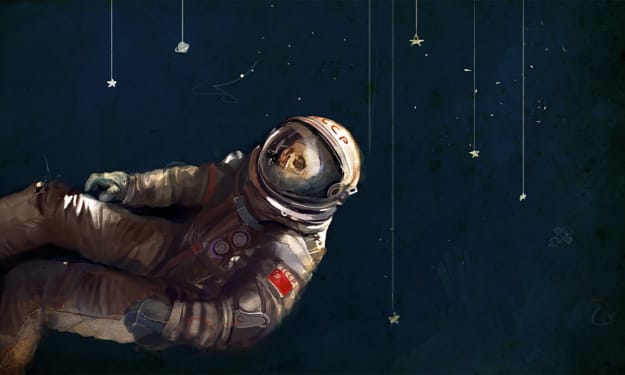
What Happens to Your Body When Exposed to Space?
We've all seen that movie: where some unfortunate guy gets sucked out of an airlock and is thrown from his spaceship into unknown space. What is the first thing he does? Struggle to breathe. This is followed by panic, while blood oozes out of his eyeballs and ears. Until finally, his slow death ends, and all we're left with is a frozen corpse. Yuck.
By George Gott9 years ago in Futurism
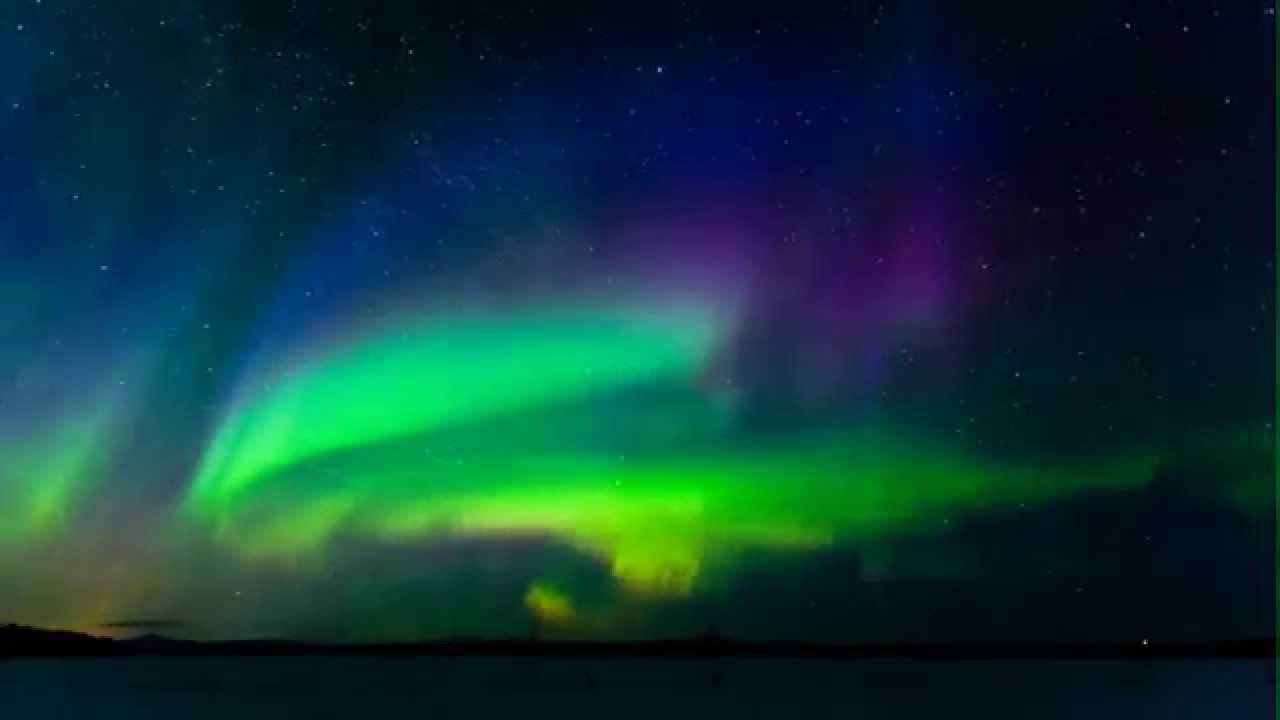
Science of Auroras
Our atmosphere, the thin membrane that separates Earth from space, is a remarkable geophysical laboratory. In it are synthesized the fascinating colored lights known as auroras, one of nature's most splendid phenomena. Now that the sunspot cycle is reaching its peak, we can expect auroras to light up our night skies with greater frequency.
By George Gott9 years ago in Futurism
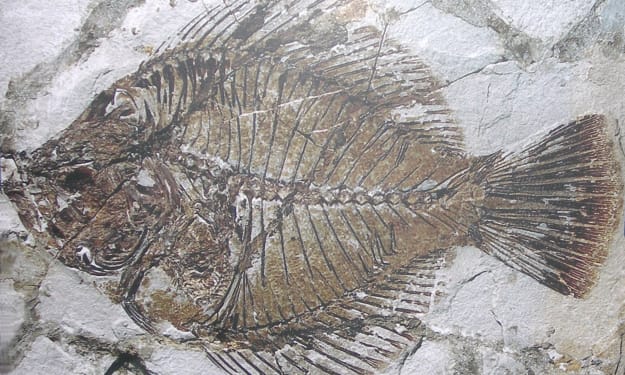
Who Will Survive the Next Biotic Crisis?
While the next biotic event is probably not in the near future, fossil records clearly testify that extinction is an unavoidable fate for all species. The real question remains: what is left in the wake of mankind? Our lineage is more likely to be altered through evolution than entirely snuffed out.
By Brian Switek9 years ago in Futurism
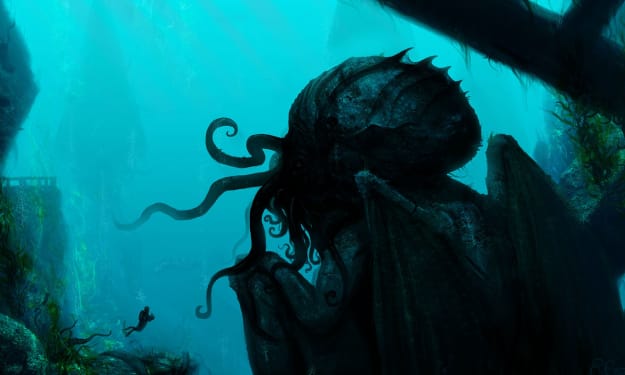
Octopus Facts
Researchers at the University of Chicago and a group at the Okinawa Institute of Science and Technology in Japan combined forces in the Octopus Genome Project. This huge undertaking maps out the entire DNA structure of this complex cephalopod. The Octopus facts, which were published in the science journal Nature, are simply incredible. Octopuses, not octopi, are so vastly different in their genetic makeup that they might as well be considered aliens from outer space. In uncovering the sequence, scientists found that octopuses have a significant expansion of a family of genes that play a role in neuronal development. A similar set of genes are found in humans, and until the Octopus facts were published, this gene expansion was believed to be a unique characteristic of vertebrates. Now, thanks to this research, we know that similar processes happened in octopuses.
By Stephanie Gladwell10 years ago in Futurism
Does the Earth Have a Hidden Twin?
For several years now we have been hearing about new planetary bodies being discovered inside and outside our solar system. There are suggestions that our familiar companions - Mercury Venus, Mars, and the rest - may not be all there is to the sun's family. There is evidence that one member or more still awaits discovery through scientific research. This idea is not new. With ideas like Planet X and also back a century ago it was widely thought that another planet could be found within the orbit of Mercury. It was even given a name: Vulcan.
By George Gott10 years ago in Futurism
Science of Identical Twins
“Double your pleasure, double your fun” couldn’t be more true when it comes to identical twins. Starting with the moment your obstetrician tells you, “There are two of them,” your life is never the same. Twins are double the fun and doubly amazing. Aside from the remarkable science behind them and the totally random happenstance of their creation, the very fact that two people can have identical faces and DNA is just miraculous. Here you have two babies who have spent nine months keeping each other company in the womb and then, upon being released into the world, continue to amaze all those around them. Parents of twins have reported identical sleeping positions, finding their twins sleeping in the same bed; As babies, when they would nap in the same crib, and even if they started out on opposites sides, they would always end up holding on to each other, most likely as they did in-utero.
By Stephanie Gladwell10 years ago in Futurism
How to Find Fossils
The next time you find yourself nodding behind the wheel from the monotony of turnpike driving, pull off beside a road cut where highway engineers have blasted the rock outcrop. Your reward will not only be a well-earned rest, but also the possibility of finding some of those exquisite treasures in the dust that we call fossils. Learning how to find fossils is both and entertaining and educational skill.
By Futurism Staff10 years ago in Futurism
Atmosphere of Earth
Imagine you are an otherworldly explorer. As part of your survey of the Milky Way, you have come across an interesting stellar system with nine major planets. You have gotten permission from your superiors to investigate the lively third planet. The planet is called “Earth” in one of the many languages used there. In your last report you discussed the development of the planet as part of the entire system. Now you are going to begin a more detailed examination of Earth itself. The most logical place to start is the atmosphere, the envelope of gasses and vapors that gives this planet so much of its character. Since it is always best to begin at the beginning, you review your findings concerning the early history of the atmosphere.
By Futurism Staff10 years ago in Futurism
Gypsy Moth Invasion
The caterpillars were everywhere—in the pool, on the side of the house, in the eaves, in your hair. Where there were large infestations, you could hear them at night. Their droppings, or frass, sounded like a light rain. Perfectly sane people went about protected beneath umbrellas on sunny days.
By Futurism Staff10 years ago in Futurism
Impact Craters of North America
The time: June 30, 1908. The place: central Siberia, Imperial Russia. A giant meteorite, blindingly incandescent, streaked across the sky and smashed to Earth near the Tunguska River, devastating a roughly circular region nearly 150 kilometers in diameter. Forests were flattened and several herds of reindeer killed. The earth was pitted by cone-shaped craters up to 50 meters across. Ground vibrations from the impact shattered windows scores of kilometers away. Heat seared the bark from trees, and smoke billowed many kilometers into the atmosphere. Shock waves from the blast were "heard" around the world by delicate microbarographs, instruments that measure pulsations in atmospheric pressure set up by very long sound waves.
By Futurism Staff10 years ago in Futurism