habitat
The natural home and environment for all things sci fi, including future homes and territories.
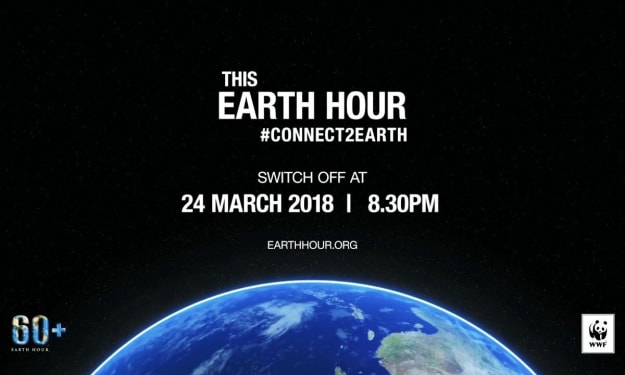
Earth Hour Was a Success?
The WWF and their supporters do so much not just for the animals but for climate change. Over 55,000 promised this last week on World Earth Hour to stop their use of things that they know are hurting the environment. Their promises included: use reusable bottles, no more plastic straws among other things. So many people did their promise.
By Tara Watts8 years ago in Futurism
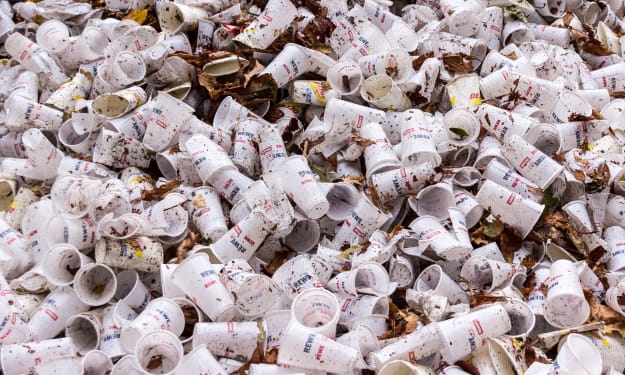
The Problem with the Problem with Plastic. Top Story - March 2018.
An admirable cause has found its way into the public consciousness helped in no small part by national treasure David Attenborough and his latest docu-series, 'Blue Planet 2.' The scourge of single-use plastics and their impact on the environment and wildlife has moved from the fringes, once valiantly espoused by environmentalists and neo-hippies of the Zero Waste movement, to become an urgent and pressing issue of our time (or perhaps just 2018).
By Joe Clarke8 years ago in Futurism
Let's Save the Bees
Honeybees. Yes, they are those pesky little critters who you do not want on your bad side, but they are doing so much good underneath their moody exterior. They are necessary for nearly 80 percent of all crops that are used directly for food worldwide—and they are becoming endangered!
By Allison Barker8 years ago in Futurism
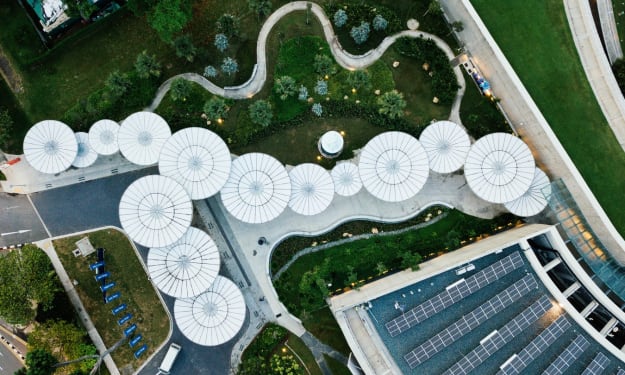
97% of Americans Overestimate the Cost of Solar Panels
Times are rapidly changing. The earth is getting hotter and it is obvious that part of the reason we don't embrace alternative sources of energy is largely because we have been told constantly that it is too expensive and even if you did go in that direction, you would never make your money back.
By Georgia de la Bertauche8 years ago in Futurism
Tears from the Earth
There was a time not too long ago that the people of the Earth lived in harmony and balance with this world. There were not so many people living on the world as many folks hardly lived beyond their 40s. But in the past few hundred years, there has been an explosion in the world's population, people are living longer due to medical advances and people are having more offspring. This is having a major effect on the Earths resources. We live in a wasteful society where we throw away so much plastic and waste. Recently I heard that huge amounts of plastic are deliberately dumped into the oceans. I was shocked to hear this.
By Forest Arts8 years ago in Futurism
The Greener the Energy, the Cleaner the Environment
How to Run Your Electricity Bill to the Healthiest and Most Economical Environmental Standard Did you know that the energy you pay out of pocket for every month isn't only bad on your wallet, but bad on the environment? Not only do emitted green house gases harm the environment, but they can potentially harm you too. Energy companies that use limited energy resources don't want you to know this of course, but they do want your money. Energy power plants emit pollution into the air; that's bad for you, your animals, your families, your environment, and it's all coming out of your wallet each month! It's even bad for the climate. Of course we need our energy but there's a greener, and cleaner way to do it every month.
By Ruby Estelle 8 years ago in Futurism
The GoGreen Revolution! What is Happening?
As a young person in the world we live in, one of the biggest causes of anxiety is that fact that our world is dying. Climate change is rapidly accelerating, oil is becoming less and less abundant, and we have yet to find a consistent way of producing energy that is clean and doesn’t hurt the environment. These concerns have caused society to start a revolution. The Go Green Revolution has been started to help us as humans and to help the Earth. The importance of the Revolution reaches every individual in the world.
By Noah Schafer8 years ago in Futurism
If You Could Make the Choice...
How would you feel if you got to choose between living where you are, moving elsewhere, or creating your very own world to live in?I'd start with the colour of the sky — I love the blue of warmer climates as well as the drama of dark clouds, the exploding sound of thunder, and the 'almost' alive flashes of lightning so commonly seen in the area where I live.Purple, green and, red are favourites — but I'd choose a purple sky with two, glowing peach-coloured suns.
By Rosalyn Grams8 years ago in Futurism
Our Oceans 🐋🐳🐟
Our world is covered in 70% water. It is a vital importance to earth and everything that lives in it. Sea water has properties that control out climate and make life on earth possible. If you think about it, without the oceans we would all be dead!! The carbon cycle that the ocean plays a part in a major role that makes life on earth sustainable. The oceans absorb 60% of the carbon dioxide we produce, and millions of plants and microbes photosynthesis that carbon dioxide daily.
By Cerise Wallace8 years ago in Futurism
The Hamrelstein Institute
Log: Dream 5/25/2017 12-1:45 PM We were in a large dark room lit only by several various terrariums containing mundane or exotic plants and animals and we were writing something down about them, their DNA, what the telomerase was... When a teacher began speaking to us aloud.
By Kellis Charles Lewis9 years ago in Futurism
Interview With Dr. Louis Rosenberg, Founder Of Unanimous A.I.
It's rather fitting that Dr. Louis Rosenberg, an individual wholly dedicated to preparing humans for the immediate and distant future, is featured in a project titled Year Million, National Geographic Channel's six-part documentary series that explores and postulates on the future of humanity; on what it will be like to be human one million years into the future.
By Futurism Staff9 years ago in Futurism