habitat
The natural home and environment for all things sci fi, including future homes and territories.
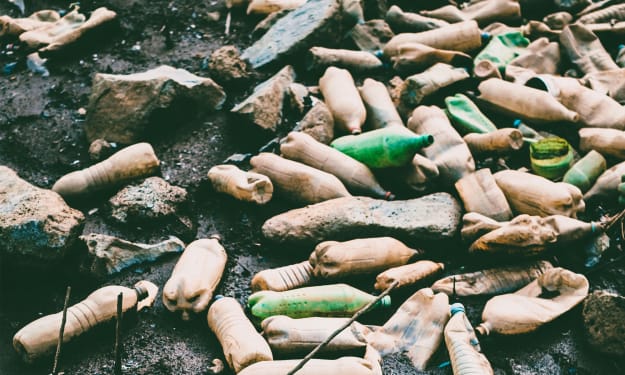
Simply Recycling Your Trash Won't Save the Planet
Even if for some reason you wanted to ignore the state of the world (looking at you, Big Oil), it’s pretty evident we have a very serious issue on our hands. Temperatures are rising, sea levels are rising, anxiety levels are rising, and for young people it sometimes feels like we're all on our own to be proactive in reversing it.
By Mackenzie Lu6 years ago in Futurism
Toxic Waste Management
As a society, we have a healthy and unhealthy relationship with toxic waste material. Let me explain a little bit more if this sounds confusing. We use a toxic substance to help fight cancer for patients in hospitals while it also being used for electrical power. To power towns and cities across the world. But in our society, we are having a shift in consciousness about the future of our planet. About climate change, raising carbon emission and having or finding solutions to fixing it for future generations. But one area in this new green age movement that we are forgetting the conservation about is toxic waste material. Toxic material and substances aren’t going away anytime soon since our population increase, the amount of toxic waste must of increase too. But on the plus side, we need to take a moment to honor the people that work alongside dealing with toxic material and substances on daily bases trying their hardest to keep our cities and towns safe from these substances and materials. While on the other side trying to make awareness to survivors and victims to toxic waste material that been plaguing their lives for many years. Even with the best efforts available, some of our toxic waste is getting out of hand. In recent years and months, we had to come face to face with it more than usual. Either there is little funding, research in this area, or even voices to talk about this. Sooner or later, we have to have a discussion about it on a global scale. We should be praising countries and people trying to get rid of the idea of keep using toxic waste in our daily lives, but also seeking other healthier alternatives. Let’s first begin the conversation about nuclear waste, which barely has a voice.
By Audrey Walters6 years ago in Futurism
How to Plan for Solar While Building a New Home?
Going Solar is now the utmost trend among Australians. Thanks to government measures and support for promoting the solar revolution. The Council of Sydney is trying to make the city run 100% on renewable energy by 2030. The plan was discussed in 2014 with the blueprints publicly. Solar Cities is a demonstration program designed to promote solar power, smart meters, and energy conservation in urban locations throughout Townsville and Queensland of Australia. An average-sized system (roughly five kilowatts) will cost between $25,000 and $35,000. Larger installations will require more hardware, planning and construction time. Government rebates, flexible payment options, and upgraded pv solar technologies have further boosted the solar drive.
By photonenergysolutions6 years ago in Futurism
How to Fix Our Climate Change Issues?
The alternative fact that the current administration is not doing much to fix climate change let alone fund research that can do something about what is going on is that other people are always doing something. For every organization that is not doing something, there are those that actually are doing something. In California alone, our seven-year drought is over, finally, because that seven-year drought was what made our air hotter, drier, and even dried up our lawns. We have solutions to global warming out there that people are working on without the blessing of the current aspect of the party in power. Companies are working on electric car options, self-driving electric cars, ethanol-powered cars, and despite the current administration stoking the power of oil, gas, and coal companies, many are starting to get through their heads what the real expert scientists are desperately trying to say to us. Environment America is a part of The Public Interest Network.
By Iria Vasquez-Paez6 years ago in Futurism
The Big Future of Tiny Houses, Part 5
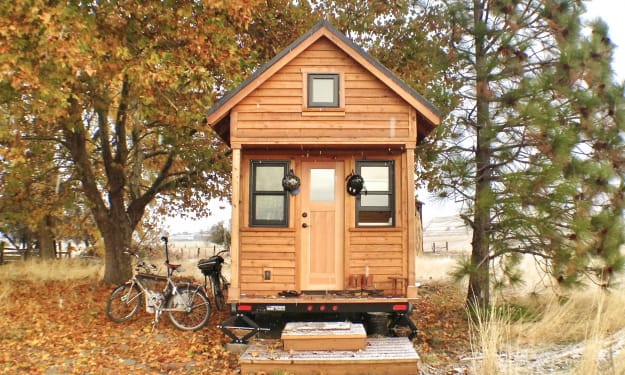
Tiny homes are distinctive in that they need to be fully customised to the owner's lifestyle, needs and priorities. Finding the perfect design can be difficult, so many people choose to build their tiny house, either with a contractor or as a DIY project. However, embarking on your own building project comes with its own caveats as well.
By Chiara Torelli6 years ago in Futurism
How to Solve the California Water Problem
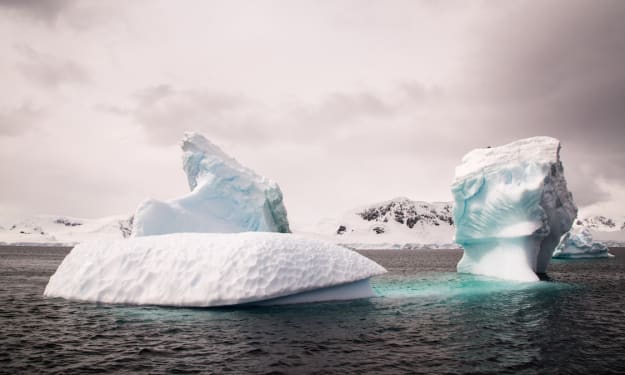
The California water situation is dangerous to live with. We use a lot of water. In particular, Los Angeles rich people who import water to water a perfect lawn with. We could start by cleaning up our plastic-encrusted and polluted oceans. In California, the last four years have been filled with on-again, off-again drought, and really hot weather that does not make sense in the winter, being at 70 degrees and not our usual 50-68 degrees. My solution to the California water crisis is to take icebergs from Antarctica and melt them as well as harvest the water. We would then desalinate the water, extracting the salt, making it into clean water for our plants and our perfectly kept lawns. The drought has made keeping a lawn in California somewhat impractical. This is why people are using astroturf these days. California may turn into even more of a desert than it is already even if I live in what used to be marshland, which evolved into the Silicon Valley that it is today.
By Iria Vasquez-Paez6 years ago in Futurism
A Letter to Humanity in a World on Fire
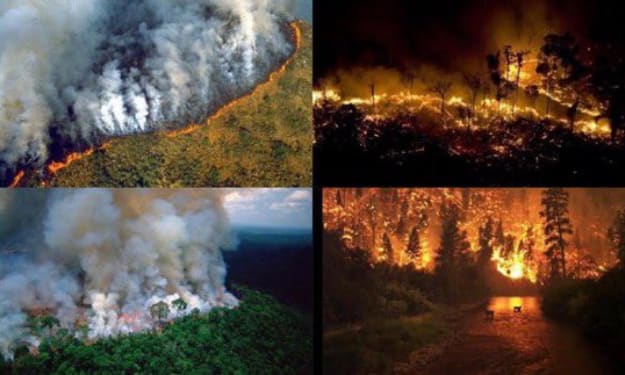
Within the course of the last several months, countries across the globe have been facing the devastation caused by thousands of wildfires. Fires raging across some of our planet's largest and most vital forests. Record temperatures continue to make headlines year after year, last July being the hottest month in recorded history. These wildfire outbreaks have been occurring throughout several different continents. Massive glaciers are melting away entirely. Yet in spite of these events, climate change is still a subject being debated amongst world leaders to this day.
By Carlos Guerra6 years ago in Futurism
How Is the Environment Related to Cremation?
Upon the passing of a loved one, decisions for burial can often be a strenuous process. Many families debate between traditional casket burials and cremation, often unsure which would be best to properly honor the recently deceased. There are endless factors to consider from individual preferences to environmental impact. Recent studies have even shown a rise in those who choose to cremate with hopes of being more eco-friendly.
By Claire Peters6 years ago in Futurism
My First Month as Zero Waste
The first half of september is gone and it’s been officially one month since I started my green journey. If you want to know more about how I was planning to start, check out my post on vocal. There were seven things I wanted to accomplish before 2020, and it’s time to check in on my journey and see where I got to.
By Lidia Kovac6 years ago in Futurism
Why You Should Choose Eco-Friendly Clothing and Cosmetics
This world is in trouble, and it has been for quite some time now. Rainforests are burning, polar ice caps are melting, and the temperatures are rising increasingly. And while we’re worried about how things will play out, and what the destiny of this planet and mankind will be, we still live our lives. After all, no matter what goes on around us, we still have to get dressed in the morning and maintain our personal hygiene. But, what if by doing exactly those things we’re harming the environment further? This is why it’s essential to reconsider our choices and turn to eco-friendly clothing and cosmetic products. Here are some reasons why—and ways how—to choose clothes and cosmetics which are more natural and sustainable.
By Fiona Wood7 years ago in Futurism
5 Great Reasons to Carry a Water Bottle
The reefs are dying, the Amazon is burning, and the ocean has more plastic than fish in it. Time to give up? No way, man! There's a lot that you can do to fix our little blue dot, and it's not all high-level, super-hard stuff. In fact, I'm here to tell you that green living is better. It's more fun. It's cleaner. And it can start small.
By Anna Gooding-Call7 years ago in Futurism
Top Things I Recommend for Anyone Living in Connecticut
With constant changes to the environment all around us, it can make it difficult on a lot of what we do. With temperatures rising in some areas while others get colder, not to include drought situations and more, it is time that all of us take a look at what we are doing and how we can change things to help the environment.
By Dennis McKonkie7 years ago in Futurism