future
Exploring the future of science today, while looking back on the achievements from yesterday. Science fiction is science future.
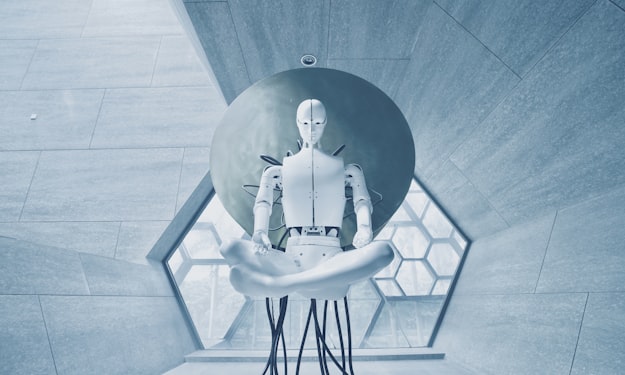
Is AI Sentient?
The short anwer is no. No, AI (Artificial Intelligence) is not sentient. Sentience refers to the capacity to have subjective experiences, feelings, and consciousness. While AI systems can perform complex tasks, analyze data, and make decisions based on algorithms, they do not possess subjective experiences or consciousness. AI operates based on predefined rules, patterns, and algorithms, and its actions are determined by its programming and the data it has been trained on. The current state of AI technology does not involve sentient or conscious machines.
By Tonia Rucker3 years ago in Futurism
ELON MUSK to Launch TELESCOPE 100X More Powerful Than JWST _ Nancy Grace Roman Space Telescope
2027 will be the year in which the first Big Bank really happened. Is there a creator of this universe? We will get the answer to this. Do aliens exist in this universe or are we alone here, is there such a thing as a multiverse or is the universe all alone? We will get answers to all these big questions and who will make this possible? musk girl friend ab aap poochhoge kaise mast ko twitter se fursat miley tab na well friends you can believe but prison the show stealer james webb space telescope
By SANJOY DAS3 years ago in Futurism
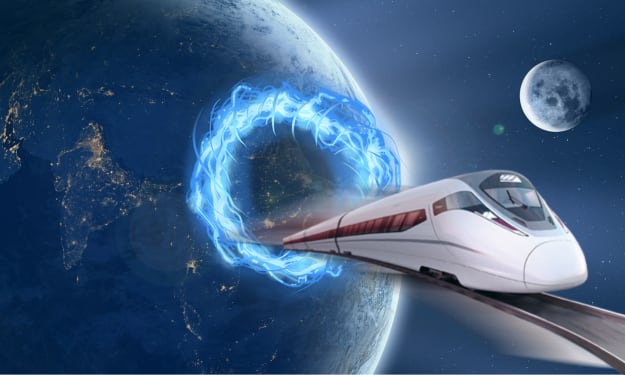
Why SPEED OF LIGHT May Actually Be WRONG _ Nobody Has Actually Measured Light Speed
give me just a little time and I will prove to you that till now no scientist has measured the speed of light. And the scientists who claimed to have measured the speed of light, all of them repeated the same mistake again and again. Its simple meaning is that currently we are using the speed of light. 3*10 Race to the Power of Eight Meters, second post does not have exact speed but average speed we are right but even more strange thing is that when first of all, there is no street light
By SANJOY DAS3 years ago in Futurism
The Rise of Remote Work
Introducti0n The COVID-19 pandemic has brought about a significant shift in the way businesses operate, with remote work becoming the new norm. The traditional office-based work culture has given way to flexible work arrangements, allowing employees to perform their duties from the comfort of their homes. This article explores the rise of remote work and how businesses have adapted to this new paradigm, examining the benefits, challenges, and strategies employed by organizations to ensure productivity and employee well-being in a remote work environment.
By Mohammed Askee3 years ago in Futurism
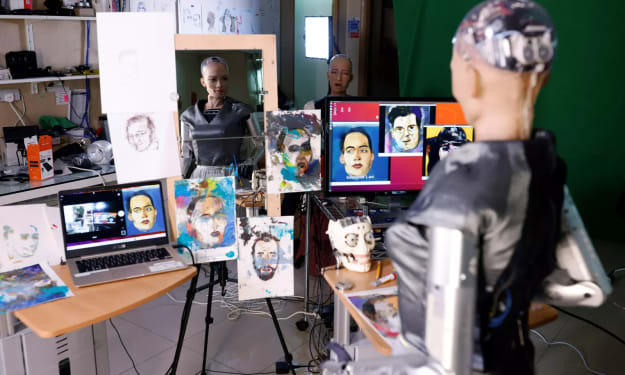
10 surprising things that rely on artificial intelligence
Artificial intelligence (AI) has transformed many aspects of our lives for the better. It even played a role in developing vaccines against COVID-19. But you may be surprised just how many things we take for granted that rely on AI.
By nizam uddin3 years ago in Futurism
TIMELESS....is there really a beginning.
The beginning... or was it "TIMELESS"? In the vast expanse of existence, where time weaves its intricate tapestry, lies a profound enigma. It is a question that has haunted philosophers, scientists, and dreamers alike since the dawn of consciousness: What truly marks the beginning? Is it a singular point in time, a definitive event that sparked the grand symphony of the cosmos? Or is it an eternal presence, forever entwined with the fabric of reality?
By Sisejumbotonma Princewill3 years ago in Futurism
THE FUTURE OF SPACE EXPLORATION
INTRODUCTION Space exploration has always fascinated humankind, touching off our interest and pushing the limits of what we are familiar the universe. Throughout the long term, critical steps have been made in space investigation, from the notorious Apollo moon missions to the automated wanderers investigating Mars. However, what lies ahead? What does the future hold for space investigation? In this article, we will dig into the thrilling possibilities and progressions that are forming the eventual fate of room investigation.
By FLYING WHALE3 years ago in Futurism
If we lived for 300 years, What would change?
Hmm, if we contemplate it, our fascination with concepts like the Philosopher's Stone, the Fountain of Youth, and even vampires stems from a common desire—to understand what it would be like to possess eternal life. Some researchers argue that there is no limit to our potential lifespan. The proponents of the No Limit Camp believe that as long as we continue making scientific advancements and taking care of ourselves, we could potentially live indefinitely, or at least until our savings run out. On the other hand, the proponents of finite lifespan argue that our bodies have a predetermined expiration date, and while we can make efforts to delay it, there are limits to how far we can push it. A study suggests that the maximum human lifespan may be around 150 years. Researchers analyzed data on the world's oldest individuals over the past few decades and concluded that there is indeed an expiration date for our lives.
By James Michael 3 years ago in Futurism
How artificial intelligence can help us prepare for climate adaptation
Despite climate mitigation efforts to keep global warming below 1.5°C, many experts expect the world to warm by 3.5°C by the turn of the next century. This ever-warming world has brought floods and wildfires and the loss of life with more disruption expected in the decades to come.
By nizam uddin3 years ago in Futurism