evolution
The evolution of science, science fiction, and mankind throughout the years.
The Loneliness of Humankind
We are not only upset because our children are now hungry, but we also suffer when we think about the next month the whole family will be starving. We not only experience our pain, of the individuals around us, but we also empathize with stories hundreds of years ago, even if it was a lie. Not only do we despair in the moment of separation, but we have firsthand experience of this even when we have just thought of it.
By Mush Boxey6 years ago in Futurism
The Loneliness of Humankind | Part 2
2. Forlornness - modern humans' "sumptuous feeling." The human society has evolved at a rate that outstrips that of biological evolution. The Holocene calendar claims that humans first settled down roughly 12,000 years ago, while Homo sapiens had formerly existed for 200,000 years. Insomuch as the "fight or flight" mechanism must have been dated to as early as mega-annum ago, since the dawn of the first species with the sympathetic and parasympathetic nervous systems.
By Mush Boxey6 years ago in Futurism
Empty
I am waking up to see empty places. Empty stores & empty cars. As if stuck in a movie with no way to change the channel. I walk along with the sounds of air with no interruptions and a feeling of awe. As if to be meditating while in motion. Less and less are visible, and more of the same is contextual. Trees sway and leave change while the seasons move naturally.
By The Kind Quill6 years ago in Futurism
Big Trouble in Little Punctuation
The broad-minded premise of Neil Burger's Teen Choice Award nominated-Film adaptation of Alan Glynn's techno thriller novel, Limitless (2011), is that we're only using a fraction of our available brain capacity. That we're not making use of our combined innate power to move through the world, because our capabilities are hidden from us. Bradley Cooper's titular character comes across a nootropic drug by the name of NZT-48, to game the stock market, become the President of the United States, and have sex with his wife or whatever. Get this - what if we're only using a fraction of the emotional range of punctuation, ad in-turn not utilizing it to it's true cosmic potential? What if we were able to unlock stigmeological capacities of punctuation, the likes of which we have never seen before? What if we were able to reinvent new modes of punctuation. The possibilities, if I may dare to say, could be Limitless (2011).
By The Lavender Prince6 years ago in Futurism
Coronavirus. I'll Fight For Our Children. Will You Fight For Them Too?
For reasons unknown at the present time, the coronavirus that is sweeping the world is sparing our children. The most vulnerable of society; the elderly, the sick and the young, tend to be at most risk of viruses and illnesses that have affected our world in the past. While children can be infected, like healthy adults, the virus hasn’t claimed any children, as yet. The recovery rate is still 100 percent.
By Samantha Wilson6 years ago in Futurism
Coronavirus. Why A "Waste Not, Want Not" Approach Will Help See Us Through The Crisis Ahead
In recent weeks, as the coronavirus has taken hold, and disrupted every aspect of our lives, it’s become clear that we must change our ways. The coronavirus was caused by the abuse of animals and humanity interfering with the natural world to satisfy our consumer and eating habits. We are at risk of further pandemics in the future for this reason.
By Samantha Wilson6 years ago in Futurism
Our Own Day Here
Suppose...that you knew that your culture would disappear, and that no one who came after, not your children nor anyone else's, would speak your language, sing your songs, hope your hopes, or comprehend your concerns? What would be the meaning of your life?
By Richard Risemberg6 years ago in Futurism
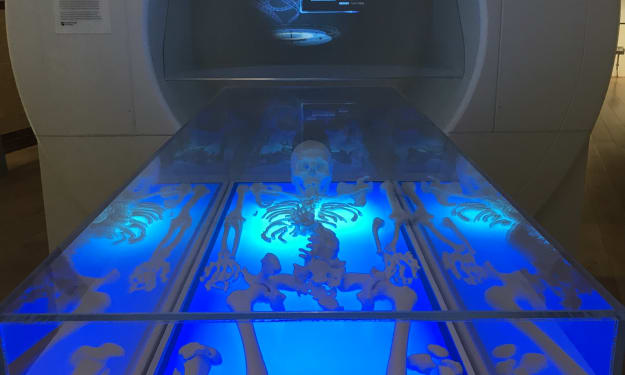
Skeletons: Windows into the past
A skeleton can tell us many things about how a person lived and who they were. I first became interested in studying skeletons when I was studying for my undergraduate degree. I discovered a passion for learning how people lived in the past through giving the dead an opportunity to tell their stories.
By Zoe WRIGHT6 years ago in Futurism