artificial intelligence
The future of artificial intelligence.
The Race
"Today, the Alpha project surpasses the Beta 2.0, as the United Global Fronts chief A.I. Despite protest from the people's front of global unity Alpha will, unlike its predecessor, not only connect the global residential districts, it will for the first time link all districts to relevant special response units and help regulate all known registered generating districts. This will, our lords say, create a global link, allowing automatous control of everything the general consumerist will need. Security, health, comfort and care will all be handled by Alpha who will simultaneously help Beta 2.0 to share this workload while also improving its systems. In other informative insights..…."
By joe thompson8 years ago in Futurism
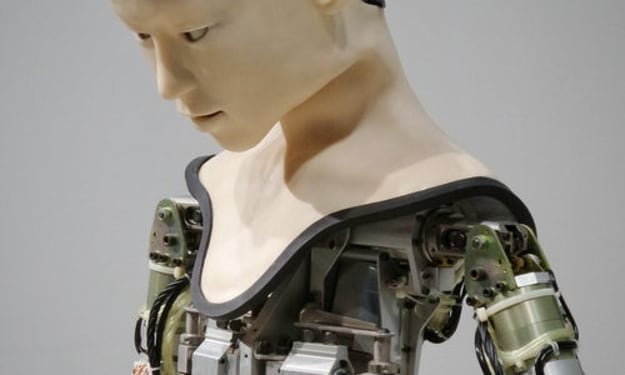
Can Robots Take Over the World?
Can robots take over the world? Well if you think of it in a big picture, robots can take over the world. But if you look very closely, you could see that robots could not take over the world. Well, it depends on how the future goes down. With the technology we have now, it is possible that robots could grow into something great. Here are reasons why robots could not take over the world:
By Miguel Flores8 years ago in Futurism
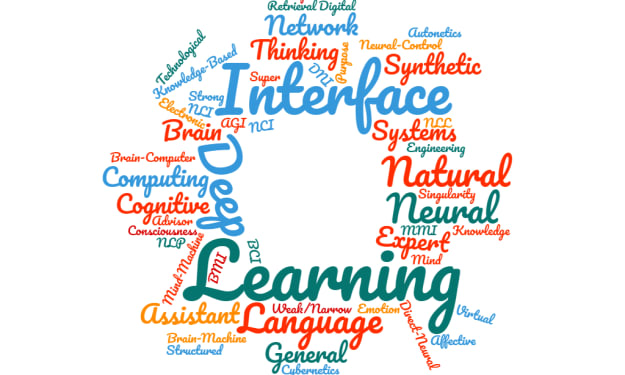
Would Artificial Intelligence by Any Other Name Smell as Sweet?: Terms You Should Know
There are a lot of new terms buzzing around the topic of AI. Each one may take on a specific meaning with subtle differences or describe the research or specific type of AI, but nevertheless is covered under the umbrella term of AI or Artificial Intelligence. There are different levels of awareness or abilities:
By New World Optimist8 years ago in Futurism
Digital Data on DNA: Could It Be the Answer to Building "Perfect Humans?" Would That Make Us Cyborgs or Something Else?
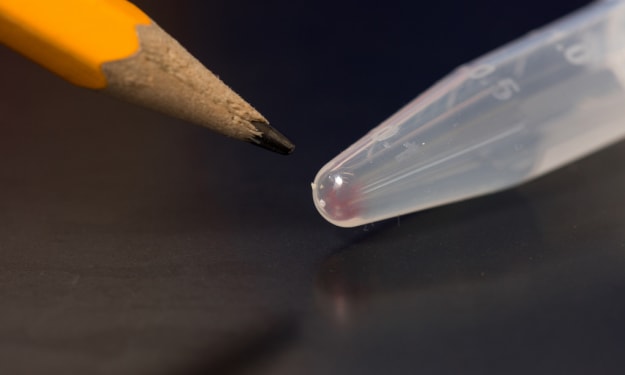
Back in 2012, Harvard scientists "broke" the DNA code that allowed them to store an immense amount of data (such as movies) on non-biological DNA. "Non-biological" is the key term in that sentence. This process can store data that amounts to an unfathomable amount known as an "exabyte" (one billion gigabytes). While there is not a whole lot of information out yet as to what the price tag looks like to use DNA for data storage on a massive scale, I would imagine it would be less than the cost of storing a Yottabyte's worth of information on traditional hard drives. In order to do that, one would need a data center this size of Delaware and Rhode Island at the cost of nearly $100 TRILLION. So, it stands to reason that with the amount of digital data humans are creating, we MUST move away from magnetic storage. It is neither economically feasible nor practical to consume precious resources required to store that much data when DNA can store 107 times the amount of magnetic tape.
By New World Optimist8 years ago in Futurism
Jibo, the World's First Social Home Robot That Will Leave You Stunned
Made by Cynthia Breazeal, Jibo is the first social robot. Like the Google Home or Amazon's Echo, Jibo brings you a new kind of experience when it comes to owning a home robot. Unlike the competitors, Jibo reacts as if he was a living being using his robotic body to move around and his facial features to recognize different people. Not only does he refer to himself as a male, but he looks at you with his intense eyes when he is replying to a question or giving you information. You can ask him anything from "what's on the news" to "what is the weather going to be like?"
By Vincent Tyminski8 years ago in Futurism
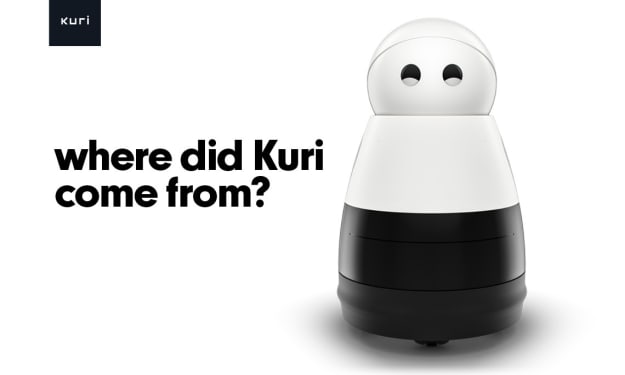
Kuri the Curator
#KuriStory #HeyKuri The 25th century had many wonderful benefits. It was an age of wonderful advancements and progress with holodecks, supersonic hypertrains, and robots. One thing the future did not have however was DVD players. Or SD card readers. Or VCRs. These things had all died along “disco,” vehicles so poorly made that the word “combust” could be used to describe their engines, and the usage of birds to communicate ideas through a vast network known as “tweeter.” The issue for the museum archives of course was that this left a rather large conspicuous gap in terms of what happened between the 1980s where everything was on books and the 2040s when holo crystals that could last for centuries started being used. Nothing could read these formats so nothing about the time was known. The movies, music, and e-books of the age were lost to time.
By Frank Bencomo8 years ago in Futurism
Kuri's Origin Story: Judy's Secret
#KuriStory #HeyKuri Spring had come once again at the Larrabee house and just like every year, it brought with it the annual spring cleaning. Emily Larrabee spent the morning doing the laundry and dishes before her young daughter Harper awoke and came stomping down the stairs.
By Rachel Bee8 years ago in Futurism
DEF(Kuri)
DEF(kuri) Every night since the little robot had first become aware, Kuri liked to review her many design files. The Engineers’ files were always entertaining, especially the early sketches (those funny ways they imagined Kuri might look). As problems were solved and materials selected, those funny drawings would become the detailed schematics the factory would need to build Kuris that would perform beautifully and last for a long time.
By Thomas Becker8 years ago in Futurism