
Strong Password That Cannot Be Hacked?
The Ultimate Guide to Creating Unbreakable Passwords for Digital Security in 2025

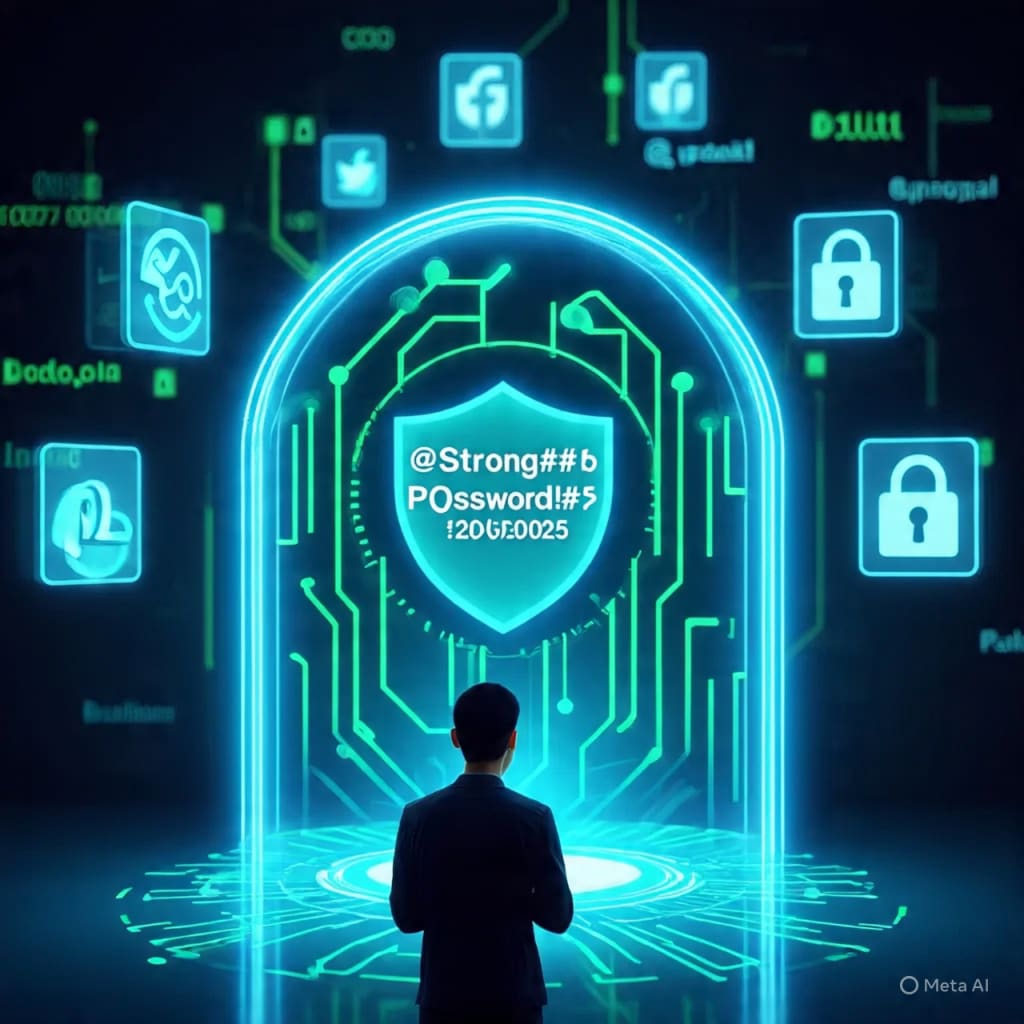
In today’s hyper-connected world, data is the new currency, and your passwords are the vaults guarding it. Yet, every day, we hear news of data breaches, hacked accounts, and identity theft. Despite advanced technologies, billions of people still use weak, guessable, or repeated passwords. But what if there was a way to create a strong password that cannot be hacked—even by the smartest hacker or the fastest AI bot? Let’s explore how to do that, and why it's more important now than ever before.
Many of us tend to use simple passwords like “123456”, “password”, or our birthdates. These are known as dictionary passwords, and they’re the first ones hackers try when using brute-force or automated tools. A strong password is not just a random mix of characters; it's a carefully crafted code that balances unpredictability, complexity, and memorability. In other words, it must be hack-proof yet human-rememberable.
To truly understand password strength, we need to think like a hacker. Modern password hacking techniques include brute-force attacks, dictionary attacks, credential stuffing, phishing, and social engineering. Brute-force alone can try billions of combinations per second using modern GPUs. This is where most people underestimate the capabilities of hacking tools. If your password is eight characters or less, and not entirely random, it’s vulnerable.
Now let’s imagine you're a cybercriminal using a high-end computer and AI-powered password cracker. You can break millions of passwords per hour. But when you come across something like “W!nt3r$#2025Y0uC@n’tH@ckTh!s”, it slows you down. Why? Because this password is long, randomized, complex, and has no personal clues. The hacker’s software is programmed to look for common patterns, not sentences broken with symbols and numbers.
Let’s break down the components of a virtually unhackable password:
1. Length:
A longer password is exponentially more secure. A password with 16–24 characters is significantly harder to crack than one with 8. Most brute-force systems can't handle the computational power required for longer strings—especially when other complexities are included.
2. Complexity:
Use a mix of uppercase and lowercase letters, numbers, and symbols. Avoid repeating characters and never use sequences like “abcd” or “1234.” Also, never rely on just one type of character. Hackers know all the shortcuts—if your password is “Hello2025!”, it might look strong, but it isn’t.
3. Unpredictability:
Random phrases or combinations like “Giraffe#ClimbsMoon!42&Venus_DripsTea” are stronger than predictable ones. You can use a passphrase generator or create a sentence only you can remember, then inject it with symbols and numbers.
4. Avoid personal data:
Your name, your pet’s name, your phone number, or favorite football team? All of this is already online—either on your social media or available on the dark web. Never use personal identifiers in your passwords.
5. Use a password manager:
It’s impossible to remember dozens of strong passwords. Password managers like Bitwarden, 1Password, and KeePass generate and store complex passwords for each account. These tools are encrypted, secure, and ensure that you don’t reuse passwords across services.
Let’s pause and ask the real question: Can any password be 100% unhackable? Technically, no. Given infinite time and resources, any password could be cracked. But the idea is to make it impractical to hack. A password that would take thousands of years to crack is, for all practical purposes, unhackable.
Here's a quick comparison of password strength by character count and complexity:
8 lowercase letters: cracked in seconds
10 characters (lower + upper): cracked in minutes
12 characters with mixed case, symbols, numbers: months to years
20+ characters with all character types: centuries
So what would a Durvesh Rathi-style explanation look like here? If you're familiar with Dhruv Rathee's informative yet analytical tone, you'd understand he’d start with real-world examples, dive deep into research, explain vulnerabilities, then offer rational and practical solutions backed by evidence. Let's walk through it with that flavor.
Imagine this: Your bank account has millions. Your emails contain sensitive contracts. Your WhatsApp backup has years of personal chats. Now imagine all that protected by a password like “Nouman123”. What do you think is stopping hackers from breaking in? Nothing.
In a Durvesh Rathee-style explanation, you’d now get to see how hacking works live. Hackers use automated tools like Hydra, John the Ripper, and Hashcat. These tools aren't just guessing passwords—they’re trained to identify patterns. So if your password contains your pet's name followed by “123”, you're doomed.
What’s worse is that many people use the same password for multiple sites. This is called credential reuse. If one website gets hacked (which happens often), your password is leaked. Hackers then use bots to test the same combination on hundreds of websites—this is how your Gmail, Facebook, or bank gets hacked even if those platforms weren’t originally compromised.
Let’s create a fictional but realistic example.
Meet Zara. She is a freelance writer who manages her clients, bank, emails, and medical records online. She uses “Zara2025!” as her password everywhere because it’s easy to remember. One day, a small writing site she uses gets hacked. Her password is leaked in a data dump. A hacker, using a bot, tests that combination on her Gmail—and boom! Access granted. That same password works on her PayPal. She loses $2,500 in less than an hour.
Had Zara used something like “G6@Wordz!Climb2025*NowRav3ns#”, the result would be different. And if she had used a different password for each site, even better.
Let’s build a formula for creating a hack-proof password:
1. Choose a random phrase: Something meaningful but not easily guessable. Example: “Green Elephants Dance at Sunset”
2. Convert to initials: “GEDAS”
3. Inject numbers and special characters: “G3D@5!”
4. Add a unique identifier for each website: For Facebook, add “FB” at the end: “G3D@5!FB”
5. Use different variations per site: Gmail version: “G3D@5!GM”, etc.
Or even better: let a password manager do all this.
Another useful tip is two-factor authentication (2FA). Even if a hacker guesses your password, they can't log in without the second layer of security. Always enable 2FA using apps like Google Authenticator or Authy. Avoid SMS-based 2FA if possible; it's vulnerable to SIM swapping.
Now let’s address a myth: “I don’t have anything important online. Why would anyone hack me?” That’s where you’re wrong. Hackers often don’t target specific people—they attack in masses. Your weak password gets caught in a data net, and before you know it, your accounts are hijacked and sold for $5 on the dark web. You might be part of a botnet, or your credentials used for criminal activity.
Another important reminder: change your passwords regularly. Every 3–6 months is a good practice. Especially if you get alerts from HaveIBeenPwned.com or hear news of data breaches.
So what is the strongest password that cannot be hacked?
It’s a combination of these principles:
At least 16–24 characters
Uses upper and lowercase letters, numbers, and symbols
No personal information
Different for each account
Stored in a password manager
Protected with 2FA
Example:
“L0ng&$ecure_M0nkeyDrums_42!#_FbAcc” for Facebook
“L0ng&$ecure_M0nkeyDrums_42!#_GmAcc” for Gmail
Easy for a password manager, tough for a hacker.
As technology advances, AI-driven hacking will become a serious threat. Already, AI is being used to mimic writing styles, crack captchas, and guess password tendencies based on demographic data. That’s why your only defense is proactive security—and it begins with a strong password.
To conclude, think of your password like your digital house key. Would you leave your real key under the doormat? Then why use “12345678” online?
Let’s make the internet safer—one strong password at a time.
Thank for reading!
About the Creator
Lana Rosee
🎤 Passionate storyteller & voice of raw emotion. From thoughts to tales, I bring words to life. 💫
Love my content? Hit Subscribe & support the journey! ❤️✨
Keep reading
More stories from Lana Rosee and writers in Futurism and other communities.
The Password That Cannot Be Hacked
In the world of cybersecurity, the eternal battle between hackers and defenders has always revolved around one vital element: the password. We’ve tried everything—two-factor authentication, biometric scans, encrypted vaults, and complex password managers—but nothing has proven truly “unhackable.” That was until a mysterious Indian ethical hacker named Aarav Sharma claimed to create what he called “the password that cannot be hacked.” This isn't just a myth. This is a story of genius, innovation, betrayal, and global disruption.
By Lana Rosee7 months ago in Futurism
Wealth Management Platform Market Insights: Client Experience, Automation & Industry Forecast to 2034
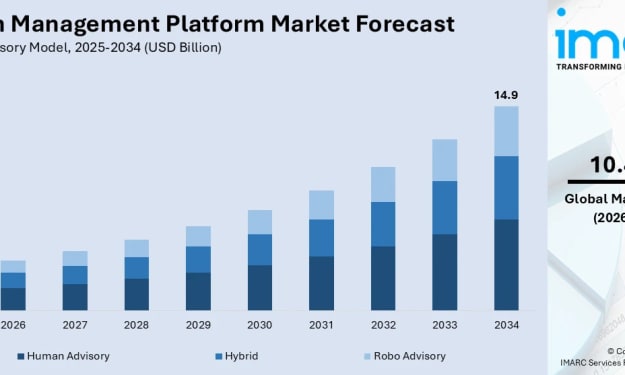
The rapid shift toward digital-first financial services, the rise of the tech-savvy millennial investor base, and a growing preference for automated, data-driven investment advice are steering the demand for wealth management platforms. These solutions are further supported by the integration of AI-driven analytics, a focus on regulatory compliance, and the expansion of hybrid advisory models. According to IMARC Group’s latest data, The global wealth management platform market size was valued at USD 6.10 Billion in 2025. Looking forward, IMARC Group estimates the market to reach USD 14.91 Billion by 2034, exhibiting a CAGR of 10.44% from 2026-2034.
By Andrew Sullivan4 days ago in Futurism
I wanted to title this something different, but worried that my chosen title might cause problems entering the United States in the future so this is the new title. It's the greatest title. No one has ever written a title better than this. (All titles unrelated to content).
Let me be honest. I am finding this difficult. Now, I like a challenge, a stretch, a bit of an obstacle course. “Write about the decline of the British Empire in the form of a narrative poem in which your protagonist is an artichoke” I read, and flex my fingers. “Write a haiku to evoke the sensation of sibilance using only the first half of the alphabet.” “Well”, I think to myself, “this should be fun.” But “write about a system that isn’t working”? A system that isn’t working? Now? In 2026? ONE system? My favourite system that isn’t working? The sexiest system that isn’t working? The one giving me the most angst day to day? The one giving me the most existential dread? I am, as I say, finding this difficult. I will own that I have contemplated writing a thousand words on why the steady “all on” setting on my fairy lights is the EIGHTH of seven options which must be sequentially activated to get there, because that is a system that some fool came up with and it definitely doesn’t work, and now who is paying the price, eh? But how can I write about my fairy lights when…. When…. When….
By Hannah Moore3 days ago in Humans



Comments
There are no comments for this story
Be the first to respond and start the conversation.