
Step-by-Step Guide to Cloud Migration — Best Practices for Enterprises
A Comprehensive Step-by-Step Roadmap for Enterprises to Migrate to the Cloud Efficiently, Securely, and Cost-Effectively


In today’s digital-first business landscape, cloud migration has become a strategic priority for enterprises aiming to achieve scalability, agility, and operational efficiency. Transitioning from on-premise infrastructure to the cloud is a transformative journey, enabling organizations to modernize applications, optimize costs, and innovate faster. However, cloud migration is a complex process that requires careful planning, strategic execution, and adherence to best practices.
This step-by-step guide provides enterprises with a structured approach to cloud migration, highlighting critical considerations and industry best practices.
Why Enterprises Must Prioritize Cloud Migration
Enterprises are increasingly adopting cloud technologies for several key reasons:
Agility and Flexibility: Cloud platforms allow rapid scaling of resources in response to business demands.
Cost Optimization: Moving away from legacy infrastructure reduces capital expenditure while enabling pay-as-you-go models.
Business Continuity: Cloud services provide high availability, disaster recovery, and robust backup solutions.
Innovation Enablement: Cloud-native tools support AI, machine learning, analytics, and IoT applications.
Enhanced Collaboration: Distributed teams benefit from cloud-based collaboration and productivity tools.
Organizations leveraging cloud migration services and solutions can ensure a secure, seamless, and efficient transition.
Step 1: Assess Your Current IT Landscape
Before beginning any cloud migration, enterprises must understand their existing infrastructure. Key steps include:
Inventory Applications and Workloads: Categorize applications as cloud-ready, refactor-required, or legacy-dependent.
Identify Dependencies: Map interdependencies between applications to prevent disruptions during migration.
Evaluate Data Sensitivity and Compliance: Understand regulatory requirements, including GDPR, HIPAA, and industry-specific standards.
Analyze Costs and Risks: Estimate the total cost of ownership (TCO) and assess risks associated with migration.
A thorough assessment provides a clear roadmap for which applications should move to the cloud first and the appropriate migration strategy.
Step 2: Define Your Cloud Strategy
Choosing the right cloud approach is essential to achieving business objectives. Enterprises typically consider:
Public Cloud: Scalable and cost-effective, suitable for general workloads.
Private Cloud: Offers enhanced security and compliance for sensitive data.
Hybrid Cloud: Combines on-premise and cloud infrastructure for flexibility and gradual adoption.
Multi-Cloud: Distributes workloads across multiple cloud providers to reduce vendor lock-in.
Align your cloud strategy with enterprise goals such as innovation acceleration, digital transformation, and operational efficiency.
Step 3: Select the Right Cloud Migration Approach
Enterprises can adopt one or a combination of these migration approaches:
Lift and Shift (Rehosting): Move applications to the cloud without modification, ensuring a faster migration timeline.
Replatforming: Optimize applications for cloud performance with minimal code changes.
Refactoring (Re-architecting): Redesign applications to leverage cloud-native capabilities such as serverless computing and microservices.
Repurchasing: Replace legacy software with cloud-based SaaS alternatives.
Retire or Retain: Decommission outdated applications or keep certain workloads on-premise.
Choosing the correct approach depends on factors such as application complexity, business priorities, and expected ROI.
Step 4: Ensure Security and Compliance
Security is a critical component of cloud migration. Enterprises must implement a robust framework that addresses:
Identity and Access Management (IAM): Define user roles, permissions, and secure authentication protocols.
Data Encryption: Encrypt data both at rest and in transit to protect sensitive information.
Compliance Monitoring: Continuously monitor adherence to regulatory requirements.
Threat Detection: Utilize cloud-native security tools for proactive threat detection and response.
Prioritizing security ensures that cloud migration does not compromise data integrity or regulatory compliance.
Step 5: Plan the Migration Phases
A phased migration reduces risk and ensures operational continuity:
Pilot Migration: Start with non-critical workloads to test migration processes and validate tools.
Core Application Migration: Migrate essential applications with minimal downtime.
Data Migration: Transfer databases securely, ensuring data integrity and consistency.
Optimization and Scaling: Adjust resources, performance settings, and configurations for cloud efficiency.
Phased migration ensures minimal disruption to business operations and allows IT teams to refine processes before full-scale deployment.
Step 6: Optimize Costs and Performance
Post-migration optimization is essential to maximize ROI. Best practices include:
Resource Monitoring: Track usage patterns to identify underutilized resources.
Automation: Automate scaling, backups, and updates to improve operational efficiency.
Cost Optimization: Use reserved instances, spot pricing, and rightsizing to reduce expenses.
Performance Tuning: Continuously monitor application performance and adjust configurations to meet business needs.
Optimizing cloud costs and performance ensures that enterprises derive maximum value from their migration efforts.
Step 7: Foster Change Management and Employee Training
Successful cloud migration requires organizational readiness:
Employee Training: Equip IT teams with cloud skills to manage and maintain cloud environments effectively.
Stakeholder Communication: Keep business leaders and teams informed about migration progress, benefits, and timelines.
Process Adaptation: Reengineer business processes to leverage cloud capabilities fully.
Change management reduces resistance and ensures employees embrace new workflows and cloud tools.
Step 8: Leverage Advanced Cloud Capabilities
Once the migration is complete, enterprises can leverage advanced cloud services to drive innovation:
AI and Machine Learning: Implement predictive analytics, automation, and intelligent decision-making.
Serverless Architectures: Reduce operational overhead while improving scalability.
Edge Computing: Process data closer to end-users for faster insights and performance.
Cloud-Native Applications: Build modern, scalable, and resilient applications that maximize cloud benefits.
Sustainability Initiatives: Utilize energy-efficient cloud practices to minimize environmental impact.
Adopting these capabilities positions enterprises to compete effectively in a digital-first market.
Step 9: Measure Success and Continuous Improvement
Monitoring and measuring the impact of cloud migration ensures continuous value delivery. Key metrics include:
Application Performance Metrics: Uptime, latency, and user experience.
Cost Savings: Reduced operational expenditure and optimized resource utilization.
Innovation Metrics: Number of new digital initiatives enabled by cloud capabilities.
Employee Productivity: Efficiency gains from cloud-based collaboration and automation.
Customer Experience: Improvements in service delivery, personalization, and engagement.
Regularly reviewing these metrics enables enterprises to refine cloud strategies and drive ongoing transformation.
Common Challenges in Cloud Migration
Enterprises may encounter obstacles during cloud migration, including:
Complex Legacy Systems: Older applications may require refactoring to operate efficiently in the cloud.
Security and Compliance Concerns: Protecting sensitive data and meeting regulatory requirements remain top priorities.
Cost Overruns: Without monitoring, cloud expenses can escalate unexpectedly.
Skill Gaps: IT teams may require training to manage cloud-native technologies.
Operational Disruption: Poor planning can lead to downtime and service interruptions.
Partnering with a trusted cloud migration services and solutions provider can help mitigate these challenges and ensure a smooth transition.
Conclusion
Cloud migration is a strategic enabler of digital transformation, allowing enterprises to modernize operations, optimize costs, and innovate faster. By following a structured, step-by-step approach assessing IT infrastructure, defining cloud strategies, selecting the right migration method, ensuring security, and optimizing post-migration, organizations can maximize the benefits of cloud adoption.
Implementing best practices ensures a seamless transition while positioning enterprises for future growth. For CIOs and IT leaders, embracing cloud migration is not just about technology, it's about unlocking agility, driving innovation, and achieving sustainable competitive advantage.
About the Creator
NextGen Narratives
Explore the latest trends in software and mobile app development across Europe. Passionate about driving insights into how European tech is transforming businesses and user experiences.
Keep reading
More stories from NextGen Narratives and writers in Futurism and other communities.
AI Startup Landscape in the UK: Top Sub-sectors & Funding Opportunities
The United Kingdom has emerged as one of the fastest-growing AI hubs in Europe, driven by world-class research institutions, supportive government policies, and a thriving startup ecosystem. From generative AI to enterprise-focused solutions, UK startups are solving real-world problems while attracting significant funding.
By NextGen Narratives2 months ago in Futurism
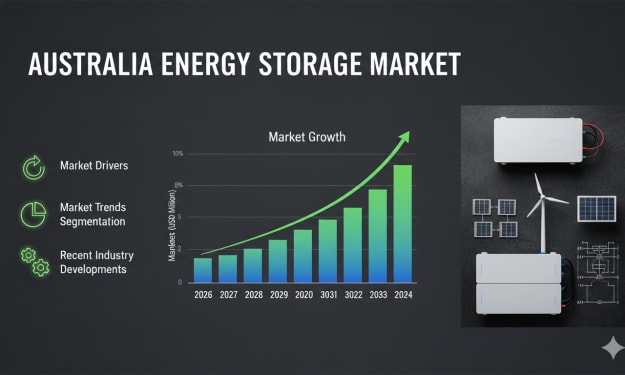
Australia Energy Storage Market: Renewable Integration, Grid Resilience & Technology Advancements
According to IMARC Group, the Australia energy storage market reached 4.72 GW in 2025 and is projected to expand significantly to 19.81 GW by 2034, exhibiting a robust compound annual growth rate (CAGR) of 17.28% during 2026–2034. This rapid expansion highlights the critical role energy storage plays in transforming the electricity ecosystem across Australia. As renewable energy capacity accelerates and coal-fired plants retire, storage systems are becoming essential for maintaining grid stability, ensuring reliability and supporting long-term decarbonization goals. From large-scale battery installations to residential storage units, energy storage is emerging as a cornerstone of Australia’s clean energy transition.
By Shrestha Roy5 days ago in Futurism
Saudi Arabia Industrial Sand Market 2026–2034: Construction Expansion, Foundry Demand & Energy Sector Applications
Saudi Arabia's industrial sand sector is moving fast, and the numbers back it up. Steady demand from mega-construction projects, expanding domestic glass production, and a push into unconventional gas development are all pulling the market in the same direction — upward. According to IMARC Group's latest research, the Saudi Arabia industrial sand market was valued at USD 81.82 Million in 2025 and is projected to reach USD 122.1 Million by 2034. The Eastern region leads with a 36% market share in 2025, anchored by oil and gas operations and major industrial infrastructure around Jubail. With Vision 2030 pumping over USD 1.3 trillion into economic transformation, this market shows no signs of slowing down.
By Kishan Kumar3 days ago in Futurism
Review of 'Man on the Run'
My wife and I saw Man on the Run, a nearly 2-hour documentary on Amazon Prime, about Wings, Paul McCartney's group that flew around the world from shortly after The Beatles broke up in early 1970 to shortly after John Lennon was murdered at the end of 1980, making a Beatles reunion forever impossible.
By Paul Levinsona day ago in Beat



Comments
There are no comments for this story
Be the first to respond and start the conversation.