
SpaceX Starship Flight 8: Achievements and Setbacks in Recent Launch
Milestones and Mishaps in SpaceX’s Latest Starship Test

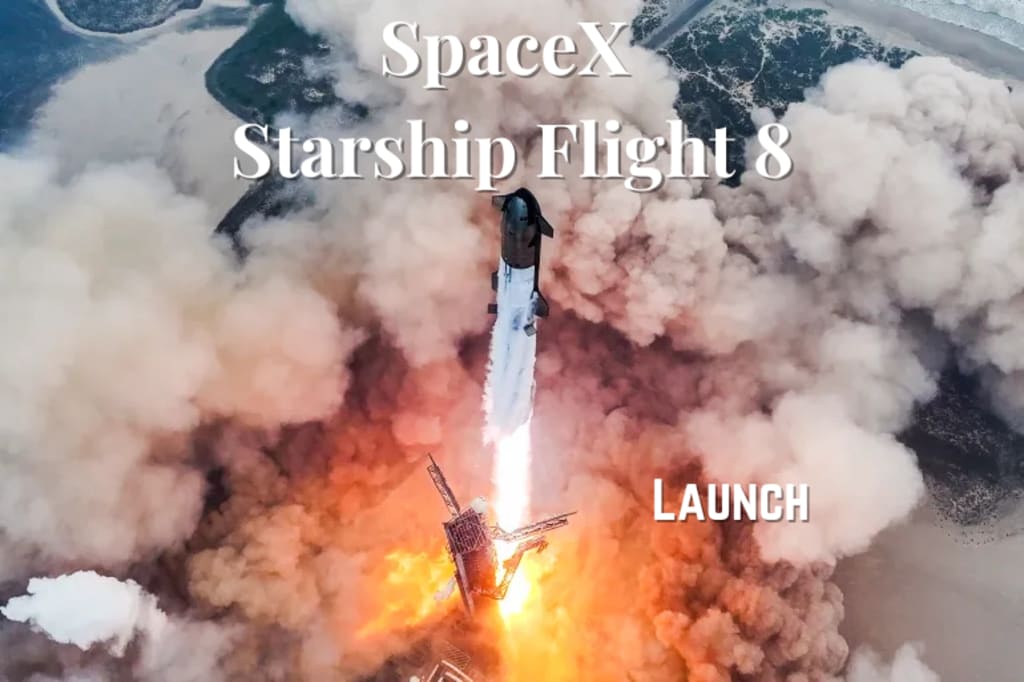
SpaceX's Starship program has been at the forefront of space exploration, aiming to revolutionize interplanetary travel. The recent Flight 8 test, conducted on March 6, 2025, showcased both significant achievements and notable setbacks, reflecting the challenges inherent in pioneering aerospace technology.
Launch Overview

On March 6, 2025, at 5:30 p.m. CT, SpaceX launched its eighth Starship test flight from Boca Chica, Texas. The mission aimed to advance the development of a fully reusable spacecraft capable of carrying humans to the Moon, Mars, and beyond. The primary objectives included testing the Super Heavy booster's return capabilities and assessing the Starship's performance during its ascent and planned orbital insertion.
Achievements
Super Heavy Booster Recovery: A significant milestone was achieved with the successful return and "catch" of the Super Heavy booster. Utilizing mechanical arms known as "chopsticks," the booster was guided back to the launch pad, marking the third successful recovery of this component. This achievement underscores SpaceX's commitment to developing reusable rocket technology, which is crucial for reducing the costs associated with space travel.
Setbacks
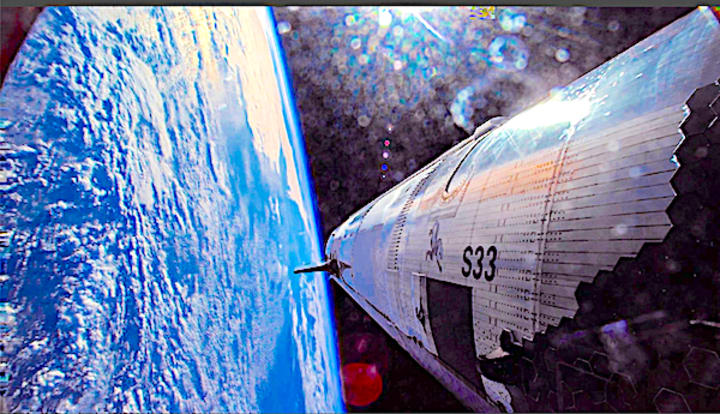
Loss of Starship Vehicle: Approximately eight minutes into the flight, SpaceX lost contact with the Starship spacecraft. The vehicle experienced a loss of attitude control, leading to its disintegration over the Caribbean Sea. Observers reported sightings of flaming debris over regions including the Turks and Caicos Islands and the Bahamas. This incident mirrors a previous failure in January, where the Starship exploded due to hardware damage caused by harmonic vibrations.
Elon Musk's Response

In the aftermath of the launch, SpaceX CEO Elon Musk addressed the incident, emphasizing the iterative nature of the Starship development program. He acknowledged the challenges faced during the test flight and reiterated the importance of rapid prototyping and testing to identify and rectify issues. Musk expressed confidence in the team's ability to learn from these setbacks, stating that each test provides valuable data that brings SpaceX closer to achieving its goal of sustainable interplanetary travel.
Community and Fan Reactions
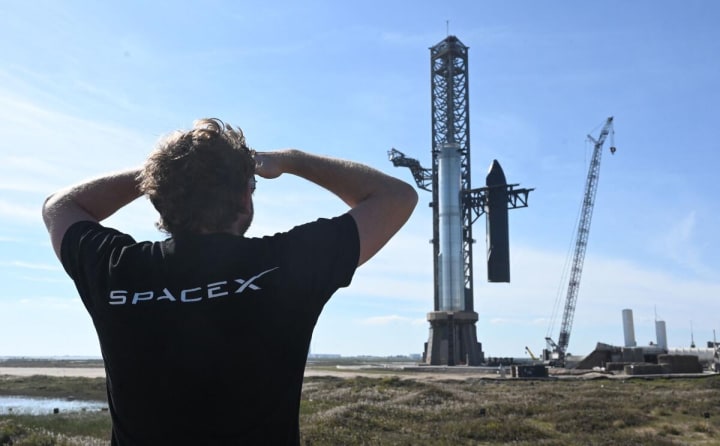
The space enthusiast community and SpaceX fans worldwide expressed a mix of disappointment and optimism following the Flight 8 test. Many took to social media platforms to share their thoughts:
Supportive Voices: Numerous fans highlighted the progress made with the successful booster recovery, viewing it as a positive step toward full reusability. They expressed trust in SpaceX's methodology of testing, learning, and iterating.
Constructive Criticism: Some community members raised concerns about the recurring issues during test flights, emphasizing the need for thorough investigations to prevent future anomalies. Discussions centered on the importance of addressing technical challenges to ensure the safety and reliability of future missions.
Looking Ahead
Despite the setbacks encountered during Flight 8, SpaceX remains steadfast in its mission to develop a fully reusable spacecraft. The company plans to conduct a comprehensive analysis of the recent failure to identify root causes and implement corrective actions. Future test flights will continue to focus on validating the Starship's design, improving system robustness, and achieving successful orbital insertions and recoveries.
The journey to revolutionize space travel is fraught with challenges, but each test, whether successful or not, contributes to the collective knowledge and advancement of aerospace technology. As SpaceX pushes the boundaries of what's possible, the world watches with anticipation, eager to witness the dawn of a new era in space exploration.
About the Creator
Keep reading
More stories from Bevy Osuos and writers in Futurism and other communities.
Can We Bring Back the Woolly Mammoth? Scientists Are One Step Closer with Woolly Mice
Imagine walking through the Arctic tundra and spotting a real, living woolly mammoth. It sounds like something straight out of Jurassic Park, but scientists are actually working to make it happen. And their latest breakthrough? Creating "woolly mice", tiny creatures with genetic traits borrowed from the prehistoric giants.
By Bevy Osuos11 months ago in Futurism
About Binding Prometheus
I want to start actively advocating on behalf of my own work, and the most valuable part of my canon is, without a doubt, Binding Prometheus, the play I have been working on since 2019 and only finished in 2023 as part of my MA. The play itself is an amalgamation of a million different inspirations. On one end, it evokes the Ancient Greek myth-play, deriving its own title from the earliest extant work of Western drama we have, Aeschylus’s Prometheus Bound. On the other end, it borrows significantly from the sci-fi bulwarks from over the years, namely Mary Shelley’s Frankenstein and Karel Capek’s Rossum’s Universal Robots. The play could be an episode of Black Mirror, I fear. I don’t know. I’ve only ever seen one episode of Black Mirror.
By Steven Christopher McKnight14 days ago in Futurism
Dosing Pump Market: Precision Metering, Chemical Processing Needs & Increasing Infrastructure Projects
According to IMARC Group's latest research publication, the global dosing pump market size reached USD 8.03 Billion in 2024. Looking forward, IMARC Group expects the market to reach USD 11.75 Billion by 2033, exhibiting a growth rate (CAGR) of 4.28% during 2025-2033.
By sujeet. imarcgroup6 days ago in Futurism



Comments
There are no comments for this story
Be the first to respond and start the conversation.