

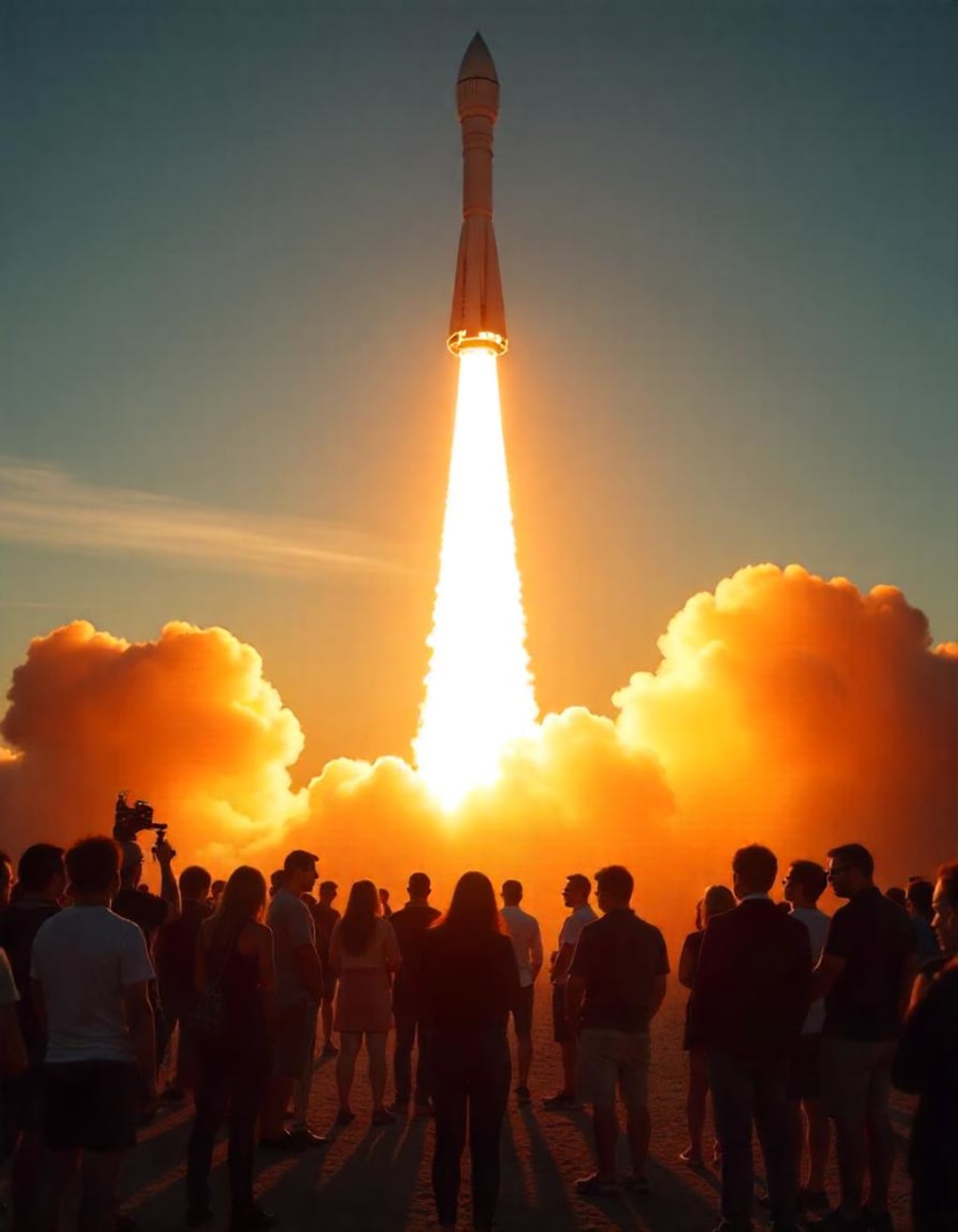
For decades, space travel was something we only saw in movies and read about in science fiction novels. The idea of everyday people soaring past Earth’s atmosphere seemed like a far-off fantasy. But now, thanks to technological advancements and ambitious entrepreneurs, space tourism is no longer just a dream—it’s becoming a reality. So, what’s driving this interstellar revolution, and what does the future hold for space tourism? Let’s take a deep dive into this exciting new industry.
The Evolution of Space Tourism
Space Tourism in Science Fiction
Science fiction has always fueled our fascination with space travel. From "2001: A Space Odyssey" to "Star Trek," the concept of humans traveling beyond Earth has captivated our imagination. Many of the ideas once considered pure fantasy—like commercial space travel, space hotels, and interplanetary tourism—are now within our reach.
The First Steps Toward Real-World Space Travel
The first real attempt at space tourism began in 2001 when Dennis Tito, an American businessman, paid $20 million for a trip to the International Space Station (ISS). This historic moment opened the door for other wealthy individuals to experience space firsthand, and it proved that commercial space travel was not just possible, but profitable.
Key Players in the Space Tourism Industry
SpaceX: The Vision for Mars and Beyond
Elon Musk’s SpaceX has been a game-changer in the space industry. With its reusable rockets and plans to colonize Mars, SpaceX is at the forefront of making space travel accessible to civilians. Musk envisions a future where traveling to another planet is as easy as booking a flight.
Blue Origin: Making Space Accessible
Founded by Jeff Bezos, Blue Origin aims to make space travel more sustainable and affordable. The company’s New Shepard rocket has already taken tourists on suborbital flights, giving them a few minutes of weightlessness and a breathtaking view of Earth from above.
Virgin Galactic: Luxury Space Travel
Richard Branson’s Virgin Galactic focuses on making space tourism a luxury experience. With a fleet of spaceplanes designed for suborbital flights, the company is targeting high-net-worth individuals looking for the ultimate thrill.
The Different Types of Space Tourism
Suborbital Space Tourism
This is the most accessible form of space tourism. Passengers board a spacecraft that takes them to the edge of space (about 100 km above Earth), where they experience a few minutes of weightlessness before returning.
Orbital Space Tourism
Orbital tourism involves traveling beyond the Kármán line and orbiting Earth for an extended period, usually aboard the ISS or a commercial space station. This is significantly more expensive and requires more extensive training.
Lunar and Deep Space Tourism
Companies like SpaceX are planning missions to the Moon and beyond. While this is still in the early stages, deep space tourism could become a reality in the coming decades.
The Cost of Space Travel: Who Can Afford It?
Why Space Tourism is Expensive
The biggest barrier to space tourism is cost. Rockets, fuel, and infrastructure are extremely expensive, and the technology is still in its infancy. As a result, only the ultra-rich can currently afford a ticket to space.
Will Space Travel Ever Be Affordable for Everyone?
As technology advances and more players enter the market, costs will likely decrease. The aviation industry followed a similar trajectory—once a luxury for the rich, air travel eventually became accessible to the masses. The same could happen with space travel.
The Risks and Challenges of Space Tourism
Safety Concerns in Space Travel
Space travel is inherently risky. From potential malfunctions to radiation exposure, there are numerous safety concerns that companies must address before making space tourism mainstream.
The Environmental Impact of Space Tourism
With more rocket launches, concerns about pollution and carbon emissions are growing. Companies are working on developing more sustainable propulsion systems, but the environmental impact remains a challenge.
The Future of Space Tourism: What’s Next?
Space Hotels and Commercial Space Stations
The concept of space hotels is no longer just fiction. Companies like Orbital Assembly Corporation are already designing commercial space stations that could serve as hotels, research labs, and tourist attractions.
The Possibility of Colonizing Other Planets
Elon Musk’s vision of colonizing Mars isn’t just a pipe dream. If space tourism continues to grow, the next logical step could be setting up permanent settlements on other planets.
Conclusion
Space tourism is no longer just a concept from science fiction—it’s happening right now. While it's still in its early stages and primarily reserved for the wealthy, advancements in technology and increasing competition could make space travel more accessible in the near future. Whether it’s suborbital joyrides, orbital stays, or lunar adventures, the future of space tourism is looking brighter than ever. One thing’s for sure: we are entering a new era where the final frontier is no longer just for astronauts but for everyone.
FAQs
1. How much does it cost to travel to space?
Currently, space travel costs anywhere from $250,000 for a suborbital flight to millions for an orbital or lunar mission.
2. Is space tourism safe?
While companies are investing heavily in safety measures, space travel still carries inherent risks, including malfunctions and health concerns.
3. When will space tourism become affordable for the average person?
It’s hard to predict, but as technology advances and competition increases, prices are expected to drop over the next few decades.
4. Can anyone go to space, or do you need special training?
Most space tourism experiences require some level of training, but suborbital flights involve minimal preparation compared to orbital missions.
5. Will we see space hotels in our lifetime?
Yes, companies are already working on commercial space hotels, with the first ones expected to be operational in the next decade.
About the Creator
Apleetech
Apleetech is a Professional Technology Platform. Here we will provide you only interesting content, which you will like very much. We're dedicated to providing you with the best of Technology, with a focus on dependability and Tech.
About Binding Prometheus
I want to start actively advocating on behalf of my own work, and the most valuable part of my canon is, without a doubt, Binding Prometheus, the play I have been working on since 2019 and only finished in 2023 as part of my MA. The play itself is an amalgamation of a million different inspirations. On one end, it evokes the Ancient Greek myth-play, deriving its own title from the earliest extant work of Western drama we have, Aeschylus’s Prometheus Bound. On the other end, it borrows significantly from the sci-fi bulwarks from over the years, namely Mary Shelley’s Frankenstein and Karel Capek’s Rossum’s Universal Robots. The play could be an episode of Black Mirror, I fear. I don’t know. I’ve only ever seen one episode of Black Mirror.
By Steven Christopher McKnight14 days ago in Futurism
Family Offices Market: Cross-Border Investments and Tax Optimization Trends
According to IMARC Group's latest research publication, global family offices market size was valued at USD 21.4 Billion in 2025. Looking forward, IMARC Group expects the market to reach USD 30.3 Billion by 2034, exhibiting a growth rate (CAGR) of 3.94% during 2026-2034.
By Andrew Sullivan7 days ago in Futurism
📢 Raise Your Voice Thread: 01/08/2026
Our “Raise Your Voice Threads” are hosted most alternating Thursdays at 12PM ET to offer creators more avenues to uncover exceptional stories on Vocal. As we are continuously searching for fresh creators and inspiring stories, this thread provides an opportunity to exchange and discuss the stories that have moved and motivated us on Vocal.
By Raise Your Voice by Vocal7 days ago in Resources


Comments
There are no comments for this story
Be the first to respond and start the conversation.