
Solar-Powered UAV Market: Zero-Fuel Operations, Long-Duration Missions & Growth Drivers
How long-duration missions, reduced launch frequency, and operational flexibility are influencing deployment models in the solar-powered UAV market

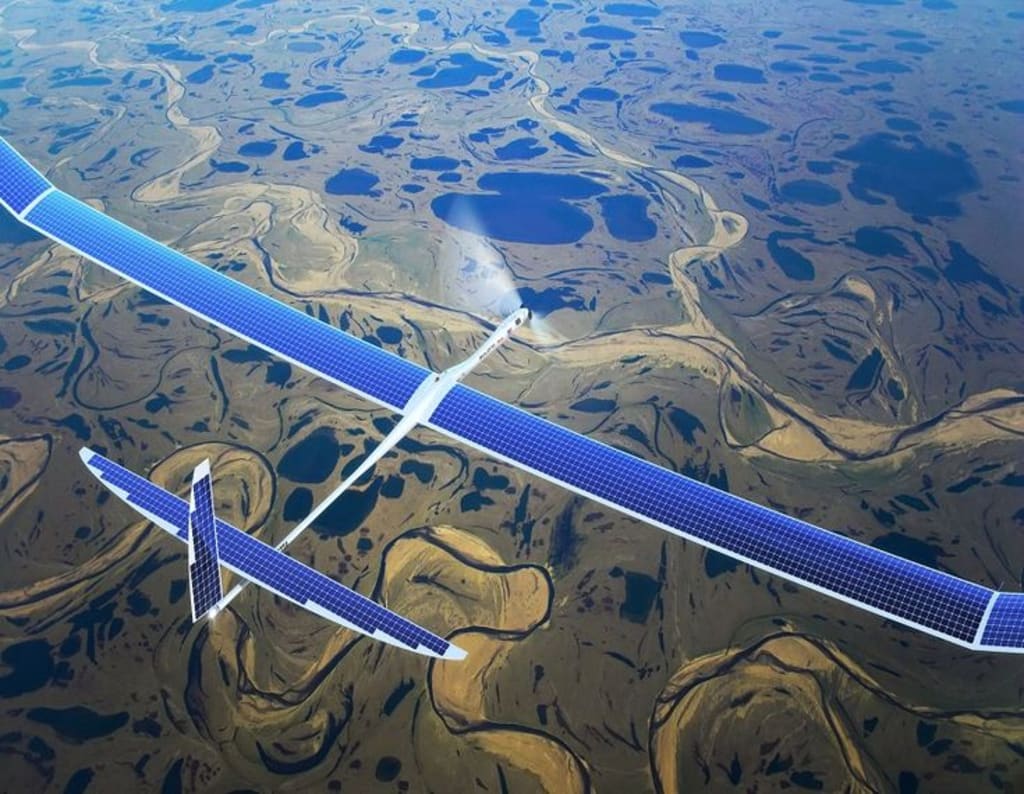
According to IMARC Group's latest research publication, global solar-powered UAV market size reached USD 401.0 Million in 2024. Looking forward, IMARC Group expects the market to reach USD 867.3 Million by 2033, exhibiting a growth rate (CAGR) of 8.5% during 2025-2033.
How AI is Reshaping the Future of Solar-Powered UAV Market
- Autonomous Mission Planning and Adaptive Navigation: AI-powered autopilot systems enable solar UAVs to autonomously adjust flight trajectories based on mission objectives and environmental conditions. Deep learning algorithms process sensor data for obstacle avoidance, terrain mapping, and target tracking, reducing human intervention by 40% while maintaining mission precision across defense and commercial applications.
- Predictive Maintenance and System Health Monitoring: AI monitors critical components including solar panels, batteries, and propulsion systems to detect performance degradation and predict failures before they occur. Neural networks analyze vibration patterns, temperature fluctuations, and power output variations, reducing unplanned downtime by 25% and extending equipment lifespan through proactive maintenance scheduling.
- Intelligent Payload Management and Data Processing: Machine learning systems automatically prioritize sensor operations and data transmission based on available solar energy and mission criticality. AI-driven image recognition processes surveillance footage in real-time, reducing bandwidth requirements by compressing and transmitting only relevant intelligence, enabling continuous operations in bandwidth-constrained stratospheric environments.
- Swarm Coordination and Multi-UAV Collaboration: AI algorithms enable coordinated operations among multiple solar-powered UAVs for large-scale surveillance and communications relay missions. Distributed intelligence systems optimize formation flying, task allocation, and energy sharing within UAV fleets, improving area coverage efficiency by 50% while maintaining persistent stratospheric presence for border security and disaster monitoring applications.

Solar-Powered UAV Industry Overview:
Defense sector innovations and stratospheric flight breakthroughs are transforming the solar-powered UAV landscape. BAE Systems' PHASA-35 completed successful 24-hour stratospheric test flights, reaching altitudes exceeding 66,000 feet and demonstrating rapid turnaround capability with relaunches within 48 hours. The aircraft features a 35-meter wingspan with advanced solar panels providing twice the power generation capacity of earlier versions, targeting operational deployment by 2026. India's IIT Kanpur developed MARAAL, a surveillance drone achieving successful multi-day flights through optimized solar cell integration and energy management systems. China's AVIC introduced the Qimingxing 50 for near-space missions, while startups like XSun and H3 Dynamics are developing hybrid systems combining solar, hydrogen, and batteries for zero-emission long-endurance operations.
Solar-Powered UAV Market Trends & Drivers
Defense and military applications are driving rapid adoption of solar-powered UAVs for intelligence, surveillance, and reconnaissance missions. The U.S. Department of Defense awarded Boeing Insitu a USD 102.3 million contract for additional RQ-21 and MQ-27 platforms, while the U.S. Army Space and Missile Defense Command sponsored PHASA-35 stratospheric trials at Spaceport America. Fixed-wing solar UAVs dominate the market with over 60% share due to superior endurance and operational range exceeding 300 kilometers. These platforms offer persistent coverage at altitudes above conventional aircraft and weather patterns, providing cost-effective alternatives to satellites for border surveillance and communications relay. The FAA registered 855,860 drones in the United States by May 2022, with 37% designated for commercial operations, demonstrating growing acceptance of unmanned systems across defense and civilian sectors for extended-duration missions requiring minimal logistical support.
Technological breakthroughs in lightweight solar cells and energy storage are enabling longer flight durations and expanded operational capabilities. Universities worldwide are advancing solar UAV technology, with Johannes Kepler University developing ultra-lightweight perovskite cells producing 44 watts per gram, while the University of Singapore created experimental quadcopters recharging in three hours for extended missions. Semi-autonomous systems command the largest market segment, combining pre-programmed flight paths with autonomous operations for takeoff, landing, and adaptive maneuvering. BAE Systems' next-generation PHASA-35 incorporates solar panels with twice the previous power generation and storage capacity, built at Prismatic's Hampshire facility for 2025 flight testing. These advancements address the critical limitation of energy autonomy, with high-altitude platforms benefiting from unobstructed solar irradiation and cooler temperatures that boost photovoltaic efficiency, enabling continuous day-and-night operations through improved battery technologies.
Agricultural and environmental monitoring applications are expanding the commercial market for solar-powered UAVs beyond traditional defense sectors. Sphere Drones introduced the HubX self-sustaining mobile platform in January 2024, enabling businesses to collect aerial data across remote terrains with deployments completed in 30 minutes for farms, mines, and disaster areas. Indian manufacturers launched specialized drones like Garuda Aerospace's SURAJ, carrying 10-kilogram payloads with 12-hour flight times at 3,000 feet for precision agriculture applications including crop monitoring, pesticide spraying, and soil analysis. Solar-powered platforms eliminate frequent battery replacements and refueling logistics, reducing operational costs by 35% while extending mission coverage areas. The growing emphasis on sustainable technology solutions aligns with corporate environmental commitments, exemplified by partnerships developing bio-renewable materials and hybrid propulsion systems that further enhance the cost-effectiveness and ecological benefits of solar UAVs for civilian applications.
Leading Companies Operating in the Global Solar-Powered UAV Industry:
- BAE Systems Plc
- Barnard Microsystems Ltd
- Eos Technologie
- Sunlight Aerospace
- UAV Instruments S.L
- Xsun
Solar-Powered UAV Market Report Segmentation:
By Type:
- Fixed Wing Drones
- Multirotor Drones
- Quadcopter Drones
Fixed wing drones exhibit a clear dominance in the market accredited to their superior aerodynamics and longer flight durations compared to other types.
By Range:
- Less Than 300 KM
- More Than 300 KM
More than 300 KM holds the biggest market share, as these drones are preferred for their extended range capabilities, enabling broader surveillance and mission scope.
By Component:
- Propulsion System
- Airframe
- Guidance Navigation
- Control System
- Payload
Propulsion system comprises electric motors powered by solar panels and batteries, designed for efficiency using lightweight materials to enhance flight endurance, while the airframe is optimized for aerodynamics and stability with materials like carbon fiber to achieve extended operational capabilities in applications such as surveillance and mapping.
By Mode of Operation:
- Semi-Autonomous
- Autonomous
Semi-Autonomous represents the largest market share, combining solar energy with partial autonomous control to enable extended flight durations, utilizing solar panels and onboard batteries for operations with reduced human intervention, applicable in areas like surveillance and environmental monitoring.
By Application:
- Defense
- Commercial
Defense accounts for the largest segment in the market, alongside commercial applications, indicating a strong demand for solar-powered UAVs in defense-related operations.
Regional Insights:
- North America (United States, Canada)
- Asia Pacific (China, Japan, India, South Korea, Australia, Indonesia, Others)
- Europe (Germany, France, United Kingdom, Italy, Spain, Russia, Others)
- Latin America (Brazil, Mexico, Others)
- Middle East and Africa
North America dominates the market owing to the rising investment in UAV technology, robust defense budgets, and a high concentration of leading UAV manufacturers.
Recent News and Developments in Solar-Powered UAV Market
- June 2025: Lincad secured a contract with BAE Systems' Prismatic subsidiary to develop specialized high-voltage lithium-ion battery packs for PHASA-35. The advanced battery management system incorporates software and hardware safety mechanisms designed for stratospheric conditions, supporting the platform's operational deployment target of 2026.
- April 2024: DJI launched its first power stations in the United States, Europe, and Australia, enabling fast-charging capabilities for drones operating far from conventional power infrastructure. The Power 1000 system recharges UAV batteries in approximately 30 minutes, supporting extended commercial and surveillance operations.
- March 2024: IIT Kanpur unveiled MARAAL, a solar-powered surveillance drone designed for defense applications. The platform successfully completed multi-day flight trials at IIT Kanpur's airstrip, demonstrating optimized autopilot performance and power consumption management for persistent monitoring missions.
Note: If you require specific details, data, or insights that are not currently included in the scope of this report, we are happy to accommodate your request. As part of our customization service, we will gather and provide the additional information you need, tailored to your specific requirements. Please let us know your exact needs, and we will ensure the report is updated accordingly to meet your expectations.
About the Creator
Andrew Sullivan
Hello, I’m Andrew Sullivan. I have over 9+ years of experience as a market research specialist.
Keep reading
More stories from Andrew Sullivan and writers in Futurism and other communities.
Hybrid Workplace Market: Flexible Work Policies, Cybersecurity & Organizational Growth
According to IMARC Group's latest research publication, the global hybrid workplace market size is expected to exhibit a growth rate (CAGR) of 15.65% during 2025-2033.
By Andrew Sullivanabout 22 hours ago in Futurism
About Binding Prometheus
I want to start actively advocating on behalf of my own work, and the most valuable part of my canon is, without a doubt, Binding Prometheus, the play I have been working on since 2019 and only finished in 2023 as part of my MA. The play itself is an amalgamation of a million different inspirations. On one end, it evokes the Ancient Greek myth-play, deriving its own title from the earliest extant work of Western drama we have, Aeschylus’s Prometheus Bound. On the other end, it borrows significantly from the sci-fi bulwarks from over the years, namely Mary Shelley’s Frankenstein and Karel Capek’s Rossum’s Universal Robots. The play could be an episode of Black Mirror, I fear. I don’t know. I’ve only ever seen one episode of Black Mirror.
By Steven Christopher McKnight16 days ago in Futurism
Glass Straw Market Size and Forecast 2025–2033
Introduction The global push toward sustainability is reshaping everyday consumer choices, from grocery bags to beverage packaging. Among the most visible symbols of this transformation is the humble drinking straw. Once dominated by single-use plastic, the category is rapidly evolving as governments, businesses, and consumers prioritize environmental responsibility. In this context, glass straws have emerged as a premium, reusable alternative that combines sustainability with style.
By Aaina Oberoi3 days ago in Futurism


Comments
There are no comments for this story
Be the first to respond and start the conversation.